

 |
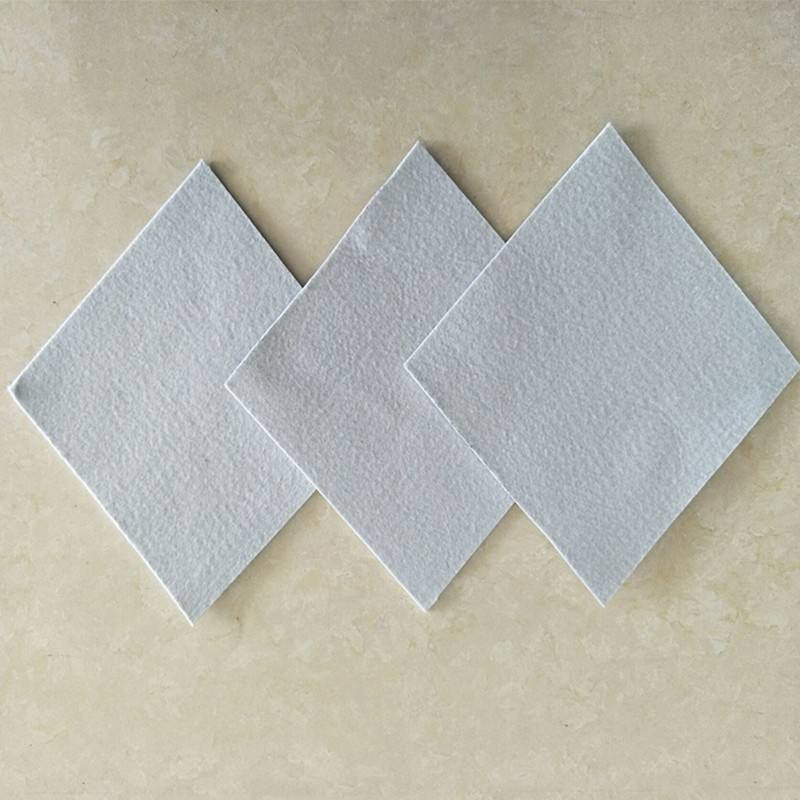


400-1200g/m2
Yingfan
The 0.3mm geotextile composite geomembrane liner is a high-performance composite material engineered by Yingfan, combining the advantages of non-woven/woven geotextile and HDPE geomembrane. Through advanced calendaring and far-infrared heat-bonding technology, the liner integrates the reinforcement, protection, and filtration capabilities of geotextiles with the exceptional impermeability of HDPE membranes. Enhanced with polymer and anti-aging additives, this composite geomembrane liner excels in extreme temperatures, chemical resistance, and leak prevention, making it the top choice for landfills, wastewater treatment, aquaculture, and civil engineering projects.
Test Item | Unit | JC | JC5 | JC6 | JC7 | JC8 |
Weight | g/m² | 400 | 500 | 600 | 700 | 800 |
Film Thickness | mm | 0.25-0.35 | - | - | 0.30-0.50 | - |
Break Strength | kN/m | 5.0 | 7.5 | 10 | 12 | 14 |
Break Elongation | % | 30-100 | 30-100 | 30-100 | 30-100 | 30-100 |
CBR Burst Strength | kN | 1.1 | 1.5 | 1.9 | 2.2 | 2.5 |
Tear Resistance | kN | 0.15 | 0.25 | 0.32 | 0.4 | 0.48 |
Peel Strength | N/cm | ≥6 | ≥6 | ≥6 | ≥6 | ≥6 |
Hydrostatic Pressure (One Cloth One Film) | MPa | 0.4 | 0.5 | 0.6 | 0.8 | 1.0 |
Hydrostatic Pressure (Two Cloth One Film) | MPa | 0.5 | 0.6 | 0.8 | 1.0 | 1.2 |
The composite geomembrane liner consists of two key components: 1) non-woven/woven geotextile (polyester or polypropylene) for reinforcement and protection, and 2) HDPE geomembrane (0.3mm core thickness) for impermeability. The geotextile layer shields the HDPE membrane from punctures, abrasion, and UV damage, while the HDPE layer blocks water, sewage, and harmful substances. During production, polymer additives improve flexibility and tensile strength, while anti-aging agents extend service life in outdoor or harsh environments. The far-infrared heat-bonding process ensures tight integration between layers, achieving excellent peel strength (≥6 N/cm) and structural stability.
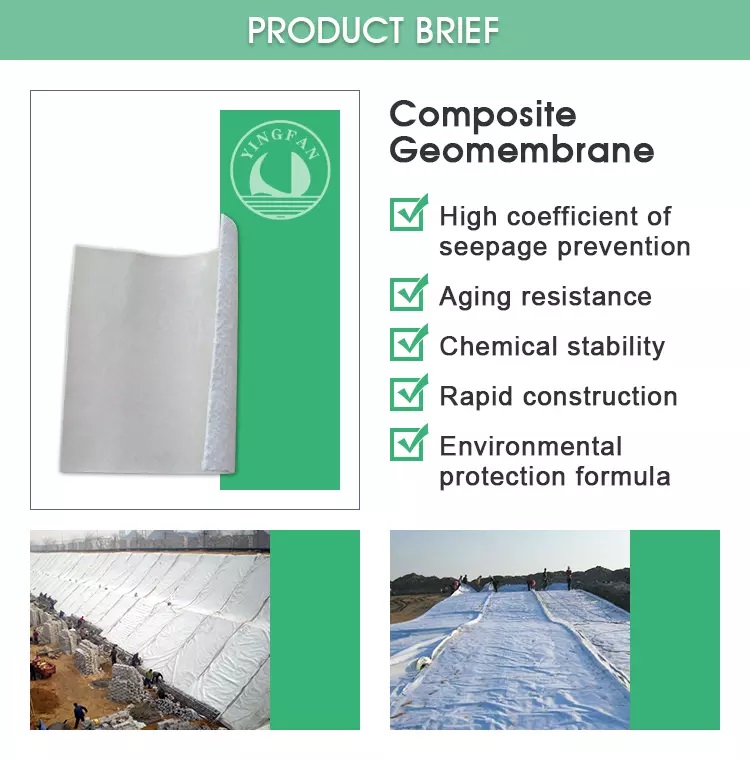
The HDPE geomembrane core provides superior impermeability, with hydrostatic pressure resistance up to 1.2 MPa (two cloth one film). It effectively blocks liquid seepage, preventing contamination of soil and groundwater – critical for landfills and wastewater treatment.
With a break strength of 5.0-14 kN/m and elongation of 30-100%, the liner withstands subgrade deformation and external pressure. The composite structure enhances durability, resisting tearing, puncturing, and mechanical damage.
Formulated with anti-aging and chemical-stable materials, the liner resists UV radiation, corrosion from acids, alkalis, and organic solvents. It maintains performance in temperatures ranging from -40℃ to 60℃, suitable for unconventional environments.
Lightweight and flexible, the liner is easy to unroll, lay, and seal. The simple installation process reduces construction time and labor costs, improving project efficiency.
The composite design eliminates the need for separate geotextile and geomembrane installation, reducing material and construction costs. The environmental protection formula is non-toxic and recyclable, complying with global eco-standards.
Prevents leachate leakage from municipal solid waste landfills, protecting groundwater and soil from contamination.
Used in ponds, lagoons, and treatment tanks to contain sewage, sludge, and chemicals, ensuring efficient treatment and zero leakage.
Reinforces road subgrades and protects waterproof layers in tunnels, bridges, and retaining walls, reducing water damage and settlement.
Ideal for fish ponds, shrimp farms, and irrigation canals, preventing water seepage and maintaining stable water levels.
Applied in artificial lakes, reservoirs, and riverbank linings, enhancing water conservation and erosion control.
Our composite geomembrane liner adheres to strict JC standards, with each batch undergoing hydrostatic pressure, peel strength, and tensile tests. The product is free of heavy metals and harmful chemicals, meeting environmental protection requirements. Safety Tips: Wear gloves during installation to avoid cuts from sharp edges; ensure proper ventilation in enclosed construction areas.
Prepare the substrate: Ensure the surface is flat, compacted, and free of sharp debris (e.g., rocks, roots).
Lay the liner: Unroll the liner smoothly, avoiding tension or wrinkles; overlap seams by 10-15cm.
Seal joints: Use heat welding or geomembrane adhesive to seal overlaps, ensuring leak-proof connections.
Secure edges: Fix the liner’s perimeter with anchors or concrete to prevent displacement.
Inspect seams and surfaces monthly for cracks, punctures, or loose connections.
Avoid exposing the liner to direct UV radiation for extended periods; cover with soil or vegetation if possible.
Repair damages promptly: Use patch kits for small holes and re-weld seams for larger issues.
One cloth one film has a single geotextile layer (lightweight, cost-effective for general projects), while two cloth one film has two geotextile layers (enhanced protection, suitable for high-abrasion or heavy-load scenarios like landfills).
Yes! The HDPE geomembrane and geotextile layers are chemically stable, resisting acids, alkalis, and organic solvents – ideal for wastewater treatment and industrial projects.
Absolutely. The liner maintains flexibility in low temperatures (-40℃) and stability in high temperatures (60℃), adapting to diverse climatic conditions.
Under normal use, the liner has a service life of 15-20 years, depending on environmental factors (e.g., chemical exposure, UV intensity).
Looking for a reliable impermeable liner for your project? Yingfan’s 0.3mm geotextile composite geomembrane liner offers unbeatable leak prevention, durability, and versatility. Contact us now for a customized quote, technical support, or on-site installation guidance. Whether you’re building a landfill, wastewater facility, or aquaculture farm, we have the perfect solution for you. Don’t compromise on quality – partner with Yingfan for long-lasting, high-performance composite geomembrane liners!


