

Views: 0 Author: Site Editor Publish Time: 2026-03-06 Origin: Site


Why do so many projects rely on a thin liner underground or underwater? A geomembrane is used to block liquid movement, prevent leakage, and protect surrounding soil. In this article, you will learn where geomembranes are used, what they do, why HDPE geomembrane is often chosen, and what affects material selection.
Geomembranes are used wherever a project needs a reliable barrier to control seepage, isolate sensitive ground conditions, or contain liquids that should not escape into surrounding soil or water. In practice, that means their role changes by industry: in some sectors they protect the environment from waste and leachate, while in others they preserve water, support industrial processing, or keep structures dry below grade. Across these applications, HDPE geomembrane is especially common because it combines low permeability with strong chemical and weather resistance.
Industry area | Typical installation context | Primary engineering purpose |
Waste containment and environmental control | Landfill liners, landfill caps, waste storage cells, remediation zones | Isolate contaminants and reduce migration into soil and groundwater |
Water management and pond lining | Reservoirs, canals, artificial lakes, wastewater lagoons, ponds | Reduce seepage and maintain stored or conveyed water |
Mining and industrial process areas | Heap leach pads, tailings ponds, evaporation ponds, tank containment areas | Hold process liquids safely within controlled operating zones |
Civil construction and structural waterproofing | Tunnels, basements, foundations, roofs, transport works | Provide waterproofing and moisture protection in built structures |
One of the most established uses of geomembranes is in environmental protection projects, especially those connected to waste management. In landfill systems, they are installed as bottom liners to help contain leachate generated by decomposing waste. They are also used in landfill covers or capping systems, where the goal shifts from containment below to surface control above, limiting rainwater infiltration and helping manage gas and moisture movement within the waste mass. In contaminated site isolation work, geomembranes function as part of engineered barrier systems that separate polluted materials from surrounding ground.
What makes this sector important is not just the presence of waste, but the consequence of uncontrolled migration. A failed barrier in these settings can affect groundwater, adjacent soil, and downstream cleanup costs. That is why geomembranes are widely specified in projects where long-term containment is more critical than short-term waterproofing alone. In environmental work, the material is not simply a liner; it is a control layer designed to keep hazardous or undesirable substances within a defined footprint.
In water-related projects, geomembranes are primarily used to reduce seepage and improve storage efficiency. Reservoirs, irrigation canals, artificial lakes, and wastewater lagoons all lose performance when water infiltrates into the subgrade instead of remaining inside the system. A geomembrane liner addresses that problem by creating a continuous low-permeability barrier between the stored water and the ground beneath it.
This is also where the term HDPE pond liner becomes highly relevant. In pond lining systems, geomembranes are used in agricultural ponds, process ponds, and other lined basins where operators need to retain water volume, stabilize operation, and avoid unnecessary replenishment. In wastewater settings, the liner also helps separate stored liquid from the underlying soil, which is essential where treatment ponds or holding lagoons operate over long periods. Rather than serving one narrow purpose, geomembranes in water management support both conservation and containment within the same infrastructure category.
Mining and industrial facilities use geomembranes in more chemically demanding environments. Typical applications include heap leach pads, tailings ponds, and evaporation ponds, all of which depend on controlled liquid handling as part of daily operation. In these settings, liner systems are not optional accessories; they are built into the process layout because the contained solutions may be corrosive, metal-bearing, or environmentally sensitive.
Industrial containment follows a similar logic. Geomembranes are installed beneath or around tanks, process zones, or storage areas to form containment boundaries for liquids that must remain within a designated area. The value of the liner here lies in operational control as much as environmental protection. When process liquids are part of production, storage, or recovery, keeping them contained is directly tied to safety, compliance, and facility performance.
In civil construction, geomembranes are used less as open containment liners and more as waterproofing layers integrated into built works. Common examples include tunnels, basements, foundations, roofs, and transport infrastructure exposed to persistent moisture or groundwater pressure. In these applications, the geomembrane helps prevent water ingress into structural elements and protects service life in below-grade or enclosed environments.
This use case is distinct from landfill or mining work because the engineering focus is structural protection rather than liquid storage. The geomembrane becomes part of a larger waterproofing assembly, often working alongside drainage and protection layers. That makes it especially valuable in projects where keeping water out is just as important as keeping liquids in.
A geomembrane plays a technical role before it plays an industry-specific one: it functions as a manufactured barrier layer designed to control where liquids can and cannot move. In engineering terms, its value comes from very low permeability, which allows it to act as a defined interface between materials, spaces, or process zones. Rather than thinking of it only as a “liner,” it is more accurate to view it as a control layer inside a larger containment or waterproofing design.
Functional role | What the geomembrane does in practice |
Barrier control | Limits the movement of liquids into or out of a defined area |
Separation | Creates a physical divide between contained media and surrounding ground |
System integration | Works as one layer within a larger engineered lining or waterproofing assembly |
The most fundamental role of a geomembrane is to create a low-permeability barrier that controls liquid migration. This barrier works in two directions depending on the design objective: it can keep fluids inside a contained space, or it can block external moisture from moving inward. The material itself is engineered to have extremely low permeability, so fluid movement is directed by the design rather than by the natural condition of the ground.
This function is especially important because soil alone is rarely predictable enough to serve as a complete control layer. Even where compacted earth or mineral barriers are present, a geomembrane adds a more defined and measurable lining surface. Its role is therefore not just “to cover,” but to establish a controlled boundary that reduces unplanned movement through the base or surrounding structure.
A geomembrane also serves as a separation layer between contained liquids and the soil or subgrade beneath them. In that role, it prevents direct contact between the stored or processed material and the ground on which the system is built. This is a technical distinction that matters in design: the geomembrane is not only stopping flow, but creating a stable interface between unlike materials.
That separation function becomes critical where the base condition is sensitive, variable, or difficult to trust on its own. By placing an engineered sheet between the contained medium and the supporting ground, designers gain a more controlled platform for the rest of the system. The barrier becomes an intentional layer of isolation rather than a passive surface covering.
Geomembranes are rarely used in isolation. In most projects, they are one component within a broader system that may also include prepared subgrade, geotextile cushions, drainage layers, protective cover materials, or other geosynthetic products. Their function within that system is to provide the primary low-permeability interface while adjacent layers protect, support, or stabilize the installation.
This systems role is essential to understanding how geomembranes actually work in the field. Performance does not depend on the sheet alone, but on how well it is integrated into the overall design. That is why geomembrane selection is closely tied to site preparation, layer compatibility, and installation methods rather than being treated as a stand-alone material choice.
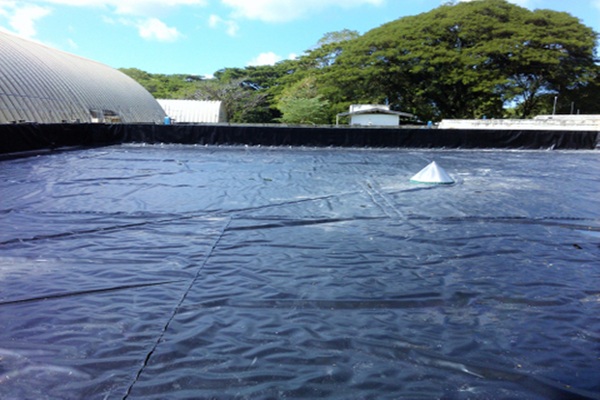
Among the different geomembrane materials used in containment and waterproofing systems, HDPE geomembrane is one of the most frequently specified because it combines strong barrier performance with material stability in demanding field conditions. Rather than being preferred for a single feature, it is commonly selected because several performance characteristics work together in one material system.
HDPE geomembrane characteristic | Why it matters in practice |
Low permeability | Helps form a reliable barrier against liquid migration |
Chemical resistance | Performs well where stored or process liquids may be chemically aggressive |
UV resistance | Supports exposed installations in outdoor conditions |
Long-term durability | Contributes to stable performance over extended service periods |
The most important reason HDPE is widely used is that its inherent properties align well with real installation environments. It has very low permeability, which allows it to function as an effective barrier liner in projects where seepage control is essential. That barrier role becomes more dependable when paired with HDPE’s resistance to a wide range of chemicals, since many lining systems must perform in contact with wastewater, industrial liquids, leachate, or mineral-processing solutions.
Another major advantage is resistance to ultraviolet exposure. In many projects, liners are installed outdoors and may remain exposed during construction or throughout service life, so UV stability is not a minor detail but a practical requirement. HDPE is also valued for durability under long-term exposure, which is why it appears so often in infrastructure and environmental containment work where the liner is expected to remain functional for years rather than for short-term use. These material traits explain why HDPE is regularly associated with large-area, high-demand liner systems.
In practice, HDPE geomembrane is most often selected for projects that combine exposure, containment demands, and long service expectations. Common examples include landfill liner systems, reservoir liners, pond liners, wastewater treatment ponds, and mining liner applications such as heap leach pads or tailings-related facilities. These are all project types where the liner is not just an accessory but a core engineered layer.
A few application patterns stand out:
● Landfill and waste containment: chosen where long-term isolation and chemical resistance are central design requirements
● Reservoirs and pond liners: used where water retention and low seepage are essential
● Wastewater treatment ponds: applied where stored liquids require dependable separation from the ground
● Mining liner systems: used in facilities that handle process solutions or residual materials under demanding site conditions
HDPE remains prominent in project specifications because it offers a practical balance between performance consistency and service-life expectations. Engineers and project owners often need a liner material that can meet technical demands without introducing excessive complexity into large-scale containment work. HDPE fits that need well: it is widely recognized, commonly specified, and suitable for projects where repeatable material performance matters as much as the initial barrier function.
Its continued use across multiple sectors also reflects specification confidence. When a material has a long record in landfill, water, wastewater, and mining projects, it becomes easier to include in design standards, procurement documents, and engineered lining systems that prioritize durability and stable field performance.
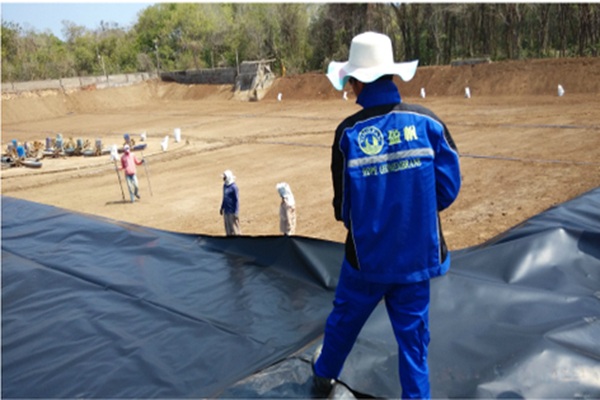
Choosing a geomembrane is not simply a matter of selecting a liner and installing it. The right choice depends on what the liner will contain, what conditions it will face in service, and how it will be specified and installed in the field. A geomembrane that performs well in one project may be unsuitable in another if the contained media, site environment, or installation demands are different.
Decision factor | What it affects |
Containment purpose and media | Chemical compatibility, hygiene requirements, and suitable liner type |
Site exposure and ground conditions | Weathering risk, deformation response, and interface with the subgrade |
Specification and installation requirements | Long-term integrity, seam quality, and resistance to puncture or movement |
The first consideration is what the geomembrane will actually contain. Potable water, wastewater, chemical solutions, solid waste leachate, and aquaculture water do not place the same demands on a liner. Clean-water storage projects may prioritize material suitability for water contact, while wastewater and industrial containment systems require stronger attention to chemical compatibility and long-term resistance to aggressive liquids. In waste-related applications, the liner must function reliably in contact with complex leachate and within a broader containment design.
This is why liner selection begins with the contained media rather than with thickness alone. A project that holds fish pond water, for example, is fundamentally different from one designed for mining solution management or sewage containment. The media determines what kind of barrier behavior, durability, and material performance the project will require over time.
The second major factor is the site itself. Geomembranes may be exposed to sunlight, temperature changes, wind, uneven support conditions, or long-term ground movement, and each of these affects how the liner should be chosen and detailed. UV exposure matters in outdoor installations, especially where the liner will remain uncovered for part or all of its service life. Temperature variation also matters because liner behavior can change with heat, cold, and daily thermal cycling.
Ground conditions are just as important. The quality of the subgrade, the presence of sharp objects, the slope of the installation area, and the likelihood of settlement all influence performance. A smooth, well-prepared base supports liner integrity, while poor subgrade preparation increases the risk of stress points or damage. Steeper slopes and irregular surfaces can also affect how the geomembrane is placed, anchored, and protected during service.
Even the right material can underperform if it is poorly specified or badly installed. Thickness matters because it affects resistance to puncture, handling demands, and suitability for different project conditions. Construction details such as seam welding, anchoring, and panel layout are equally important, since a geomembrane system depends on field continuity as much as on sheet properties.
Several practical requirements should be treated as part of selection, not as an afterthought:
● Thickness: should match expected loading, support conditions, and risk of damage during use
● Puncture resistance: becomes more important where the base is rough or the liner will face construction stress
● Seam welding quality: determines whether adjacent panels function as one continuous barrier
● Anchoring method: affects stability on slopes and around perimeters
● Installation control: influences whether the design intent is achieved in actual site conditions
Because geomembranes are welded and installed in the field, final performance depends on both product specification and construction execution.
Geomembranes are used for containment, separation, and waterproofing across many projects. This article covered their applications, core function, the value of HDPE geomembrane, and key selection factors. Choosing the right liner starts with project needs, and Shanghai Yingfan Engineering Material Co., Ltd. adds value through durable products and practical engineering support.
A: HDPE geomembrane is used for containment, seepage control, and waterproofing in landfills, ponds, reservoirs, and mining facilities.
A: HDPE geomembrane is often selected for its low permeability, chemical resistance, UV stability, and long service life.
A: Choose HDPE geomembrane or another liner based on contained media, site exposure, thickness requirements, and installation conditions.


