

Views: 0 Author: Site Editor Publish Time: 2026-03-02 Origin: Site


Why is HDPE geomembrane used in so many containment projects? This engineered liner helps stop liquid seepage and protect soil and water. In this article, you will learn what HDPE geomembrane is, where it is used, how to choose it, and what affects its performance in water, waste, mining, and aquaculture systems.
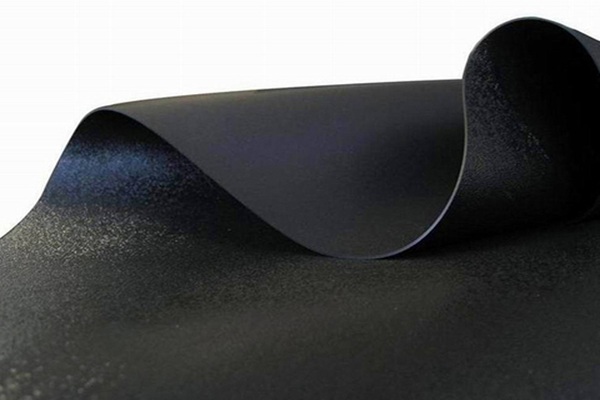
HDPE geomembrane is an engineered liner made mainly from high-density polyethylene resin, a polymer valued for its dense molecular structure and low permeability. In practical terms, this resin gives the sheet its ability to act as a long-lasting barrier in projects where leakage control matters, such as ponds, reservoirs, landfills, and wastewater facilities. Rather than functioning like a general plastic film, it is produced as a technical geosynthetic material designed for demanding field conditions.
Its formulation usually includes more than just the base resin. Several additives are blended into the material to improve long-term performance under environmental stress:
● Carbon black helps protect the liner from ultraviolet exposure during outdoor use.
● Antioxidants and stabilizers slow down aging caused by heat, oxygen, and weather.
● Processing additives support more uniform production and consistent sheet quality.
This composition is one reason HDPE geomembrane is widely chosen for projects that require both containment and durability rather than simple surface waterproofing.
The main job of HDPE geomembrane is to block the movement of liquids and, in some systems, gases. Once installed over a prepared subgrade and joined by welded seams, it forms a continuous impermeable layer. That layer reduces seepage into the soil and helps prevent pollutants from reaching groundwater. In exposed applications, it also limits water loss from lined ponds, canals, or storage basins.
This is why HDPE geomembrane is used in anti-seepage systems instead of ordinary waterproof sheets. Standard waterproof materials may resist moisture, but they are not always designed for chemical contact, mechanical stress, large-scale welding, or decades of outdoor service. HDPE geomembrane is selected because it combines barrier performance with engineering reliability.
The performance of HDPE geomembrane comes from a combination of barrier efficiency, chemical resistance, and physical strength. These traits explain why it remains one of the most common liner materials in civil and environmental works.
Material characteristic | Why it matters in real projects |
Low permeability | Helps control liquid migration and reduce seepage loss |
Chemical stability | Resists acids, alkalis, oils, and other aggressive media |
UV resistance | Supports outdoor use under long-term sunlight exposure |
Tensile and puncture performance | Helps the liner withstand installation stress and site loading |
Durability in buried or exposed conditions | Makes it suitable for long service life in containment systems |
Because of this property profile, HDPE geomembrane is well suited to both exposed applications, such as aquaculture ponds and reservoirs, and buried systems, such as landfill liners and wastewater containment structures.
HDPE geomembrane is widely used in environmental protection projects because these systems must isolate liquids that could otherwise migrate into soil or groundwater. In landfill construction, it serves as a primary liner or cover component to control leachate movement and support long-term containment. In sewage treatment ponds, waste reservoirs, and industrial containment areas, it provides a stable barrier against seepage while tolerating chemically aggressive liquids and continuous moisture exposure. These applications demand more than basic waterproofing: they require a liner that can maintain integrity under pressure, weather exposure, and long service periods.
A reliable impermeable liner matters in these environments for three practical reasons. First, leakage control is essential for environmental compliance and site safety. Second, many contained liquids include salts, organics, acids, or other substances that can damage weaker materials. Third, repair after system failure is costly and disruptive, so long-term barrier performance is part of project risk control, not just material selection.
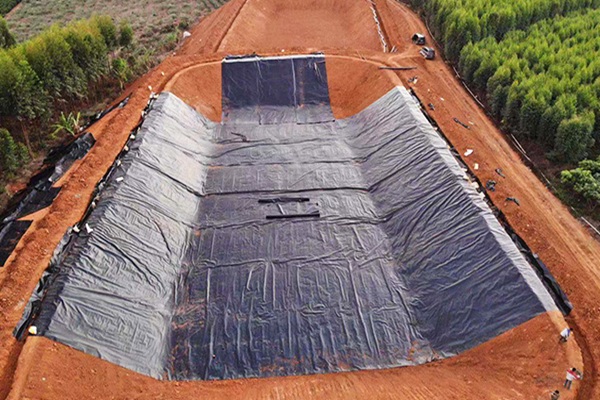
In water conservancy and civil engineering, HDPE geomembrane is used in reservoirs, irrigation canals, dams, and artificial lakes to reduce seepage loss and improve water retention. When water infrastructure depends on efficient storage or delivery, uncontrolled infiltration can reduce usable volume and weaken project efficiency. A geomembrane liner helps create a more predictable hydraulic system by separating stored water from the surrounding ground.
These projects also benefit from the material’s adaptability to large lined areas and variable site conditions. In canal systems, for example, lining helps reduce water loss during transport. In artificial lakes and landscape water bodies, it supports stable water levels and helps protect the designed structure of the basin.
Application area | Typical function of HDPE geomembrane |
Landfills and waste facilities | Controls leachate migration and supports containment |
Sewage and industrial ponds | Prevents seepage from contaminated liquids |
Reservoirs and canals | Reduces water loss and improves retention efficiency |
Dams and artificial lakes | Provides anti-seepage lining for stored water systems |
Mining and aquaculture ponds | Creates a durable barrier in exposed liquid-retention settings |
In mining projects, HDPE geomembrane is commonly used in tailings ponds and heap leach pads, where containment reliability is critical because stored liquids may contain process chemicals or dissolved metals. In aquaculture, it is used in fish ponds and shrimp ponds to reduce seepage, stabilize water conditions, and make pond management more controllable. These are often exposed applications, so the liner must perform under sunlight, changing temperatures, and ongoing contact with stored liquids, which explains why HDPE geomembrane is so common in liquid-retention environments.
Choosing the right HDPE geomembrane starts with surface type. A smooth geomembrane is generally preferred for flat or standard lining areas where the main goal is containment and the installation surface does not create unusual stability concerns. Its surface allows for efficient deployment in many reservoirs, ponds, and general anti-seepage systems, especially where slope movement is not a major design issue. By contrast, textured HDPE geomembrane is used when extra surface friction is needed. This makes it more suitable for side slopes, embankments, and other installations where slippage resistance becomes part of the design requirement rather than a secondary benefit.
The choice between smooth and textured material is not just about appearance. It directly affects how the liner interacts with adjacent soil, protective layers, and slope geometry. In practice, the surface profile should match the installation environment instead of being selected as a default feature.
Thickness selection depends on how much protection the project requires and how demanding the service environment will be. Thinner HDPE geomembranes are commonly used in lighter-duty applications such as fish ponds, shrimp ponds, small reservoirs, or landscape water features, where the containment function is important but the mechanical and chemical demands may be lower. Thicker geomembranes are more commonly specified for landfill liners, tailings ponds, wastewater facilities, and chemical containment projects, where puncture risk, load, and exposure to aggressive media are more severe.
The key is to treat thickness as a design response, not just a purchasing preference. A thicker liner can provide stronger puncture resistance and a larger safety margin, but increasing thickness without reference to site conditions may add cost without improving project efficiency. A practical specification should align liner thickness with both the engineering risk and the expected operating environment.
Project context | Common specification direction |
Fish ponds, shrimp ponds, small water features | Lighter thickness may be suitable when subgrade conditions are controlled |
Reservoirs, canals, and general water retention systems | Moderate thickness is often chosen for balanced durability and cost |
Landfills, wastewater ponds, mining, chemical containment | Heavier thickness is preferred where puncture, load, and chemical exposure are higher |
Steep slopes or unstable interfaces | Surface texture may be as important as thickness |
Several project conditions should shape the final specification. One is the type of contained substance. Clean water, wastewater, leachate, and mining solutions do not place the same demands on a liner, so chemical exposure must be considered early. Another is the condition of the site itself. Rough subgrades, sharp stones, settlement risk, and slope angle all influence whether a liner needs greater thickness, added protection, or a textured surface. Exposure conditions also matter. A geomembrane used in an exposed pond or canal must withstand sunlight and temperature variation differently from one buried beneath cover soil. Design service life should therefore be part of the specification process rather than an afterthought.
A practical screening list includes:
● what liquid or waste will be contained
● whether the installation area is flat or sloped
● how smooth or abrasive the subgrade is
● whether the liner will remain exposed
● how long the containment system is expected to perform
Standards help convert broad product claims into comparable technical requirements. ASTM-related test methods and GRI reference requirements are commonly used to evaluate properties such as thickness, density, tensile behavior, puncture resistance, oxidation resistance, and other performance indicators relevant to field use. They give designers and buyers a more objective way to judge whether a geomembrane is suitable for the intended application.
Product consistency matters for the same reason. Two liners may look similar in a quotation, but differences in raw material quality, additive control, and manufacturing stability can affect how reliably the material performs after installation. When comparing specifications, consistency in production is important because field performance depends not only on nominal thickness, but also on whether the sheet is manufactured to stable and repeatable quality levels.
Field performance depends heavily on how the HDPE geomembrane is installed, not only on the material itself. Panel layout affects stress distribution, overlap control, and how easily seams can be welded and tested. If panels are poorly aligned or placed without considering slope direction and site geometry, the liner system may develop unnecessary tension points or weak transition areas. Seam workmanship is especially important because the welded joint must perform as part of the continuous barrier, not as a secondary attachment.
Weak seams or poor installation can become the first path for leakage. In practice, even a high-quality geomembrane may fail to deliver reliable containment if welding conditions, surface preparation, or installer handling are inconsistent. This is why field performance is often tied as much to construction quality control as to product specification.
After installation, the liner remains vulnerable to damage from the supporting surface and from activity around the lined area. Geotextile underlayment or other protective layers are often needed when the subgrade contains stones, angular particles, or other features that may create localized stress. Protective layers are also useful when the liner will be covered with soil, aggregate, or other materials that could introduce puncture risk during placement.
Mechanical damage can also develop over time. Uneven settlement may stretch the liner in concentrated zones, while construction traffic or maintenance equipment can create abrasion or point loading if the surface is not adequately protected.
Field factor | Potential effect on liner performance |
Poor seam welding | Increased leakage risk at panel joints |
Rough or stony subgrade | Puncture or stress concentration |
Differential settlement | Local strain and deformation |
Construction traffic | Surface damage or abrasion |
Missing protective layer | Reduced resistance to installation-related damage |
Operating environment matters after the liner is in service. Long-term sunlight, temperature changes, chemical contact, water level fluctuation, and repeated wet-dry cycles can all influence field condition. A liner used in an exposed pond or industrial basin may face different aging patterns than one buried below cover material, so service conditions should always be considered as part of performance management.
Inspection and repair are part of maintaining containment performance because damage is not always visible during normal operation. Periodic checks help identify seam problems, localized wear, or puncture-related defects before they grow into larger leakage issues.
HDPE geomembrane is a specialized liner for reliable anti-seepage and containment work. This article explained what it is, where it is used, how to choose it, and what affects performance after installation. The best results come from matching material type and specification to real site needs. Shanghai Yingfan Engineering Material Co., Ltd. adds value with durable HDPE geomembrane solutions, stable quality, and practical project support.
A: HDPE geomembrane is a high-density polyethylene liner used to control liquid and gas migration.
A: HDPE geomembrane is used in landfills, reservoirs, wastewater ponds, mining pads, and aquaculture ponds.
A: Select HDPE geomembrane by surface type, thickness, chemical exposure, subgrade condition, and service life.


