

Views: 0 Author: Site Editor Publish Time: 2026-03-09 Origin: Site


Why do some lining projects last for decades while others fail early? The answer often starts with the material. Both HDPE geomembrane and PVC geomembrane are used for containment, but they serve different project needs. In this article, you will learn their key differences, where each one works best, and how to choose the right liner more confidently.
When people compare HDPE and PVC geomembranes, the real difference starts with how the two materials are built. HDPE geomembrane is made from high-density polyethylene, which gives the sheet a firmer structure and a more stable physical profile over time. PVC geomembrane, by contrast, is formulated to be softer and more pliable, so it can bend and adapt more easily during installation. This material contrast is not just a manufacturing detail. It affects how each liner behaves once it is placed on subgrade, exposed to weather, or required to hold water or waste over many years. In practice, the question is not simply which liner is stronger, but which material structure better matches the project’s demands.
A useful way to understand the difference is to think of HDPE as a material chosen for stability and resistance, while PVC is often chosen for ease of shaping and handling. Because HDPE has a denser composition, it is commonly associated with stronger resistance to chemicals, ultraviolet exposure, and long-term aging. PVC, on the other hand, stands out for its flexibility, especially where the liner must fit corners, curves, or uneven surfaces. That is why two projects with the same containment goal may still choose different liners: the material itself drives different performance priorities from the start.
Comparison Point | HDPE Geomembrane | PVC Geomembrane |
Material character | Dense and structurally stable | Soft and highly flexible |
Typical priority | Durability and resistance | Adaptability and easier fitting |
UV performance | Strong for outdoor exposure | More limited over long exposure |
Chemical resistance | Broad resistance range | Good, but more application-dependent |
Service life focus | Long-term containment use | More suited to projects needing flexibility |
These differences become more visible in real projects. HDPE is often selected where the liner must remain reliable under chemical contact, sunlight, or longer service periods, such as containment ponds or engineered environmental works. PVC tends to be more practical where installation conditions are complicated and the liner must conform closely to the site. Neither choice is automatically better. The main difference is that HDPE is usually specified for performance endurance, while PVC is more often selected for installation adaptability.
Key selection signals often follow that same pattern:
● Choose HDPE when the project places greater value on long-term resistance, structural integrity, and service life.
● Choose PVC when the project involves tighter geometry or needs a liner that is easier to position over irregular layouts.
● Compare the liner’s intended job first, because the material structure usually determines which strengths matter most in the field.
In many lining projects, the choice is not simply about whether a barrier can hold liquid. It is about whether that barrier can keep performing after years of exposure, pressure, and environmental stress. That is where HDPE geomembrane usually shows a clearer advantage. It is more often specified for projects that are expected to stay in service for a long time and where seepage control cannot be allowed to weaken after a short operating cycle. In these cases, decision-makers are usually less concerned with short-term installation convenience and more concerned with stable containment performance over the full life of the facility.
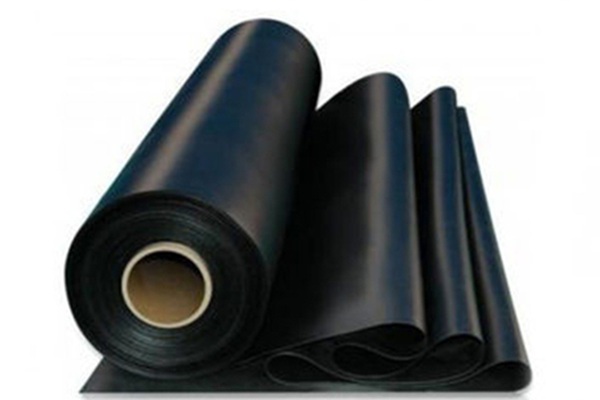
The strongest fit for HDPE is in engineered containment systems where the liner is part of a long-life infrastructure plan. Landfill lining is one clear example, because the barrier must isolate waste and leachate over an extended period rather than for a single operating season. The same logic applies to wastewater ponds, reservoirs, and mining containment areas such as tailings facilities or leach-related ponds. In each of these settings, the liner is expected to function as a dependable anti-seepage layer under conditions that may involve chemical contact, standing liquid, or continuous outdoor exposure. A material used in these projects must support the long-term operating goal of the site, not merely the initial installation target.
HDPE is also closely associated with aquaculture and water-retention work, which makes it highly relevant to customer-facing applications such as fish ponds, shrimp ponds, and aquaculture tanks. In these projects, the liner is not just preventing water loss. It also helps create a cleaner and more controlled holding environment over repeated use cycles. For pond systems that are exposed to sunlight, varying water conditions, and seasonal operation, a more stable liner category is often preferred because replacement or major repair can interrupt production. This is one reason HDPE pond liners are commonly discussed in relation to aquaculture development, especially where operators want a lining system that supports longer-term pond use rather than a short-duration or decorative installation.
Project type | Why HDPE is often preferred |
Landfill lining | Supports long-term containment where seepage control is critical |
Wastewater ponds | Better suited to continuous service in managed liquid containment |
Reservoirs and canals | Works well in projects requiring durable water retention over time |
Mining containment | Common in facilities where reliability matters under demanding operating conditions |
Fish and shrimp ponds | Fits aquaculture uses that need stable pond lining for repeated outdoor service |
Another area where HDPE has the clearer advantage is in outdoor projects that must handle harsher exposure conditions over time. This includes sites with strong sunlight, open-air weathering, and demanding subgrade environments where the liner is expected to remain in use for years. The point here is not simply that HDPE performs well in laboratory terms, but that it aligns more naturally with projects where long outdoor service is built into the design expectation. Reservoir embankments, exposed pond systems, remote containment areas, and similar installations often favor HDPE because the project profile itself calls for a liner that can stay reliable without frequent intervention. In that sense, HDPE is often selected not because it is universally better, but because these tougher project conditions make it the more suitable long-term fit.
PVC geomembrane becomes a more practical option when the project layout itself is the main challenge. In smaller installations or sites with more detail, the liner often needs to follow corners, curves, pipe penetrations, edge transitions, or uneven shapes without creating unnecessary difficulty during placement. In that kind of work, PVC is often easier to manage because it bends and adjusts more readily. The advantage here is not about making a broader claim that PVC is better overall, but about recognizing that some layouts demand a liner that can conform quickly and cleanly to the shape of the site.
Projects with irregular geometry usually require more than basic sheet coverage. A liner may need to wrap around tight corners, sit neatly against side slopes, or adapt to a base that is not perfectly uniform. In these conditions, PVC can be easier to use because it is more naturally suited to detailed fitting. That makes it a practical choice for smaller ponds, decorative water features, narrow channels, or other layouts where close conformity matters more than broad-area coverage.
Layout condition | Why PVC may be easier to use |
Corners and curves | Adapts more easily to directional changes |
Uneven or irregular shapes | Fits detailed surfaces with less resistance |
Smaller lined areas | Simpler to position and adjust during placement |
Penetrations and edge details | More workable around localized layout features |
PVC can also make more sense when field handling is a priority from the beginning. Some projects are less concerned with building a heavy-duty containment system and more focused on getting the liner placed efficiently, especially in sites where manual adjustment, folding, and repositioning are part of the installation process. In these cases, a softer liner can reduce handling difficulty for crews and make fitting more straightforward on site. This is especially relevant in projects where the liner must be aligned carefully over a detailed footprint and where easier placement is more valuable than choosing the stiffest sheet option. The decision, then, is often shaped by how the material behaves during installation rather than by broad technical comparisons outside the scope of layout and fitting.
Choosing between HDPE and PVC geomembrane becomes much easier when the decision follows a practical order. Many buyers start by comparing thickness, price, or general product claims, but that usually leads to confusion because the right liner depends first on what the project is actually designed to do. A fish pond, a wastewater pond, a landfill cell, and a mining containment area may all use geomembranes, yet they do not place the same demands on the liner. The most reliable approach is to begin with the application itself, then move to service expectations and installation realities, and only after that compare cost. That sequence keeps the choice tied to project needs instead of surface-level product differences.
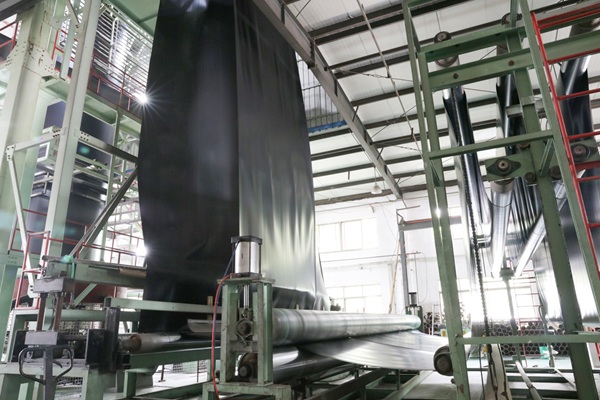
The first step is to define the working environment as clearly as possible. If the project is a pond, reservoir, canal, wastewater facility, landfill, mining site, or another containment use, that category already points toward a different baseline for liner selection. A decorative or small-scale pond does not impose the same requirements as a landfill liner or a tailings containment system. Likewise, aquaculture ponds and water-retention projects often prioritize stable anti-seepage performance over time, while some smaller lined areas may give more weight to fitting convenience. Starting with the project type helps narrow the comparison immediately, because it anchors the material choice to function rather than preference.
Once the application is clear, the next step is to balance expected years of use against the practical demands of installation. Some projects are built for long operating cycles and cannot easily tolerate liner replacement or frequent repair. Others are less demanding in service but require a material that is easier to place across corners, edges, or irregular shapes. This is where the decision becomes more realistic. Instead of asking which liner is “better” in general, it is more useful to ask whether the site needs a liner built for longer service or one that is easier to fit during construction. That shift in perspective usually leads to a more accurate specification.
Decision factor | What to ask |
Project category | Is the liner for aquaculture, water storage, wastewater, landfill, mining, or another containment use? |
Service expectation | Is the project expected to stay in operation for many years without major liner replacement? |
Installation conditions | Does the layout include curves, corners, penetrations, or uneven surfaces that complicate fitting? |
Budget evaluation | Is the project focused only on purchase price, or on total cost over time? |
Cost should come last because the cheapest sheet at purchase is not always the most economical choice over the life of the project. A lower initial price may look attractive, but it does not automatically account for installation effort, maintenance needs, or the operational impact of earlier replacement. A more useful way to compare cost is to view it as a lifecycle issue: what the liner costs to buy, what it costs to install properly, and what it may cost later if repairs or replacement become necessary. This matters even more in containment and pond-lining work, where downtime, drainage, or reconstruction can add expenses that are far greater than the original material difference.
The difference between HDPE and PVC geomembrane comes down to material behavior, project fit, and long-term use. HDPE geomembrane is often the better choice for demanding, longer-life lining projects, while PVC works well where flexibility and easier installation matter more. The right liner depends on the job itself. Shanghai Yingfan Engineering Material Co., Ltd. adds value by providing durable HDPE geomembrane solutions and practical technical support for real containment needs.
A: HDPE geomembrane is better for long-life, high-resistance containment; PVC suits flexible, detailed layouts.
A: HDPE geomembrane is commonly used in landfills, reservoirs, wastewater ponds, mining, and aquaculture lining.
A: HDPE geomembrane usually needs more controlled seaming, while PVC is easier on complex shapes.
A: Compare HDPE geomembrane and PVC by project type, installation conditions, and lifecycle cost.


