

Views: 0 Author: Site Editor Publish Time: 2026-03-13 Origin: Site


Many liners look similar at first, but the wrong choice can cause costly problems later. Buyers often compare LLDPE and HDPE geomembrane when planning ponds, containment systems, or water projects. In this article, you will learn their real differences and how to choose the right material for your specific application.
Selecting between LLDPE and HDPE geomembrane starts with understanding that they belong to the same polyethylene family but behave differently once installed in real containment systems. The difference is not simply “soft versus hard.” It affects how the liner reacts to subgrade irregularities, mechanical stress, chemical exposure, and long service periods outdoors. In practice, the choice often depends on whether a project needs a liner that can adapt to movement and uneven surfaces or one that can maintain a more rigid, high-strength barrier under demanding conditions.
The core distinction lies in molecular arrangement and density. HDPE has a more tightly packed, highly crystalline structure, which gives it greater density and a firmer physical profile. LLDPE has more branching in its polymer structure, resulting in lower density and a material that bends and stretches more easily. These structural differences influence performance from the moment the geomembrane is unrolled on site.
For engineers and buyers, this means the material decision is tied to job conditions rather than product category alone. A denser structure typically supports higher stiffness and stronger chemical resistance, while a less rigid structure improves adaptability when the liner must conform to uneven ground, curved surfaces, or areas with minor settlement.
Property | HDPE Geomembrane | LLDPE Geomembrane |
Density | Higher | Lower |
Molecular behavior | More crystalline and tightly packed | More branched and flexible |
Barrier profile | Rigid and stable | Adaptable and conformable |
Tensile behavior | Higher strength at load | Higher stretch before failure |
Typical fit | Engineered, high-demand containment | Uneven terrain and flexible lining |
Flexibility is often the first visible difference on site. LLDPE can stretch over irregular surfaces with less risk of creating localized stress points, which makes it useful for ponds, canals, and other projects where the base is not perfectly uniform. Its higher elongation also helps it absorb movement caused by settlement or thermal change. HDPE, by contrast, is much stiffer. That rigidity is valuable when the design calls for a more structurally stable liner with strong tensile performance and dependable shape retention under load.
A practical way to think about it is this:
● LLDPE favors conformity and movement tolerance.
● HDPE favors strength and structural control.
● The more complex the terrain, the more flexibility becomes a material advantage.
● The more demanding the containment environment, the more stiffness can matter.
Durability becomes more important as exposure conditions become harsher. Both materials provide strong impermeable performance, but HDPE is more commonly selected where aggressive chemicals, extended UV exposure, and longer design life are central requirements. Its structure helps it maintain long-term barrier performance in applications such as landfill liners, wastewater containment, and mining-related systems. LLDPE still offers good resistance, but its main advantage lies more in flexibility than in maximum long-term resistance under the harshest exposure conditions.
Choosing between LLDPE and HDPE is most useful when the decision starts with the project environment rather than with a general idea of which liner is “better.” Both materials are used in containment and anti-seepage systems, but they solve different field problems. The real question is whether the liner must adapt to movement and irregular geometry or maintain stronger long-term performance in a more engineered containment setting. That distinction explains why the same geomembrane is not ideal for every pond, canal, landfill, or reservoir.
LLDPE is often the better option where flexibility drives performance. On irregular terrain, the liner has to follow curves, grade changes, and uneven surfaces without creating too much localized stress. This makes LLDPE well suited to decorative ponds, agricultural ponds, aquaculture ponds, and canal lining projects where the subgrade may be softer or less uniform. In these settings, a more flexible geomembrane can sit closer to the base material and adapt better to minor settlement over time.
This is especially relevant in projects where the shape is not highly standardized. Farm ponds, small irrigation canals, and landscaped water features often include bends, changing depths, and slopes that are not as tightly engineered as industrial containment systems. A liner that stretches more easily is usually easier to install in those layouts and is less likely to fight the geometry of the site. That is why LLDPE is commonly associated with lower-intensity water containment rather than high-risk environmental isolation.
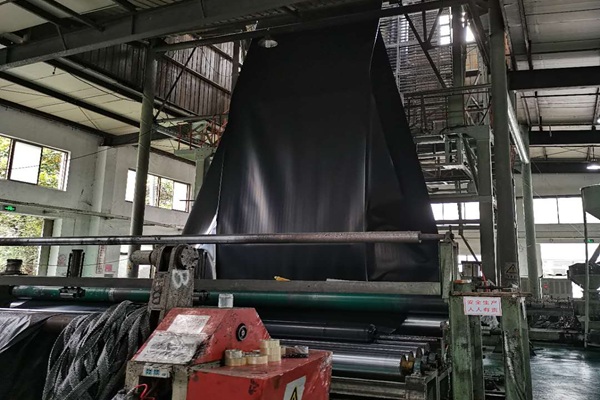
Where long-term containment reliability is the main requirement, HDPE geomembrane is more commonly selected. Its typical use cases include landfill liners, wastewater ponds, large reservoirs, mining containment, and other engineered systems where the liner is expected to perform under more demanding mechanical, chemical, or environmental conditions. In these applications, strength, chemical resistance, and service life often matter more than the ability to conform to an irregular base.
Application type | Material more often preferred | Main reason |
Decorative ponds and landscape water features | LLDPE | Better conformity to curves and irregular shapes |
Agricultural ponds and canal lining | LLDPE | More flexible on softer or uneven subgrades |
Aquaculture ponds | LLDPE or HDPE depending on design | Flexibility may help on irregular bases, while HDPE suits more engineered pond systems |
Landfill liners | HDPE | Stronger long-term containment and chemical resistance |
Wastewater ponds and reservoirs | HDPE | Better fit for engineered, long-life barrier systems |
Mining containment and tailings areas | HDPE | More suitable for high-demand containment environments |
In engineered facilities, the liner is usually part of a controlled design that includes prepared subgrade, defined loading conditions, and higher consequences of leakage. Under those circumstances, HDPE is favored because its performance profile aligns more closely with regulatory, durability, and containment priorities.
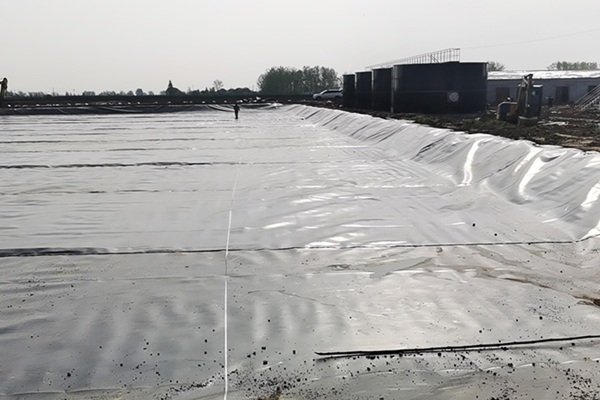
Many buyers assume the stronger material is automatically the safer choice, but that can lead to the wrong specification. A liner that performs well in a landfill is not automatically the best liner for a decorative pond or an irrigation canal. The more useful approach is to match the geomembrane to the field condition, the contained liquid, the design life, and the expected movement of the base.
A simple selection logic helps avoid that mistake:
● Choose by site condition first, not by product reputation.
● Treat flexibility as a functional requirement, not a secondary feature.
● Treat long-term containment performance as critical where leakage risk is high.
● Judge material suitability by application demands, not by abstract strength alone.
Installation differences between LLDPE and HDPE often affect project cost as much as the liner itself. Buyers sometimes compare only the sheet price, but geomembrane projects are built around transport limits, welding time, site conditions, labor skill, and quality control. In that context, a material that looks cheaper on paper may become more expensive once field work begins. For this reason, installation method is not a secondary detail; it is part of the material decision from the start.
LLDPE is generally easier to fold, move, and position on site because it is more flexible. That flexibility also makes factory prefabrication more practical, allowing larger panels to be prepared in controlled conditions before delivery. With fewer seams left for field work, installation can move faster and may face fewer weather-related interruptions. HDPE is stiffer, so it is less suitable for folding and large prefabricated handling. As a result, it more often depends on field welding, where seam quality is tied closely to equipment settings, crew experience, and site conditions.
Subgrade condition also changes the installation burden. HDPE usually performs best when the base is smooth, stable, and carefully prepared. Because the sheet is less forgiving, sharp stones, uneven areas, or sudden grade changes can create stress points during installation or service. LLDPE adapts more easily to complex surfaces, which can reduce preparation pressure in projects with irregular terrain or softer ground. This does not eliminate the need for a proper base, but it often makes installation more manageable where perfect site preparation is difficult to achieve.
Cost factor | LLDPE | HDPE |
Handling and positioning | Easier due to flexibility | More difficult due to stiffness |
Prefabrication potential | Higher | Lower |
Field welding demand | Usually lower | Usually higher |
Sensitivity to subgrade quality | More forgiving | More demanding |
Best cost fit | Smaller or irregular sites | Large, engineered long-term systems |
A useful cost comparison separates material price from installed cost. Raw resin pricing may favor one option at a given time, but the full budget also includes labor, welding equipment, field testing, transport efficiency, project duration, and possible repair work later. A liner that requires more seam work and tighter installation control can raise total cost even if the roll price is competitive. That is why procurement decisions based only on square-meter pricing often miss the real financial picture.
LLDPE may be the more economical choice in smaller projects, irregular layouts, or sites where prefabricated panels reduce field labor. HDPE geomembrane may offer stronger long-term value in large containment systems where service life, chemical exposure, and barrier reliability carry more weight than installation convenience. In other words, the cheaper option depends less on unit price and more on how the project is built and how long the liner is expected to perform.
Choosing between LLDPE and HDPE becomes easier when the decision follows a practical sequence instead of starting with product preference. Many projects fail at the specification stage because the liner is chosen by habit, price, or a general belief that the stronger material must always be safer. In reality, the right geomembrane depends on site conditions, exposure level, and the consequences of underperformance. A pond, canal, landfill, and wastewater basin may all require impermeable lining, but they do not impose the same demands on the material.
The first step is to define what the liner must do and what type of ground it must sit on. If the site includes uneven terrain, variable slopes, soft subgrades, or potential settlement, flexibility becomes a major requirement. In those situations, a liner that can conform to the surface without creating too much localized stress is often the better fit. If the site is smooth, engineered, and expected to remain stable, the decision can shift toward a material that offers greater rigidity and long-term structural consistency.
The function of the liner should also be stated clearly before comparing products. Some projects need a barrier mainly for water retention, while others need reliable isolation from aggressive liquids or regulated contaminants. That difference changes what matters most during selection.
Once the site is understood, the next step is to assess how demanding the operating environment will be over time. Design life is important because a short-term agricultural application does not require the same performance margin as a long-life environmental containment system. Exposure matters as well: chemical contact, direct sunlight, and repeated temperature changes can all influence which geomembrane is more appropriate. The higher the exposure level and the greater the consequence of leakage, the more carefully long-term durability must be weighed.
Project factor | Selection focus |
Uneven or movement-prone ground | Favor flexibility and conformity |
Smooth, engineered base | Favor structural stability |
Lower-risk water retention | Prioritize installation fit and adaptability |
Higher-risk containment | Prioritize durability and long-term barrier performance |
Shorter design life | Balance performance with installation efficiency |
Longer design life | Emphasize resistance to aging and exposure |
After those factors are defined, the material choice becomes more straightforward. LLDPE is usually the better fit for pond and canal applications on irregular terrain where the liner must adapt to the shape of the site. HDPE is more commonly selected for landfill liners, reservoirs, wastewater ponds, and other engineered anti-seepage applications where stronger long-term containment performance is required. The key is not to ask which geomembrane is better in general, but which one is better for the actual demands of the project.
Neither LLDPE nor HDPE is always the better choice. LLDPE suits flexible applications, while HDPE fits tougher containment projects. The best result comes from matching material properties to site conditions, installation needs, and project goals. Shanghai Yingfan Engineering Material Co., Ltd. provides HDPE geomembrane solutions with strong durability, anti-seepage performance, and technical support for practical project value.
A: Yes. HDPE geomembrane usually offers higher stiffness, tensile strength, and chemical resistance.
A: HDPE geomembrane is better for landfills, wastewater ponds, reservoirs, and mining containment.
A: Choose LLDPE when HDPE geomembrane flexibility is less important than conformity on uneven ground.


