

Views: 0 Author: Site Editor Publish Time: 2026-07-10 Origin: Site


Nothing drains a property budget faster than a failing gravel driveway. Deep ruts, vanishing aggregate, and chronic regrading quickly turn a simple access road into a frustrating maintenance nightmare. Property owners often pour fresh rock onto sinking driveways year after year. They hope the next layer will finally hold. It rarely does.
The hidden variable behind long-term driveway stability usually lies beneath the surface. Selecting the correct subgrade stabilization fabric dictates whether your base rock stays rigid or sinks endlessly into the mud. Many contractors skip this crucial step or choose the wrong material entirely.
This article provides an evidence-based comparison between woven and nonwoven geotextiles. We will explore the exact engineering mechanics behind load distribution and soil separation. By understanding these concepts, contractors and property owners can make definitive, spec-driven purchasing decisions for their next project.
Primary Function: Woven fabrics excel at soil separation and load distribution; nonwoven fabrics prioritize filtration and multi-directional drainage.
The Default Choice: For 90% of standard driveway stabilization projects, woven geotextile is the engineering standard to prevent aggregate from sinking into the subgrade.
Heavy-Duty Spec: A woven 600g/m² geotextile provides commercial-grade tensile strength, making it ideal for high-traffic or heavy-equipment driveways.
Implementation Warning: Fabric is only as effective as the installation—improper overlap or using overly sharp angular rock directly on the fabric without a buffer can cause system failure.
Understanding driveway failure requires looking underground. Subgrades fail due to a physical process called pumping. Heavy vehicle loads press down on the gravel layer. Simultaneously, moisture trapped in the native clay or soil pushes upward. These opposing forces force the materials to blend. You soon find soft mud mixing directly into your expensive crushed stone.
The solution requires introducing a permanent physical barrier. A proper soil separation geotextile stops this destructive mixing process completely. It acts as an unbreakable shield between the soft native subgrade and your imported road base. The fabric locks the rock in place. It prevents aggregate from migrating downward under heavy tire pressure.
You must weigh the upfront cost against long-term financial impacts. Purchasing quality fabric requires an initial investment during construction. However, skipping the fabric guarantees compounding costs later. Annual gravel replacement becomes mandatory. Grading labor expenses add up quickly over a few seasons. Investing in strong fabric eliminates these recurring repairs.
A stabilized subgrade creates a bridging effect over weak soils. It spreads the weight of heavy vehicles over a much wider surface area. This distribution drastically reduces the focused point-load pressure beneath vehicle tires. You maintain a smooth, rigid surface regardless of the weather conditions above.
Contractors constantly debate between woven and nonwoven materials. You must understand how manufacturers construct each type to make the right choice. Both materials utilize tough synthetic polymers. They serve very different primary functions in construction.
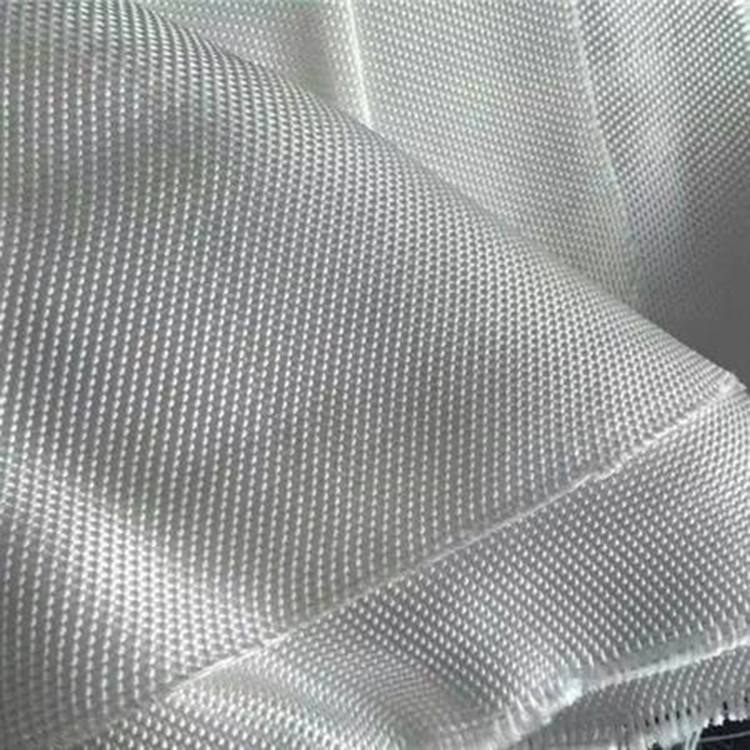
Manufacturers create woven fabrics by weaving slit-film or monofilament plastic yarns together on massive industrial looms. The resulting material resembles the tight, rigid structure of a heavy-duty tarp. This tight weave pattern provides massive structural advantages.
The primary advantage is exceptionally high tensile strength. Woven fabrics experience minimal stretching under intense vehicle loads. They span weak soils effortlessly. They create a rigid, drum-like effect across your driveway subgrade. This makes them the definitive choice for foundational support.
The major drawback involves lower permeability. Water passes through the tight weave slowly. If you have poor surface grading, heavy rains can cause pooling on top of the fabric. Proper driveway crowning remains essential when using woven materials.
Nonwoven materials undergo a completely different manufacturing process. Factories take synthetic fibers and needle-punch them together mechanically. The finished product looks and feels much like a thick sheet of felt. It features a porous, three-dimensional structure.
This felt-like construction offers high water flow rates. Permeability is its biggest strength. It provides excellent filtration capabilities. Nonwoven fabrics allow water to pass rapidly while preventing fine soil particles from clogging surrounding drainage systems.
The disadvantage lies in elongation. Nonwoven fabrics stretch significantly under pressure. They yield when heavy tires roll over them. This higher elongation means they offer far less structural reinforcement for heavy wheel loads compared to their woven counterparts.
Feature | Woven Geotextile | Nonwoven Geotextile |
|---|---|---|
Manufacturing | Slit-film or monofilament yarns woven together | Needle-punched synthetic fibers (felt-like) |
Tensile Strength | Exceptionally High | Moderate to Low |
Permeability | Low (Slow water flow) | High (Rapid water flow) |
Elongation (Stretching) | Minimal (Rigid support) | High (Stretches under load) |
Primary Application | Soil separation and structural load distribution | Subsurface drainage and soil filtration |
Selecting the right material requires analyzing your specific site conditions. No single fabric works perfectly for every scenario. You need a systematic approach to evaluate your property. Here is a framework to guide your decision-making process.
Your native soil type dictates the primary mechanism of failure. Soft, rut-prone clay or loamy subgrades lack natural bearing capacity. Load distribution becomes the critical failure point here. You must specify woven materials for these weak soils. They prevent the heavy rock from pushing into the soft mud below.
You should specify nonwoven only under specific moisture conditions. Use it if your primary goal involves subsurface drainage. For example, French drains flanking the driveway require nonwoven fabric. It also works if the driveway sits in a constant state of saturation. Rapid vertical permeation becomes more critical than rigid strength in those rare scenarios.
You must calculate the anticipated axle weights traversing the driveway. Daily traffic volume multiplies the stress placed on the subgrade. Light passenger vehicles require standard tensile strength. Most mid-grade fabrics handle standard residential cars easily.
Heavy agricultural and construction equipment present a different challenge. Dump trucks, tractors, and delivery vans exert massive point loads. You need a heavy-duty gravel driveway fabric engineered for high-stress applications. Always match your fabric tensile strength to the heaviest vehicle expected on the property.
The type of stone you use impacts the fabric directly. Puncture resistance is a vital specification. Sharp, large-diameter crushed rock acts like a collection of tiny knives under pressure. Smooth river rock poses less risk but shifts easily.
Angular base rock requires a strong road base fabric with high puncture and burst strength metrics. Weak fabrics will tear instantly when a heavy truck drives over sharp stones. Check the manufacturer technical data sheets. Ensure the burst strength aligns with your chosen aggregate size.
Sometimes standard residential materials fall short. Extreme environments demand maximum structural integrity. This is where heavy-duty commercial specifications enter the conversation. You must know when to upgrade your materials.
You will often see fabric weights listed in grams per square meter. A woven 600g/m² geotextile represents a massive leap in structural capacity. It translates to a highly dense, exceptionally thick barrier.
This weight class provides commercial-grade durability. It offers massive burst resistance against large, sharp angular rocks. The thick polymer weave resists stretching completely. It creates an unyielding bridge over the softest ground imaginable.
You should not use this heavy specification for simple garden paths. It belongs in environments demanding extreme performance. Consider this spec for the following scenarios:
Commercial staging areas where semi-trucks turn their wheels frequently.
Logging roads supporting massive timber loads over muddy terrain.
High-traffic agricultural driveways accommodating tracked tractors and heavy harvesters.
Construction site access roads experiencing constant heavy equipment traffic.
Sites with exceptionally poor subgrades exhibiting a California Bearing Ratio (CBR) of less than 3.
This heavy-duty specification carries a higher upfront material cost. Many property owners hesitate at the price tag. You must balance this initial expense against the zero-maintenance expectation. Heavy-load environments destroy standard fabrics quickly. Once standard fabric tears, your road base sinks.
Using a 600g/m² fabric guarantees structural permanence. You eliminate the need for future road rebuilding. You stop buying replacement gravel entirely. The driveway stabilization benefits pay for the upgraded fabric within the first two harsh winters.
Purchasing premium material only solves half the problem. A world-class woven geotextile fails quickly if installed incorrectly. Contractors often make critical errors during placement. You must follow strict engineering guidelines to protect your investment.
Fabric rolls have limited widths. You must place multiple rolls side-by-side to cover a standard driveway. The seams represent the weakest points in your stabilization system. Mud will pump up through any gaps between the sheets.
You must maintain proper overlap mechanics. Detail the necessity of 12-to-18-inch overlaps at all longitudinal and transverse seams. If you are building over exceptionally soft soils, increase that overlap to 24 or 36 inches. Never skimp on the overlap. It ruins the integrity of the entire barrier.
Synthetic polymers possess incredible strength underground. However, they share a common enemy above ground. Ultraviolet light from the sun degrades the plastic yarns rapidly. Extended sunlight exposure turns the strongest woven materials brittle.
Never leave the fabric exposed to sunlight for prolonged periods. You must cover it promptly. Coordinate your gravel delivery with your fabric installation. Ensure the material receives its aggregate cover within a few days to prevent irreversible UV breakdown.
How you place the rock matters immensely. Many inexperienced operators ruin the fabric immediately during the gravel delivery phase. You must adhere to strict aggregate placement rules.
Avoid direct dumping: Advise operators against dropping heavy loads of sharp base rock directly onto the fabric from a high dump truck bed.
Do not drive on bare fabric: Never allow heavy delivery trucks to drive over the exposed material.
Push the gravel: Dump the rock at the edge of the installed fabric. Use a skid steer to gently push the gravel out smoothly over the material.
Maintain a buffer: Keep at least six inches of rock between your machine tracks and the fabric at all times to prevent tearing.
Choosing the correct subgrade material dictates the lifespan of your access roads. Woven fabric remains the definitive choice for driveway stabilization and soil separation. It stops subgrade pumping and distributes heavy axle loads efficiently. Nonwoven materials belong in drainage-first applications where water flow matters more than structural rigidity.
Your success depends entirely on proper specification and installation. Skipping the separation layer guarantees chronic rutting and endless maintenance bills. High-weight woven specifications offer unparalleled longevity for challenging soils and heavy equipment.
Take action before your next gravel delivery. Calculate your driveway square footage carefully. Add a 15% surplus to ensure you have enough material for proper seam overlaps. Consult the manufacturer technical data sheets to verify the tensile and puncture strengths. A little upfront calculation ensures your gravel stays exactly where you put it for decades.
A: No. Weed barrier landscape fabrics lack the tensile and puncture strength required to support vehicular loads and will tear instantly under gravel.
A: Most woven driveway fabrics are bidirectional and perform identically on either side, unless a specific technical coating is noted by the manufacturer.
A: Yes, but at a slower rate than nonwoven. Driveways using woven fabric must be crowned or graded properly to encourage surface runoff rather than relying entirely on vertical drainage.
A: Generally under 4 to 8 inches of compacted base rock, depending on the anticipated load and soil conditions, to ensure the fabric is protected from tire friction and UV exposure.


