| Availability: | |
|---|---|
100-800g/m2
Yingfan
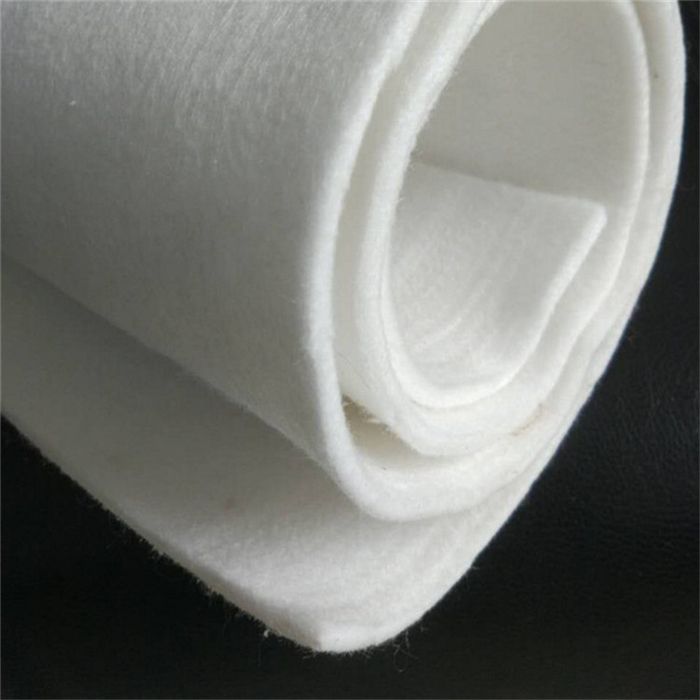
Yingfan’s Filament 300g/m² Geotextiles is a premium nonwoven engineering material designed for filtration, isolation, and reinforcement in landscape, civil, and environmental projects. Made from 100% virgin polyester/polypropylene spunbond continuous filaments, this product is manufactured via needle-punching technology, which entangles fibers to form a dimensionally stable, high-strength fabric. With a weight range of 100-800g/m², it balances flexibility and durability, making it suitable for both small-scale landscape projects (e.g., garden paths) and large-scale engineering (e.g., dam reinforcement). Key features include UV resistance, chemical resistance, and breathable permeability, ensuring optimal performance in diverse environments. As a trusted brand in geosynthetics, Yingfan delivers consistent quality for projects requiring reliable soil protection and structural enhancement.
Test Item | Specifications | Unit |
Mass per Unit Area | 100-800 (standard: 300) | g/m² |
Material | 100% Virgin Polyester (PET) / Polypropylene (PP) | - |
Manufacturing Process | Spunbond continuous filament + double-sided needle-punching | - |
Break Strength (MD/CD) | 8-30 / 6-25 | kN/m |
Break Elongation | 30-100 | % |
CBR Burst Strength | 1.0-3.5 | KN |
Tear Resistance | 0.15-0.5 | KN |
UV Resistance | ≥90% retention of strength after 500h UV exposure | - |
Width | 1-8 (customizable) | m |
Length | 50-100 (customizable) | m/roll |
Fiber Type: Spunbond continuous filaments (length ≥50mm), ensuring higher tensile strength than staple fiber geotextiles.
Needle-Punching Technology: Double-sided entanglement creates a dense, sturdy fabric that resists fraying and deformation.
Additives: UV stabilizers and anti-aging agents, enhancing durability in outdoor applications.
Environmental Friendliness: Non-toxic, recyclable, and chemical-free, safe for soil, plants, and aquatic ecosystems.
The porous structure of the filament geotextile allows water and gas to pass freely while trapping soil particles (0.02-0.05mm), preventing soil erosion and clogging of drainage systems. It is ideal for use as a filtration layer in dykes, river canals, and retaining walls.
Effectively separates materials of different particle sizes (e.g., railway ballast and subgrade soil, dam core and shell materials), preventing mixing and maintaining structural integrity. This reduces settlement and extends the service life of infrastructure.
The continuous filament structure provides a break strength of 8-30 kN/m, enabling the geotextile to withstand installation stresses (e.g., dragging, stretching) and operational loads (e.g., soil pressure, water flow). Its tear resistance (0.15-0.5 kN) prevents damage from sharp objects.
Formulated with UV stabilizers, the product retains 90% of its strength after 500 hours of UV exposure, resisting degradation from sun, rain, and extreme temperatures. It is also resistant to acids, alkalis, and organic solvents, adapting to aggressive environments like coastal areas or industrial sites.
The permeable fabric maintains soil moisture balance, allows air and nutrients to reach plant roots, and promotes healthy growth—making it perfect for landscape projects such as garden paths, green roofs, and planting areas.
Lightweight (300g/m²) and flexible, the geotextile is easy to cut, lay, and install without specialized equipment. Its durability minimizes maintenance costs, and the customizable weight/length options reduce material waste.
Dykes, river canals, and coastal slopes: Filter soil particles, protect embankments from erosion.
Retaining walls and drainage ditches: Prevent clogging of drainage pipes while allowing water flow.
Railway and highway subgrades: Separate ballast from soil, reduce subgrade settlement.
Airport pavements and parking lots: Isolate surface layers from the foundation, enhancing stability.
Dam construction: Separate different dam materials (e.g., clay core and rockfill), preventing mixing.
Soil-stone dams and breakwaters: Distribute earth stress, prevent lateral displacement of soil.
Slope protection: Stabilize steep slopes, reduce erosion, and support vegetation growth.
Highway/railway expansion: Reinforce soft soil foundations to bear heavy traffic loads.
Garden paths, patios, and softscapes: Control weeds, retain soil moisture, and protect plant roots.
Green roofs and vertical greening: Filter water, isolate substrate layers, and promote plant growth.
Agricultural fields and greenhouses: Improve soil structure, reduce erosion, and enhance crop yields.
Production Standards: Complies with ISO 9001 quality management system and geotextile industry standards (GB/T 17638-2017).
Material Quality: 100% virgin polyester/polypropylene, no recycled fibers, ensuring consistent performance.
Safety: Chemical-free, non-toxic, and eco-friendly, no harmful impacts on soil, water, or wildlife.
Site Preparation: Clear the area of debris, stones, and weeds; level the soil to ensure a smooth base.
Laying: Unroll the geotextile flat, ensuring tight contact with the substrate. Overlap adjacent rolls by 10-15cm to avoid gaps.
Fixing: Secure edges with stakes, gravel, or soil to prevent displacement from wind or water. For slope applications, use anchor pins every 1-2 meters.
Covering: Add soil, gravel, or vegetation on top immediately after installation to protect the geotextile from UV exposure.
Inspect regularly for tears, punctures, or loose edges; repair small damages with geotextile patches and adhesive.
Avoid dragging heavy machinery or sharp tools over the fabric.
For long-term storage, keep rolls in a dry, shaded area to prevent moisture and UV damage.
Filament geotextiles use continuous long fibers, offering higher tensile strength, tear resistance, and durability than staple fiber (short fiber) geotextiles, making them suitable for engineering projects requiring long-term stability.
Yes, we offer customization from 100g/m² to 800g/m², and heavier options via special order to meet high-strength requirements.
Absolutely, its water-permeable and corrosion-resistant properties make it ideal for underwater filtration and isolation (e.g., riverbank protection, underwater slopes).
With UV treatment and virgin materials, the service life is 8-12 years under normal conditions; it can be extended with proper maintenance (e.g., timely covering with soil/vegetation).
Elevate your project’s filtration, isolation, and reinforcement performance with Yingfan’s Filament 300g/m² Geotextiles! Whether you’re working on landscape design, civil engineering, or environmental protection, our product delivers reliability and cost-effectiveness. Contact us today to get a free quote, technical consultation, or sample test.


Yingfan’s Filament 300g/m² Geotextiles is a premium nonwoven engineering material designed for filtration, isolation, and reinforcement in landscape, civil, and environmental projects. Made from 100% virgin polyester/polypropylene spunbond continuous filaments, this product is manufactured via needle-punching technology, which entangles fibers to form a dimensionally stable, high-strength fabric. With a weight range of 100-800g/m², it balances flexibility and durability, making it suitable for both small-scale landscape projects (e.g., garden paths) and large-scale engineering (e.g., dam reinforcement). Key features include UV resistance, chemical resistance, and breathable permeability, ensuring optimal performance in diverse environments. As a trusted brand in geosynthetics, Yingfan delivers consistent quality for projects requiring reliable soil protection and structural enhancement.

Test Item | Specifications | Unit |
Mass per Unit Area | 100-800 (standard: 300) | g/m² |
Material | 100% Virgin Polyester (PET) / Polypropylene (PP) | - |
Manufacturing Process | Spunbond continuous filament + double-sided needle-punching | - |
Break Strength (MD/CD) | 8-30 / 6-25 | kN/m |
Break Elongation | 30-100 | % |
CBR Burst Strength | 1.0-3.5 | KN |
Tear Resistance | 0.15-0.5 | KN |
UV Resistance | ≥90% retention of strength after 500h UV exposure | - |
Width | 1-8 (customizable) | m |
Length | 50-100 (customizable) | m/roll |
Fiber Type: Spunbond continuous filaments (length ≥50mm), ensuring higher tensile strength than staple fiber geotextiles.
Needle-Punching Technology: Double-sided entanglement creates a dense, sturdy fabric that resists fraying and deformation.
Additives: UV stabilizers and anti-aging agents, enhancing durability in outdoor applications.
Environmental Friendliness: Non-toxic, recyclable, and chemical-free, safe for soil, plants, and aquatic ecosystems.
The porous structure of the filament geotextile allows water and gas to pass freely while trapping soil particles (0.02-0.05mm), preventing soil erosion and clogging of drainage systems. It is ideal for use as a filtration layer in dykes, river canals, and retaining walls.
Effectively separates materials of different particle sizes (e.g., railway ballast and subgrade soil, dam core and shell materials), preventing mixing and maintaining structural integrity. This reduces settlement and extends the service life of infrastructure.
The continuous filament structure provides a break strength of 8-30 kN/m, enabling the geotextile to withstand installation stresses (e.g., dragging, stretching) and operational loads (e.g., soil pressure, water flow). Its tear resistance (0.15-0.5 kN) prevents damage from sharp objects.
Formulated with UV stabilizers, the product retains 90% of its strength after 500 hours of UV exposure, resisting degradation from sun, rain, and extreme temperatures. It is also resistant to acids, alkalis, and organic solvents, adapting to aggressive environments like coastal areas or industrial sites.
The permeable fabric maintains soil moisture balance, allows air and nutrients to reach plant roots, and promotes healthy growth—making it perfect for landscape projects such as garden paths, green roofs, and planting areas.
Lightweight (300g/m²) and flexible, the geotextile is easy to cut, lay, and install without specialized equipment. Its durability minimizes maintenance costs, and the customizable weight/length options reduce material waste.
Dykes, river canals, and coastal slopes: Filter soil particles, protect embankments from erosion.
Retaining walls and drainage ditches: Prevent clogging of drainage pipes while allowing water flow.
Railway and highway subgrades: Separate ballast from soil, reduce subgrade settlement.
Airport pavements and parking lots: Isolate surface layers from the foundation, enhancing stability.
Dam construction: Separate different dam materials (e.g., clay core and rockfill), preventing mixing.
Soil-stone dams and breakwaters: Distribute earth stress, prevent lateral displacement of soil.
Slope protection: Stabilize steep slopes, reduce erosion, and support vegetation growth.
Highway/railway expansion: Reinforce soft soil foundations to bear heavy traffic loads.
Garden paths, patios, and softscapes: Control weeds, retain soil moisture, and protect plant roots.
Green roofs and vertical greening: Filter water, isolate substrate layers, and promote plant growth.
Agricultural fields and greenhouses: Improve soil structure, reduce erosion, and enhance crop yields.
Production Standards: Complies with ISO 9001 quality management system and geotextile industry standards (GB/T 17638-2017).
Material Quality: 100% virgin polyester/polypropylene, no recycled fibers, ensuring consistent performance.
Safety: Chemical-free, non-toxic, and eco-friendly, no harmful impacts on soil, water, or wildlife.
Site Preparation: Clear the area of debris, stones, and weeds; level the soil to ensure a smooth base.
Laying: Unroll the geotextile flat, ensuring tight contact with the substrate. Overlap adjacent rolls by 10-15cm to avoid gaps.
Fixing: Secure edges with stakes, gravel, or soil to prevent displacement from wind or water. For slope applications, use anchor pins every 1-2 meters.
Covering: Add soil, gravel, or vegetation on top immediately after installation to protect the geotextile from UV exposure.
Inspect regularly for tears, punctures, or loose edges; repair small damages with geotextile patches and adhesive.
Avoid dragging heavy machinery or sharp tools over the fabric.
For long-term storage, keep rolls in a dry, shaded area to prevent moisture and UV damage.
Filament geotextiles use continuous long fibers, offering higher tensile strength, tear resistance, and durability than staple fiber (short fiber) geotextiles, making them suitable for engineering projects requiring long-term stability.
Yes, we offer customization from 100g/m² to 800g/m², and heavier options via special order to meet high-strength requirements.
Absolutely, its water-permeable and corrosion-resistant properties make it ideal for underwater filtration and isolation (e.g., riverbank protection, underwater slopes).
With UV treatment and virgin materials, the service life is 8-12 years under normal conditions; it can be extended with proper maintenance (e.g., timely covering with soil/vegetation).
Elevate your project’s filtration, isolation, and reinforcement performance with Yingfan’s Filament 300g/m² Geotextiles! Whether you’re working on landscape design, civil engineering, or environmental protection, our product delivers reliability and cost-effectiveness. Contact us today to get a free quote, technical consultation, or sample test.


