

Views: 0 Author: Site Editor Publish Time: 2026-07-06 Origin: Site


Material failure costs you serious money. Using basic retail plastics on steep or exposed terrain virtually guarantees premature degradation. Rework will quickly drain your project budget.
You must recognize a significant operational gap here. Basic residential ground covers handle light garden duty under thick mulch. Commercial-grade slope stabilization demands much tougher engineering. Direct sunlight and heavy rain destroy standard polymers fast. Your site needs real structural integrity.
Selecting a UV-resistant landscape geotextile involves a highly calculated decision. You must evaluate daily exposure hours. You must assess local soil mechanics. You also need to project the total site lifespan. Upgrading your materials is never just an optional luxury. It serves as your primary defense against costly environmental damage.
Standard fabrics degrade within 1–2 years under direct sunlight; UV stabilization extends functional life to 10+ years.
Steep slopes require specific surface friction coefficients to prevent topsoil or mulch slippage—a common point of failure.
The upfront premium of UV-resistant materials is offset by the elimination of replacement labor and erosion remediation costs.
Proper anchoring and trenching are as critical as the material specification itself.
Ultraviolet rays mercilessly attack exposed plastics. Standard polypropylene polymers lack chemical defenses against prolonged solar radiation. Sunlight breaks down the molecular bonds binding these cheap plastics together. The material quickly turns brittle. You will see it flake and crumble within a single season. Once photodegradation begins, the structural integrity vanishes completely. A compromised barrier lets sunlight reach the soil underneath. Weeds exploit these breaches immediately. Soil erosion soon follows. You cannot rely on untreated plastics in open environments.
Contractors constantly face a major industry pain point regarding sloped terrain. Smooth, cheap plastics act exactly like a playground slide. They create a dangerous "slip plane" across the surface. During heavy rainfalls, water lubricates this smooth surface. Your carefully applied mulch simply washes away. The topsoil slides straight down the incline. Choosing a basic weed control fabric often causes these exact landslides. You lose your covering materials. You create a mess at the base of the hill. You also expose the weak barrier to direct sunlight, accelerating its destruction.
Budget materials create a deceptive illusion of savings. You might pay less at the supply counter today. However, you will pay dearly later. Hidden costs multiply quickly in areas lacking full mulch or rock coverage. Wind displaces light mulch layers. Heavy rains wash away protective topsoil. These events leave cheap materials completely naked against the sun. You face constant patching and repair work. Your maintenance crews will spend hours fixing blowouts. Ultimately, you buy the material twice. You also pay for the labor twice. This false economy destroys project profitability.
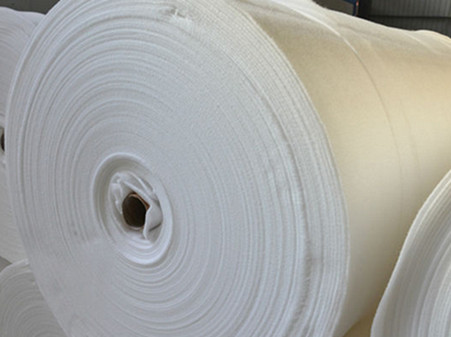
True solar defense starts deep inside the factory. Manufacturers do not simply spray a protective coating onto finished rolls. They alter the base chemistry during the initial extrusion process. Engineers blend carbon black directly into the polymer mix. They also add specialized chemical UV stabilizers. These additives absorb and scatter harmful ultraviolet radiation. They prevent solar energy from breaking the core polymer chains. This integrated chemistry ensures protection runs through the entire thickness of the material. Surface scratches do not compromise the underlying defense.
You must understand the difference between basic woven plastics and advanced non-woven structures. Standard woven tapes pull apart easily once they become brittle. Conversely, a continuous filament geotextile offers vastly superior endurance. Manufacturers spin endless synthetic threads into a thick, tangled web. They bond these threads using high heat and needle-punching. This web maintains impressive tensile strength over time. It stretches slightly instead of snapping. It withstands prolonged exposure without catastrophic failure.
Ignore vague marketing claims. "Sun-proof" means absolutely nothing in commercial engineering. You must look for specific testing data. Legitimate products undergo rigorous laboratory evaluations. Look for standardized "UV hour" retention ratings. A high-quality product will guarantee 70% strength retention after 500 hours of accelerated weathering.
Feature | Standard Retail Fabric | UV-Treated Continuous Filament |
|---|---|---|
UV Stabilizers | None or superficial coatings | Integrated carbon black & chemical inhibitors |
Exposed Lifespan | 3 to 12 months | 5 to 10+ years |
Surface Texture | Slick and woven | Textured and felt-like |
Tensile Strength Retention | Fails rapidly under sunlight | Maintains 70%+ after 500 hours UV exposure |
Steep hillsides demand specialized engineering. You cannot use smooth woven plastics on a 3:1 grade. Gravity will defeat you every time. A proper slope protection fabric requires a highly textured surface. Non-woven materials resemble thick felt. This texture creates thousands of tiny friction points. It grips the soil beneath it securely. It also locks loose aggregate and heavy mulch in place above it. This friction prevents shear failure during heavy rainstorms.
Topsoil Retention: Textured surfaces stop dirt from sliding downhill.
Water Permeability: Non-woven structures allow rain to pass through slowly.
Friction Coefficient: Rough fibers grip covering materials tightly.
Erosion Prevention: Eliminates the dangerous slip plane effect entirely.
Some projects cannot guarantee immediate or permanent ground cover. Phased construction sites often leave materials bare for many months. Certain agricultural applications require un-mulched rows. Areas experiencing severe winds frequently blow cover materials away. You face guaranteed failure using standard plastics here. The bare material must survive direct midday sun. It must withstand aggressive wind uplift. A UV-stabilized barrier easily handles these harsh, exposed conditions without turning brittle.
Tough weeds ruin expensive landscapes. Bindweed, thistle, and nutsedge possess incredibly sharp growth tips. They easily pierce weak retail plastics. Over time, sunlight weakens standard fabrics further. This allows even mild weeds to break through the barrier. You need heavy-duty puncture resistance. A premium landscape geotextile combines dense fiber construction and UV stability. It blocks sunlight completely. It deflects sharp sprouts downward. It prevents persistent weeds from breaching your defensive layer year after year.
Do not let upfront material prices scare you. A heavy-duty UV resistant geotextile absolutely costs more per square foot. However, material expenses represent only a fraction of your total project budget. Labor consumes the largest share of any installation. If you install cheap fabric, it will fail. You must then pay a crew to rip out the dead material. You pay them to haul away ruined mulch. You pay them to regrade the eroded slope. Finally, you pay them to install everything a second time. This rework cycle destroys profit margins instantly.
Slope failure triggers severe financial consequences. An eroded hillside does not just look bad. It damages adjacent properties. Runoff sends sediment into municipal storm drains. Local authorities regularly issue massive compliance fines for poor erosion control. Re-grading a collapsed hill requires heavy machinery. You must purchase replacement soil and fresh rock. Specifying the correct stabilization material mitigates all these expensive risks. Your upfront investment acts as an essential insurance policy against catastrophic site failure.
Realistic timelines prove the value of premium materials. You expect a commercial landscape to look good for a decade. Standard fabrics force you into a replacement cycle every two years. High-grade materials easily cross the ten-year threshold. You hit your financial breakeven point around year three. Beyond year three, you accumulate pure savings. You eliminate recurring maintenance invoices entirely.
Simple Cost Breakeven Projection (10-Year Cycle) | ||
Year | Standard Fabric Strategy | UV-Resistant Strategy |
|---|---|---|
Year 1 | Low Initial Material Cost | Higher Initial Material Cost |
Year 3 | Fabric tears; 1st Replacement Labor Required | Zero Maintenance Needed |
Year 5 | Major Weed Breach; Mulch Washout Fines | Zero Maintenance Needed (Breakeven Achieved) |
Year 10 | 4th Replacement Cycle; High Cumulative Labor | Barrier Remains Functional; Massive Labor Savings |
Great materials fail due to lazy installation. You must secure the edges properly. Do not just lay the roll on the ground. You need to dig an anchor trench at the very top of the hill. We call this the crest. You bury the leading edge inside this trench. You backfill it tightly with heavy soil. This stops wind from lifting the barrier. It also stops rainwater from running underneath the layer. You must repeat this exact process at the bottom of the slope. Trenching the toe prevents the entire system from sliding downward under the weight of wet mulch.
Gravity constantly pulls your installation downhill. You cannot skimp on steel staples. Flat garden beds require minimal anchoring. You might use one staple per square yard there. Steep inclines demand an entirely different approach. The pinning density must increase dramatically.
Assess the total slope gradient before rolling out material.
Use heavy-duty, 6-inch or 8-inch U-shaped steel landscaping pins.
Place one pin every single square foot on 3:1 slopes.
Drive pins perpendicular to the soil surface for maximum grip.
Add extra pins along all overlapping seams and outer edges.
Water always finds the weakest seam. A tiny gap invites aggressive weed growth. You must overlap adjoining rolls generously. Never butt the edges flat against each other. Provide a minimum overlap of six to twelve inches. You must also shingle these overlaps correctly. Always overlap them in the direction of water flow. The higher roll must cover the lower roll. This shingling method forces water to run cleanly over the seam. It prevents runoff from diving under the barrier and washing away your subsoil.
Site conditions dictate your material choices. If your project features steep gradients, expect strong gravity sheer forces. If your site faces delayed planting schedules, prepare for intense solar radiation. In these demanding scenarios, a UV-resistant fabric becomes completely non-negotiable. It provides the heavy-duty friction and longevity required to keep soil and stone exactly where you placed them. You avoid endless repair loops.
You must evaluate your site carefully today. Check the gradient angles. Calculate the daily sun exposure. Do not order generic rolls blindly. Request detailed technical specification sheets from your supplier. Ask for physical material samples. Feel the thickness and texture yourself before placing a bulk order. Protect your site properly the first time, and enjoy years of maintenance-free performance.
A: Premium UV-stabilized options typically last 5 to 10 years or more under direct sunlight. Exact lifespans depend on the specific UV rating and local climate intensity. Standard retail fabrics usually disintegrate within 3 to 6 months if left uncovered.
A: No. Regular woven fabrics possess a slick, smooth surface. Placing heavy rock on this smooth material creates a dangerous slip plane. Gravity and rainfall will cause catastrophic sliding. You absolutely need textured, non-woven geotextiles to grip heavy aggregate safely.
A: Yes. Continuous filament non-woven materials provide superior three-dimensional water flow. They feature a felt-like structure. This design lets water pass through easily while trapping fine soil particles. Woven plastics often clog with dirt or pool water on the surface.


