

Views: 0 Author: Site Editor Publish Time: 2026-04-29 Origin: Site


Are you struggling to choose between geotextile vs geomembrane for your project? Selecting the wrong material causes structural failure or high costs. One is permeable, while the other blocks all fluids. This guide explains their differences, uses, and selection criteria to ensure long-term success.
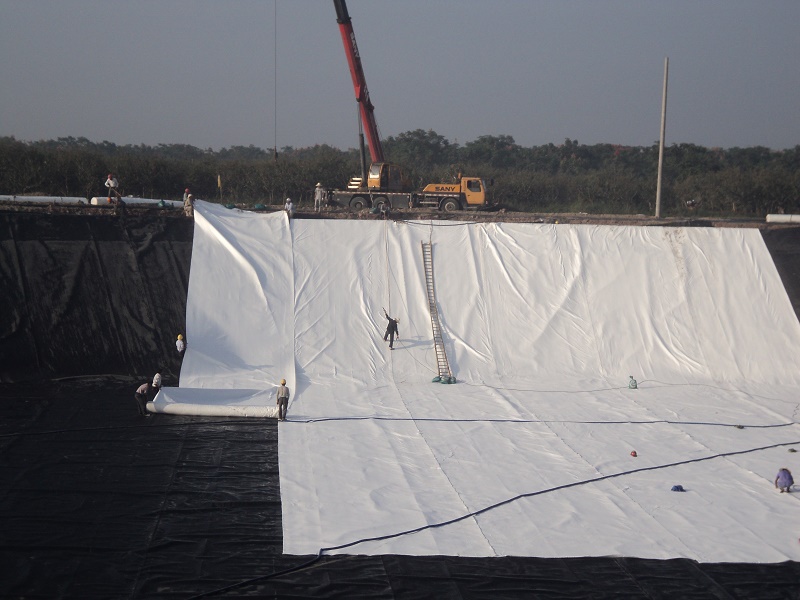
● Core Permeability Difference: The most critical distinction is that geotextiles are permeable and allow fluid flow , whereas geomembranes are impermeable and act as absolute fluid barriers.
● Primary Functions: Geotextiles are used for separation, filtration, drainage, and soil reinforcement. Geomembranes are primarily used for waterproofing, liquid containment, and preventing pollutant migration.
● Material Composition: Geotextiles are made from synthetic fibers like polypropylene or polyester in woven or non-woven forms. Geomembranes consist of polymer resins like HDPE, PVC, or bituminous materials.
● Strategic Synergy: In many civil engineering projects, these materials are used together; for example, a geotextile provides a protective cushion to prevent a geomembrane from being punctured by soil particles or stones.
● Sustainability Impact: Utilizing these geosynthetics reduces the need for natural resources like sand or clay and lowers the carbon footprint by minimizing material transport requirements.
● Selection Criteria: Choosing between them—or using both—depends on the site support nature, chemical exposure, and the specific structural goal such as seepage prevention or foundation reinforcement.
Understanding the technical nuances between these two materials is the first step in effective project planning. While they both belong to the geosynthetic family, their physical properties and manufacturing methods set them apart significantly.
The most significant functional gap is how they handle moisture. Geotextiles feature a porous structure that facilitates the movement of fluids, making them ideal for drainage and filtration. Geomembranes are engineered for sealing. They utilize a continuous plastic film to prevent seepage, making them the primary choice for containment.
Geotextiles are typically made from synthetic fibers like polypropylene (PP), polyester (PET), or polyethylene (PE). Manufacturers prefer PP because it is chemically stable and resists acids naturally found in soil. Geomembranes use polymer resins such as High-Density Polyethylene (HDPE), Low-Density Polyethylene (LDPE), or Polyvinyl Chloride (PVC). Some specialized membranes even incorporate bitumen or elastomers for specific flexibility requirements.
Geotextiles are categorized by their construction: non-woven, woven, or knitted. Non-woven versions are often needle-punched or heat-bonded to interlock fibers. Geomembranes are usually produced as continuous, thin, and flexible sheets through extrusion or calendering processes to ensure a solid, leak-proof surface.
You can easily tell them apart by touch. Geotextiles have a "fabric-like" feel—they are soft, plump, and thick. Geomembranes are smooth or textured solid films that feel like a heavy-duty plastic liner. While both are flexible, geomembranes are significantly less breathable than their textile counterparts.
Feature | Geotextile | Geomembrane |
Primary Function | Filtration, Drainage, Reinforcement | Sealing, Waterproofing, Containment |
Permeability | High (Permeable) | Extremely Low (Impermeable) |
Material Type | Synthetic fibers (PP, PET) | Polymer films (HDPE, PVC) |
Texture | Soft, fabric-like | Solid, film-like |
Every geosynthetic product is designed with a specific primary goal in mind. To choose correctly, you must align the material's strengths with your project's technical requirements.
Geotextiles serve five essential roles in civil engineering:
● Separation: They prevent two different soil layers from mixing, preserving the integrity of each.
● Filtration: They allow fluids to pass while retaining soil particles, preventing internal erosion.
● Drainage: They collect and transport water within their own plane to a designated outlet.
● Reinforcement: They use high tensile strength to improve the mechanical properties of soil structures.
● Protection: They act as a cushion to prevent localized damage to other materials, like geomembranes.
Geomembranes focus almost exclusively on containment and isolation. They act as a waterproof barrier to remedy water loss by infiltration or to stop the migration of dangerous pollutants into the groundwater. Because they are continuous and flexible, they can handle service stresses while maintaining a perfect seal.
Geotextiles manage pore water pressure by giving water a path to escape without washing away fines. This stabilizes the ground and prevents the "liquid" behavior of saturated soils. Geomembranes block this pressure entirely, which is vital in applications like dams or waste lockers where any fluid movement could lead to disaster.
Geotextiles are the "workhorses" of civil infrastructure. If your project involves moving earth or managing natural water flow, they are likely necessary.
In transportation projects, geotextiles are used as a separation layer between the subgrade and the aggregate base. This prevents the stone base from sinking into the soft soil underneath, which significantly extends the lifespan of roads and tracks.
Whether in forest tracks or drainage ditches, geotextiles protect drainage pipes from clogging. They act as a permanent filter that stays sensitive to soil chemistry but remains durable enough to last as long as the structure it protects.
On inclined surfaces or riverbanks, geotextiles limit ground movement by fighting surface erosion. They also improve the stability of embankments and retaining walls by providing the necessary deformation resistance.
Geomembranes are essential when the goal is to keep "what's inside, inside" and "what's outside, outside".
Landfills use geomembranes as active barriers in waste storage lockers. They prevent toxic leachate from penetrating the earth and reaching water tables. Their chemical resistance makes them suitable for containing industrial liquid waste and hydrocarbons.
Agricultural and industrial basins rely on geomembranes to seal hill reservoirs and water basins. They prevent significant water loss through infiltration, which is vital for irrigation and drinking water storage in arid regions.
For underground structures and buried walls, geomembranes provide a permanent shield against groundwater. They are often heat-welded at the joints to create a single, continuous, and reliable waterproofing layer across large surface areas.
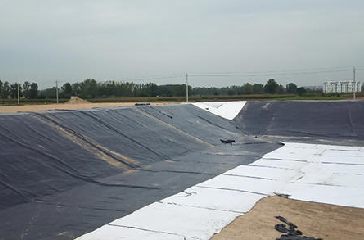
While the geotextile vs geomembrane debate often frames them as alternatives, the most successful engineering projects use them in tandem.
Geomembranes are effective but can be vulnerable to sharp stones or debris in the soil. Heavy-duty non-woven geotextiles are often placed on one or both sides of the membrane to act as a protective cushion. This prevents punctures that could lead to leaks years after the project is finished.
Modern engineering often uses geocomposites—products that industrially combine two or more geosynthetics into one roll. A common example is a "sandwich" layer in landfills: a geomembrane for sealing, a geotextile for protection, and perhaps a drainage net for fluid transport. This integrated approach ensures zero-leakage while maintaining structural stability.
Using them together reduces friction damage and manages the transition between different material types. This synergy minimizes maintenance costs and ensures that the waterproofing membrane remains intact under service stresses for decades.
Selecting the right material requires a deep dive into your site’s specific environmental and mechanical stresses.
The nature of the support—whether it is concrete, clay, or rocky soil—will dictate the thickness and weight of the geosynthetic you need. Rougher soils demand thicker protection geotextiles and more durable geomembranes to resist perforation.
Not all polymers are equal. For example, polypropylene (PP) geotextiles are highly stable in acidic soils. For geomembranes, HDPE offers excellent chemical resistance for industrial use, while EPDM might be chosen for its flexibility in fluctuating temperatures.
Installation methods vary: geomembranes usually require specialized heat-welding for joints, while geotextiles might simply be overlapped or sewn. Always ensure your materials meet international standards such as ISO, ASTM, or EN to guarantee performance and safety.
Geosynthetics are a cornerstone of sustainable development in modern construction.
Using these materials preserves natural resources by reducing the need for massive quantities of sand, clay, and gravel. Because they come in lightweight rolls, they significantly reduce transportation emissions compared to hauling conventional granular materials.
Geosynthetics protect people from natural risks like erosion, floods, and landslides. They also enable the rehabilitation of degraded ecosystems and the creation of ornamental basins that improve our living environment. Their 100+ year lifespan ensures that we meet the needs of the present without compromising future generations.
Choosing between a geotextile and a geomembrane depends on your project's specific needs for permeability or containment. Geotextiles excel at filtration and drainage, while geomembranes provide essential waterproofing. Combining both materials creates a durable, high-performance system for complex engineering tasks. yfgeosynthetics offers premium solutions that ensure structural integrity and long-term value. Their innovative products deliver reliable protection for any site condition.
A: Geotextiles are permeable for drainage , while geomembranes are impermeable barriers.
A: Use geotextiles for separation and reinforcement. Use geomembranes only if waterproofing is required.
A: Geotextiles act as a protective cushion to prevent punctures in the waterproofing geomembrane.
A: Both reduce natural resource consumption and lower carbon emissions compared to traditional clay or sand layers.


