

Views: 0 Author: Site Editor Publish Time: 2026-08-03 Origin: Site


Purchasing an HDPE liner roll is a critical risk-management decision, rather than a mere commodity transaction. Containment failures trigger severe environmental damage. They also lead to devastating financial liabilities. You cannot afford to treat this as a simple materials purchase. Buyers evaluating geomembranes must perfectly align project requirements with specific material properties. Variables like chemical resistance, UV exposure, and subgrade conditions dictate your long-term success. Overlooking these factors leads to premature deterioration and catastrophic leaks.
This guide breaks down exactly how you can match application demands to technical specifications. We explore how to plan for complex deployment logistics. You will learn strategies to minimize vulnerable field seams on your job site. Finally, we provide actionable steps to vet manufacturing partners. This ensures your project maintains material integrity from the factory floor to the final installation.
Different industries face distinct regulatory and physical stressors. Identifying your primary containment category is the first step. This category dictates the baseline requirements for your liner. You must understand these demands before looking at product catalogs.
Industrial projects present the highest risk profiles. Use cases include landfill base liners, hazardous waste containment, and secondary containment for tank farms. These environments demand extreme chemical resistance. They also require strict compliance with EPA or local regulatory standards.
Long-term impermeability is the primary driver here. A landfill liner will face decades of toxic leachate exposure. Secondary containment systems sit dormant but must withstand sudden, highly concentrated chemical spills. You need materials engineered for maximum durability.
Agricultural and municipal projects focus heavily on water retention. Common use cases include irrigation ponds, aquaculture setups, canal linings, and wastewater lagoons. UV stability is a massive priority. Ponds and canals often feature exposed liner edges that bake in the sun.
Another key driver is non-toxicity. Aquaculture and potable water reservoirs require food-safe certifications. Furthermore, puncture resistance is crucial. Agricultural subgrades often contain rocks or roots. These rough subgrades easily puncture inferior materials under the weight of water.
Mining applications involve brutal operational environments. Use cases feature heap leach pads, evaporation ponds, and brine ponds. These sites endure heavy machinery and massive material loads. High load-bearing capacity is an absolute necessity.
Mining liners also face highly abrasive materials. They handle harsh chemical solutions like cyanide in gold leaching. The liner must resist physical abrasion while maintaining chemical integrity. Failure here halts mining operations entirely.
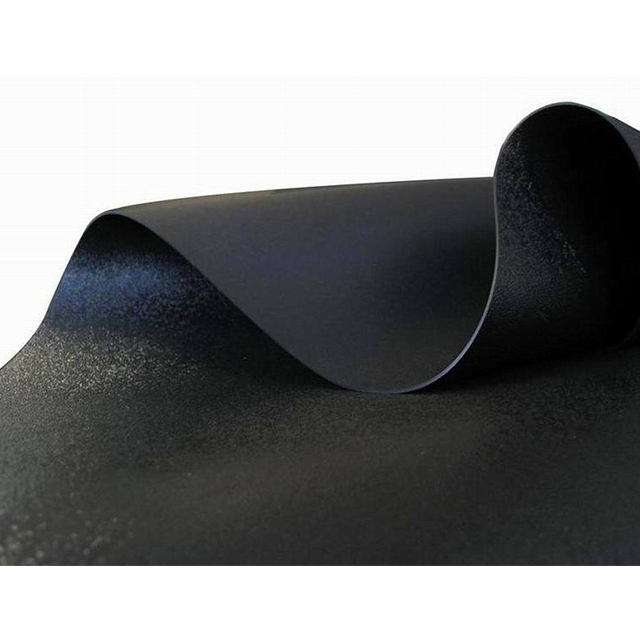
You must bridge the gap between your application type and the manufacturer’s technical data sheet. Reading a data sheet can be confusing. However, focusing on specific HDPE liner roll specifications simplifies the process.
Thickness directly correlates to durability and puncture resistance. It is usually measured in mils (thousandths of an inch) or millimeters.
Geomembrane Thickness and Application Guide
| Thickness (Mil) | Metric Equivalent (mm) | Primary Applications | Puncture Risk Tolerance |
|---|---|---|---|
| 30-mil | 0.75 mm | Temporary covers, decorative ponds | Low |
| 40-mil | 1.00 mm | Irrigation ponds, aquaculture | Moderate |
| 60-mil | 1.50 mm | Landfills, mining, wastewater lagoons | High |
| 80-mil+ | 2.00 mm+ | Hazardous waste, heavy mining loads | Extreme |
Always look for compliance with GRI-GM13. This framework serves as the global industry standard for high-density polyethylene geomembranes. It dictates the minimum acceptable physical and chemical properties.
Verify specific metrics on the data sheet. Density ensures the material is truly high-density. Tensile properties and tear resistance dictate how well the liner handles stretching. Carbon black dispersion is absolutely critical. Proper carbon black integration provides essential UV resistance for exposed applications.
Liners come in smooth or textured finishes. Smooth liners are easier to weld. They are also easier to clean. However, textured rolls are strictly necessary for steep slopes. The texture increases the friction angle between the liner and the soil. This prevents soil slides and ensures worker safety during installation.
Always request a material sample before ordering. Feel the texture and stiffness. Ensure your engineering team reviews the specific GRI-GM13 test results for your exact product batch.
Standard rolls typically measure 22 to 23 feet wide. These dimensions act as industry defaults. However, non-standard dimensions or pre-welded panels offer distinct advantages for many projects.
A custom HDPE liner roll drastically minimizes the linear footage of thermal welding required on-site. Field seams are the most vulnerable parts of any containment system. They are exposed to dust, wind, and fluctuating temperatures.
Fewer field seams equal lower failure risk. Factory welds happen in clean, climate-controlled environments. They undergo rigorous quality checks. Leveraging custom panels also means faster deployment. You spend less time welding and more time completing the project.
You must address logistical realities. Custom sizes certainly reduce field labor. However, extreme dimensions increase shipping complexities. Large prefabricated panels become incredibly heavy.
Handling weights can exceed the capacity of standard site equipment. Moving a massive, folded custom panel requires specialized rigging. If you damage a massive panel during unloading, you jeopardize a huge section of your project.
Deciding between standard and custom rolls requires simple math. Calculate the labor cost of field welding. Compare this to the premium price of factory-fabricated dimensions. Base this calculation on the specific footprint and geometry of your site. Small, rectangular sites often benefit greatly from custom panels. Large, irregular sites usually require standard rolls.
Buying the material is only half the equation. Staging and deployment carry significant risks. Poor installation ruins perfect materials.
Standard HDPE rolls weigh between 2,000 to 4,000+ lbs. You cannot move these with basic manpower. You must use spreader bars. Spreader bars prevent the lifting straps from crushing the roll edges.
Heavy machinery like excavators or heavy-duty skid steers are mandatory. You also need proper staging areas. Dropping a roll on rough ground damages the edges. Damaged edges make thermal welding nearly impossible.
Your site installation HDPE liner roll success relies entirely on the ground beneath it. The subgrade must be highly compacted. It must be completely free of debris, sharp rocks, and roots.
Even a small stone creates a point-load. Under the weight of millions of gallons of water, that stone will puncture the liner. If you cannot achieve a perfect subgrade, you must use protective geotextile underlayments. These fabrics cushion the liner against imperfections.
Installation requires dry, moderate weather. You cannot weld in the rain. Moisture boils inside the extrusion or wedge welder. This creates voids in the seam. Cold weather makes the material stiff. Hot weather causes excessive thermal expansion.
You must emphasize seam testing. Conduct destructive testing (cutting and pulling seam samples). Also perform non-destructive testing (air pressure testing dual-track seams). Do this daily during the installation phase.
Contractors often drag liner panels across rough dirt to position them. This causes invisible micro-scratches on the underside. Always unroll the material smoothly. Never drag it.
Navigating global supply chains requires intense risk mitigation. You must distinguish between reputable manufacturers and unreliable brokers. Brokers often relabel inferior products.
A qualified HDPE liner roll supplier must provide total transparency. Demand batch-specific QA/QC test reports. These are known as Mill Test Certificates (MTC). MTCs prove the exact specifications of your specific roll.
The documents must also prove resin quality. You want 100% virgin resin. Recycled material (regrind) introduces impurities. Impurities drastically reduce the lifespan and chemical resistance of the geomembrane.
Assess their production capabilities. Ask about their maximum production width. Wider rolls mean fewer field seams. Check their inventory turnaround times to ensure they meet your project schedule.
Furthermore, verify their adherence to ISO 9001 manufacturing standards. ISO certification guarantees they follow strict, repeatable quality control processes. It shows they are a mature manufacturing entity.
Look carefully at warranty terms. Understand the difference between prorated and non-prorated warranties. A 20-year prorated warranty loses value every year. You also need clear technical support. A good supplier helps troubleshoot installation issues over the phone.
Supplier Evaluation Matrix
| Evaluation Criteria | Red Flags (Brokers) | Green Flags (Reputable Manufacturers) |
|---|---|---|
| Documentation | Generic data sheets, no batch numbers | Batch-specific Mill Test Certificates (MTC) |
| Resin Quality | High percentage of regrind/recycled plastics | 100% virgin premium polyethylene resin |
| Standard Compliance | Claims "equivalent to" industry standards | Explicit GRI-GM13 and ISO 9001 certifications |
| Support | Disappears after the invoice is paid | Offers installation troubleshooting and clear warranties |
Selecting the correct geomembrane requires rigorous evaluation. You must analyze site conditions, regulatory standards, and exact material specifications. Never treat this purchase casually. The integrity of your containment project depends entirely on these early decisions.
Take action today to secure your project. Contact a qualified engineering and sales team. Request detailed material data sheets, ask for sample swatches, or schedule a custom sizing consultation to ensure your containment system performs flawlessly.
A: Standard widths typically range from 22 to 23 feet (approx. 7 meters). Lengths vary based on thickness, usually spanning 400 to 700 feet. Always check weight limits, as standard rolls easily exceed 3,000 lbs, requiring specialized shipping and handling equipment.
A: A high-quality exposed liner can last 20 to 30 years. Lifespan depends on mil thickness, climate, and UV exposure. Proper carbon black additives (usually 2-3%) are critical to absorbing UV rays and preventing rapid polymer degradation.
A: Yes. Installers join them using extrusion welding. This technique bonds the liner to pipe boots, concrete embedment strips, or specialized geotextiles. It allows for secure sealing around complex penetrations and varied containment structures.
A: You must provide the total square footage, required thickness (e.g., 40-mil or 60-mil), and finish preference (smooth or textured). Also, specify the application type and your delivery zip code to calculate precise freight logistics.


