

Views: 0 Author: Site Editor Publish Time: 2026-07-23 Origin: Site


Securing materials for large-scale infrastructure projects requires balancing strict engineering requirements against everyday procurement realities. Buyers face immense pressure to deliver durable results. Selecting the proper road construction geogrid involves much more than comparing the price per square meter. It demands structural integrity, strict DOT compliance, and logistical predictability. You must ensure materials arrive precisely on time. They must also perform flawlessly under heavy, repetitive traffic loads.
Civil engineers and procurement managers rely heavily on these geosynthetics. They prevent premature roadway failure and reduce expensive maintenance cycles. This checklist provides a pragmatic framework for evaluating complex technical specs. We will guide you through calculating true landed costs accurately. You will also learn how to audit manufacturing partners for bulk procurement effectively. Let this guide simplify your purchasing decisions. It helps you navigate complex technical data sheets efficiently. You can ultimately protect both your project timeline and your financial bottom line.
Roadway failure typically originates far below the asphalt surface. Problems usually start right at the subgrade level. Aggregate base courses often push down into soft native soils. This downward migration leads to severe rutting. It also causes dangerous surface cracking over time. Effective application of a weak subgrades road construction geogrid prevents this aggregate migration. It effectively spreads the dynamic loads of heavy traffic across a wider area. You create a stabilized foundation capable of enduring constant mechanical stress.
To evaluate your project needs, identify the exact CBR value of the site. The CBR dictates the required tensile properties of your grid. Soft clay soils behave very differently than silty sands. Next, determine the required structural number (SN) reduction. Engineering teams target specific SN reductions to optimize base layer thickness. Achieving this reduction saves massive amounts of imported gravel. This calculation remains the cornerstone of modern civil engineering designs.
Avoid products claiming universal subgrade stabilization capabilities. Soils differ drastically across geographic regions. Require load-distribution models specific to your local soil type. Reliable manufacturers test their materials against varying moisture contents. They also check performance against different clay plasticity indexes. You should demand data proving long-term performance under your exact site conditions. Implementing proper stabilization early prevents catastrophic foundation settling later.
Not all grids perform equally under heavy load. Buyers must verify product data sheets thoroughly. They must match the project's foundational engineering requirements exactly. Let us explore the critical dimensions of road construction geogrid specifications.
First, consider tensile strength carefully. Do not focus solely on ultimate tensile strength. Look closely at strength measured at 2% and 5% strain. These lower strain values remain far more relevant to in-situ performance. Grids must mobilize strength quickly to prevent initial rutting. If a grid needs 10% strain to activate, the road has already failed.
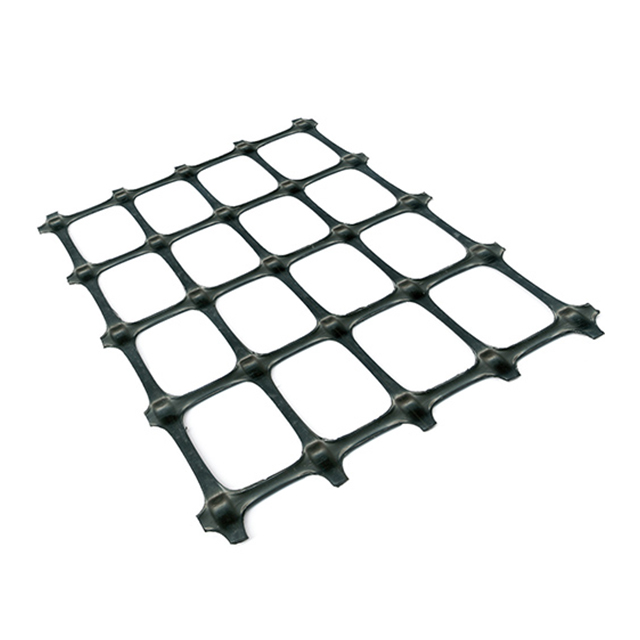
Second, evaluate aperture size thoroughly. The openings must optimize interlock with your specific aggregate gradation. For example, DOT #57 stone requires a different aperture than finer crushed gravel. Particles must wedge tightly inside the openings. This creates a stiffened composite layer capable of bearing heavy equipment.
Third, review junction efficiency. High junction strength ensures the grid transfers stress without deforming. The intersecting ribs must remain stable under dynamic wheel loads. Weak nodes break easily during aggregate compaction.
Finally, verify regulatory compliance. Always align your material choices with local DOT standards. Adhere strictly to AASHTO guidelines for geosynthetics. Check for proper carbon black additives ensuring adequate UV resistance during installation.
| Testing Metric | ASTM Standard | Importance for Engineers |
|---|---|---|
| Tensile Strength at 2% Strain | ASTM D6637 | Indicates initial load transfer capability. |
| Junction Efficiency | ASTM D7737 | Confirms node stability under stress. |
| UV Resistance | ASTM D4355 | Ensures longevity during exposed installation. |
| Flexural Rigidity | ASTM D7748 | Demonstrates ease of handling on site. |
Buyers constantly evaluate whether to buy standard inventory or request custom manufacturing. Both solution categories offer distinct advantages. Implementation realities dictate that standard rolls remain readily available. You can procure them quickly for immediate site delivery. However, standard widths may lead to higher overlap waste. If roll widths do not align perfectly with roadway dimensions, crews must overlap excess material. This wastes money and valuable installation time.
When should you specify a custom road construction geogrid? Consider them for high-volume projects. Major highway expansions benefit immensely from custom widths. Reducing overlap by just a few inches yields massive cost savings over miles of roadway. You should also consider custom runs for specific tensile requirements. Sometimes engineers need performance that falls right between standard biaxial or triaxial grades. Custom formulations optimize material use without over-engineering the final solution.
Custom orders do carry notable risks. They require significantly longer lead times. You must rigorously vet production schedules against project milestones. Missing a subgrade stabilization window can delay the entire paving schedule. Weather windows close quickly in civil construction. Coordinate closely with your manufacturing partner to ensure timely delivery. Factor in transit delays when planning custom orders.
Uncovering the true landed costs for bulk geogrid purchases requires a thorough decision framework. Do not focus solely on the raw material quote. Several key cost constituents dictate your final budget accuracy.
First, evaluate freight and logistics strictly. Geogrids remain notoriously bulky materials. Evaluate how many rolls fit inside a standard shipping container. Products featuring lower profile nodes often allow more rolls per truck. This density significantly reduces transportation expenses across long distances. Optimize your truckloads to minimize shipping premiums.
Second, account for installation inefficiencies. You must calculate the labor hours required to unroll, tension, and cut the material. Stiff grids might lie flat easier. This saves critical deployment time. Roll weights also matter significantly. Heavier rolls might require specialized lifting equipment on site. Renting forklifts or spreader bars adds to your total daily expenses.
Third, factor in generous overlap allowances. Standard overlaps usually range from one to three feet. This depends heavily on subgrade softness. If you need 100,000 square feet of coverage, you must purchase at least 115,000 square feet of material. Always order extra to cover these necessary structural overlaps. Failing to account for overlap causes costly mid-project material shortages.
Establishing authoritativeness and trust remains paramount during procurement. You need a reliable checklist for auditing potential manufacturing partners. Complete this audit before signing a bulk purchase order. We recommend using a strict shortlisting logic to mitigate supply chain risks effectively.
Evaluate their manufacturing QA/QC processes first. Do they operate an in-house laboratory testing to recognized ASTM standards? They should routinely perform ASTM D6637 testing for tensile properties. Ask to see their latest equipment calibration certificates.
Next, demand strict batch traceability. Can they track a field failure back to the specific resin batch? Quality manufacturers stamp each roll with unique identification codes. This ensures complete accountability across the production timeline. It protects you from widespread material defects.
Technical support also differentiates a great road construction geogrid supplier from a mediocre one. Determine if they offer direct engineering support. Ask if they provide design software or comprehensive installation field guides. Good suppliers want your project to succeed safely.
Finally, verify their financial and production capacity. Assess their factory output capabilities closely. You must ensure they can meet strict delivery schedules. Bottlenecking the construction phases due to material shortages causes severe financial penalties. Check their raw material inventory levels to gauge production readiness.
| Evaluation Criteria | Minimum Standard | Excellence Standard |
|---|---|---|
| Quality Assurance | Basic ISO 9001 certification | In-house ASTM-certified testing lab |
| Material Traceability | General production lot numbers | Individual roll barcode tracking |
| Engineering Support | Basic product data sheets provided | Custom load-distribution modeling software |
| Production Capacity | Standard inventory availability | Dedicated custom manufacturing lines |
Sourcing geosynthetics at scale requires looking far beyond basic product descriptions. You must evaluate technical tolerances, logistical costs, and overall supplier reliability thoroughly.
Take immediate action on your next procurement cycle. Cross-reference your latest geotechnical reports against potential supplier spec sheets. Request independent laboratory test results before finalizing any bulk purchase. We advise integrating these specific steps into your standard operating procedures. This guarantees long-term infrastructure stability and procurement success.
A: The standard overlap typically ranges between one and three feet. This requirement directly depends on the firmness of your subgrade. Firm soils may only need a minimal one-foot overlap. However, as the subgrade CBR decreases and soils become softer, you must increase the overlap to maintain structural continuity.
A: You must ensure the aggregate particles interlock tightly within the grid openings. Engineers evaluate the ratio of the D50 aggregate size to the aperture opening. The ideal aperture should allow the stone to lodge securely, preventing lateral movement under load. Consult your geotechnical engineer to calculate the precise ratio.
A: Always request comprehensive quality assurance paperwork before purchasing. Ask for Mill Test Certificates (MTCs) to verify raw material origins. Demand current ISO certifications demonstrating consistent manufacturing practices. Finally, require independent third-party ASTM testing reports to validate the tensile and junction strength claims found on their data sheets.
A: Yes, applying a stabilizing grid can significantly reduce the required thickness of the aggregate base course. This reduction saves substantial material and hauling costs. However, the exact reduction depends entirely on site-specific structural design calculations. Always run specialized design software to determine the safest permissible base course reduction.


