

Views: 0 Author: Site Editor Publish Time: 2026-07-21 Origin: Site


Standard off-the-shelf liners handle basic, flat-grade applications perfectly well. However, complex waste management sites rapidly expose the hidden limitations of these standard rolls. Defaulting to standard dimensions or formulations introduces significant project risks. It often leads to excessive field welding, compliance failures, or premature material degradation. Site operators face mounting pressure to prevent leaks. They must ensure structural stability across decades of continuous use. Engineers cannot rely on guesswork when protecting vulnerable groundwater systems. Proper material specification is the ultimate first line of defense. We provide project managers and engineers with a rigorous decision-making framework. You will learn exactly when the upfront cost of a customized solution yields lower overall project expenses. We will explore how specific customization choices mitigate catastrophic failure risks. Our guide helps you navigate complex procurement decisions with absolute confidence.
Relying entirely on standard 22-foot or 23-foot rolls increases your required field seams. Installers must weld many more panels together to cover large cells. More seams mean higher vulnerability to human error during installation. They also increase thermal expansion risks under fluctuating temperatures. Extensive Construction Quality Assurance (CQA) testing becomes strictly necessary. Each individual seam requires meticulous inspection and vacuum testing. You spend considerably more time and money on field labor. Rain or high winds often delay this intensive welding process. A custom approach dramatically reduces these expensive field bottlenecks.
Standard smooth or lightly textured materials often fail on challenging terrains. They do not provide adequate interface friction angles for steep slopes. Steep-slope designs demand highly aggressive texturing to maintain stability. Complex subgrades require specialized friction profiles to prevent sliding. Standard liners often allow heavy cover soil slippage after severe rainstorms. They compromise the stability of multi-layer containment systems. Engineers cannot rely on standard friction metrics for unorthodox topographies. You need engineered surface textures to lock adjacent soil layers securely. This prevents catastrophic slope failures during the facility's operational lifespan.
Many procurement teams assume standard liners work universally across all sites. We must challenge this dangerous fallacy immediately. Retrofitting standard liners in the field causes severe material stress. Installation crews stretch and force rigid materials into unnatural positions. This aggressive practice creates microscopic weak points across the liner. It ultimately leads to long-term environmental liabilities and regulatory fines. The initial unit-price savings quickly vanish when unexpected leaks occur. You face massive remediation costs if the baseline material fails. Proper engineering demands materials tailored specifically to unique site conditions.
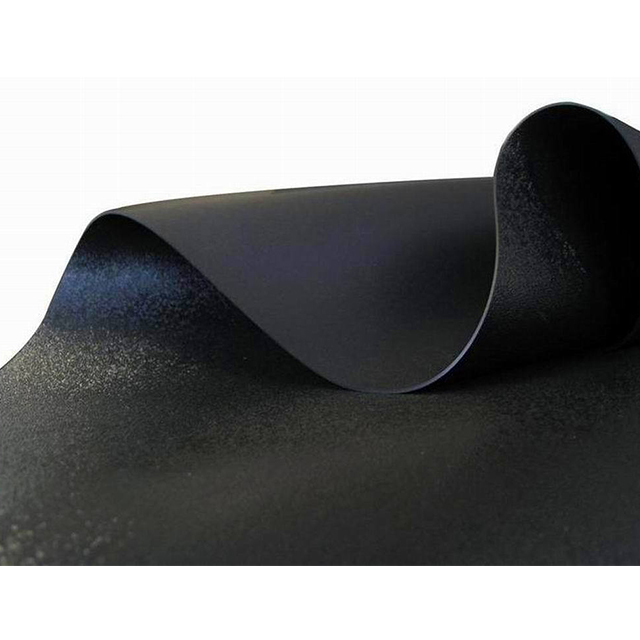
Standard High-Density Polyethylene (HDPE) handles typical municipal solid waste effectively. However, industrial and mining operations generate much harsher chemical byproducts. Specialized waste containment landfill geomembrane applications require custom blended resins frequently. You might need Linear Low-Density Polyethylene (LLDPE) for enhanced flexibility over uneven ground. Sometimes, you need co-extruded layers to resist specific aggressive solvents. Custom resins prevent premature chemical breakdown and maintain absolute impermeability. Standard resins simply degrade too fast when exposed to highly acidic leachate. Engineers must match the polymer formulation directly to the expected waste stream.
Steep slopes demand exceptionally high interface friction to remain stable. Standard textures often fall short of these stringent engineering requirements. You must specify custom texturing to prevent cover soil sliding. Options include specialized single-sided or double-sided texturing profiles. You can even dictate specific asperity heights for maximum grip. Proper friction keeps heavy cover soil securely anchored on steep inclines. It ensures multi-layer system stability during heavy rainfall or seismic events. A customized texture profile actively prevents costly slope rehabilitation work.
Exposed caps face intense sunlight and massive temperature swings daily. UV degradation becomes a primary concern for these specific facilities. Traditional black liners absorb heat and develop severe thermal wrinkles. Exposed environments strongly dictate customized UV-stabilized chemical packages. You may also specify reflective surface colors to mitigate heat. White geomembranes reflect harsh sunlight highly effectively. They reduce heat absorption and minimize destructive thermal wrinkling. This temperature control prevents stress cracking along the welded seams. Your exposed cap lasts significantly longer under brutal weather conditions.
Many modern waste cells feature highly irregular geometric shapes. Rectangular standard rolls overlap poorly in these confined or odd spaces. You waste expensive material and extend your deployment time unnecessarily. Custom-cut prefabricated panels match your exact site footprint perfectly. Installers deploy these tailored panels much faster than standard rolls. You reduce material waste significantly across the entire project site. The custom fit ensures better structural integrity around complex corners. It eliminates the need for awkward, improvised field cuts.
Thicker materials are not automatically superior for every single application. You must evaluate when to customize thickness very carefully. Transitioning from a standard 60-mil to a customized 80-mil thickness increases puncture resistance. However, it also noticeably reduces essential subgrade conformity. Hybrid thicknesses offer a highly balanced engineering solution. You must align your landfill geomembrane specifications against actual puncture risks. A rocky subgrade demands different thickness tolerances than smooth clay. Flexibility often matters just as much as absolute tensile strength.
Advanced co-extrusion allows different materials on the top and bottom faces. You can specify a highly aggressive high-friction bottom layer. This ensures excellent subgrade adherence on dangerous slopes. Simultaneously, you can specify a highly UV-resistant top layer. This dual engineering approach solves complex environmental challenges perfectly. Multi-layer technologies maximize both long-term durability and structural stability. You do not have to compromise between chemical resistance and friction. Co-extrusion blends the best properties of multiple polymers seamlessly.
Custom specifications must strictly anchor to baseline regulatory frameworks. Industry standards like GRI-GM13 or GRI-GM17 remain absolutely essential. You should actively aim to exceed these minimum baselines. Avoid manufacturers making unverifiable longevity promises without solid data. Demand independent laboratory testing for your custom landfill geomembrane. Proven compliance protects your massive financial investment securely. Regulators require hard proof before approving customized containment systems. Proper specification writing guarantees seamless regulatory approval.
| Attribute Focus | Standard Geomembrane | Custom Geomembrane |
|---|---|---|
| Thickness Options | Pre-set increments (e.g., 40-mil, 60-mil) | Hybrid and exact-mil customization |
| Surface Texture | Smooth or standard texturing | Engineered asperity heights, double-sided |
| Polymer Resins | Standard HDPE or LLDPE bases | Advanced co-extruded multi-layer polymers |
| Panel Dimensions | Standard 22ft to 23ft rectangular rolls | Prefabricated to specific site geometries |
Customization carries one primary drawback: extended manufacturing lead times. You must forecast your supply chain extremely accurately. We strongly advise sequencing procurement early in the planning phase. Align your custom orders with site excavation schedules perfectly. Pre-plan subgrade preparation alongside the material manufacturing process. Proactive scheduling entirely eliminates costly project delays. You cannot rush custom resin blending or specialized texturing. Clear communication between engineers and buyers prevents timeline disasters.
Deploying massive custom panels requires highly specific logistics. They reduce welding, but they present unique handling challenges. You need specialized heavy equipment for safe unloading and placement. You must develop staging strategies to prevent dangerous wind uplift. Careful handling prevents microscopic material damage during actual deployment. A clear deployment plan keeps the site moving efficiently. Standard spreader bars often fail to handle large prefabricated panels safely. You must upgrade your lifting equipment before the trucks arrive.
Installation crews might mishandle unfamiliar custom materials initially. You must highlight this specific risk very early. Detailed deployment blueprints are absolutely essential for field crews. We recommend mandatory pre-construction meetings before breaking ground. These meetings align CQA inspectors and installers on procedures. Everyone must deeply understand the unique handling requirements involved. Proper training prevents expensive installation errors and material waste. Do not assume your contractor knows how to handle hybrid polymers.
A highly credible landfill geomembrane supplier offers transparent access to their testing labs. You need comprehensive data long before material shipment begins. Demand Oxidation Induction Time (OIT) results for thermal stability. Request detailed stress crack resistance data for long-term performance. Review peel and shear testing metrics for multi-layer systems. Verifiable testing confirms the material meets your strict requirements perfectly. Third-party lab validation provides an extra layer of security. Never accept custom materials without reviewing the underlying test data.
Batch-level traceability is absolutely critical for custom blended resins. You must demand rigorous documentation from your manufacturing partner. This paperwork proves the custom blend matches the approved prototype. Quality control ensures exact consistency across massive production runs. Without strict traceability, you cannot verify the final polymer integrity. A single bad batch compromises the entire containment cell. Top suppliers track every single resin pellet from delivery to extrusion. You deserve complete transparency regarding manufacturing quality control.
Evaluate their willingness to provide on-site technical assistance proactively. A highly customized liner system requires expert guidance during initial deployment. Your supplier should deploy experienced technicians directly to your site. They help resolve unexpected field challenges quickly and safely. Their physical presence ensures the installation matches the engineered design. Complex co-extruded materials often require slightly different welding temperatures. Supplier technicians calibrate field equipment to prevent weak seams. Strong post-sale support guarantees a flawless installation process.
Customization is never just a luxury. It serves as a highly calculated engineering risk-mitigation strategy. It solves complex topographies and handles exceptionally aggressive waste streams. Custom panels easily accommodate deeply compressed installation windows. You should move firmly beyond standard price-per-square-foot metrics. Evaluate your procurement through installation efficiency and compliance security lenses. Focus relentlessly on long-term asset protection and environmental safety. We strongly recommend consulting geotechnical engineers early. Finalize your exact material requirements before initiating the RFP process. Investing in a tailored landfill geomembrane secures your site against unpredictable environmental liabilities.
A: Customization carries a manufacturing premium. However, you must focus on the final installed cost. Savings in field labor, reduced welding, and lower material waste often offset the initial price. This frequently results in a neutral or lower overall project expense. You pay more upfront but save heavily on deployment logistics.
A: Manufacturing realities dictate slightly longer timelines. Dependent on resin availability and production schedules, custom orders can add four to eight weeks to your procurement timeline. This requires highly proactive project management. You must coordinate early ordering with your site excavation phases to avoid costly delays.
A: Yes. Custom liners must still be strictly tested against standard CQA frameworks. A custom formulation is specifically designed to exceed baseline site requirements. It does not bypass regulatory testing protocols. Instead, it ensures a much higher margin of safety, satisfying all state and federal environmental regulations perfectly.


