

Views: 0 Author: Site Editor Publish Time: 2026-07-19 Origin: Site


Discovering damaged materials on a busy job site halts progress instantly. Receiving out-of-spec geosynthetics disrupts strict project timelines and compromises structural integrity. These sudden delays also incur heavy return-shipping costs.
Pre-shipment inspection serves as the final safeguard against supplier quality control failures. Whether you stabilize commercial embankments or reinforce highway subgrades, verifying materials at the factory prevents catastrophic field failures. Skipping this critical step leaves site engineers completely vulnerable to manufacturing mistakes.
We will explore how to implement a standardized framework for evaluating these vital materials before they leave the factory floor. You will learn how to verify compliance documentation, conduct thorough visual checks, and validate third-party testing. This practical guide empowers procurement managers to secure top-tier quality every time.
Site rejections severely damage the critical path of construction schedules. When site engineers reject delivered materials, heavy machinery sits idle. Labor crews wait around. Project deadlines inevitably slip away. Construction schedules operate on tight margins. A single delay regarding base course stabilization pushes back every subsequent phase. You lose valuable time waiting for replacement shipments to arrive.
Safety and liability risks escalate rapidly when utilizing non-compliant materials. High-stakes structural applications demand strict adherence to original design parameters. For instance, utilizing subpar materials for retaining walls geogrid reinforcement often leads to catastrophic soil collapse. Retaining walls bear immense lateral earth pressures. If the internal grid fails, the entire face can rupture. You face severe legal liabilities if a structure fails due to unverified factory errors. Proper pre-shipment checks eliminate this extreme risk exposure.
Logistics represent a massive sunk cost in heavy civil construction. Returning bulky rolls of geosynthetics burns through project budgets instantly. You pay for outbound freight. You pay return freight. You then pay restocking fees and replacement shipping. Geosynthetic rolls are heavy and require specialized flatbed transport. Paying these transit costs twice destroys profit margins. Implementing factory-level verification removes this financial burden completely.
Many procurement managers blindly trust initial product data sheets. They assume the delivered batch perfectly matches the marketing brochure. This assumption often proves false. Always verify the actual production lot before shipping.
You must rigorously evaluate physical and mechanical properties. Tensile strength and modulus form the backbone of these checks. You must cross-reference Machine Direction (MD) and Cross-Machine Direction (XMD) metrics against your engineering submittals. MD represents the strength along the roll length. XMD represents the strength across the roll width. Verify ultimate tensile strength data using ASTM D6637 testing protocols. This ensures the grid handles anticipated dynamic loads without rupturing.
Aperture size heavily dictates structural stability. Aperture dimensions must strictly align with your specified aggregate size. Proper sizing guarantees mechanical interlock between the stone and the grid. If the openings are too small, the aggregate simply rests on top. This creates a dangerous slip plane. Check junction efficiency according to ASTM D7737. High flexural rigidity keeps the grid completely stable under heavy compaction forces. Before approving the lot, closely review the required geogrid reinforcement specifications to ensure perfect alignment.
Polymer composition determines environmental durability. Prolonged environmental exposure degrades poor-quality polymers. You must verify Carbon Black content using ASTM D4218 protocols. Sufficient Carbon Black ensures robust UV resistance during staging. Confirm the material actively resists installation damage from heavy vibratory rollers. It must also withstand long-term chemical degradation in highly specific soil pH environments.
| Critical Specification | Standard Test Method | Primary Purpose | Verification Focus |
|---|---|---|---|
| Ultimate Tensile Strength | ASTM D6637 | Load bearing capacity | Compare MD and XMD against submittals. |
| Junction Efficiency | ASTM D7737 | Load transfer mechanism | Check node strength stability. |
| Carbon Black Content | ASTM D4218 | Ultraviolet (UV) resistance | Ensure minimum percentage is met. |
| Flexural Rigidity | ASTM D7748 | Installation stiffness | Verify resistance to folding/bending. |
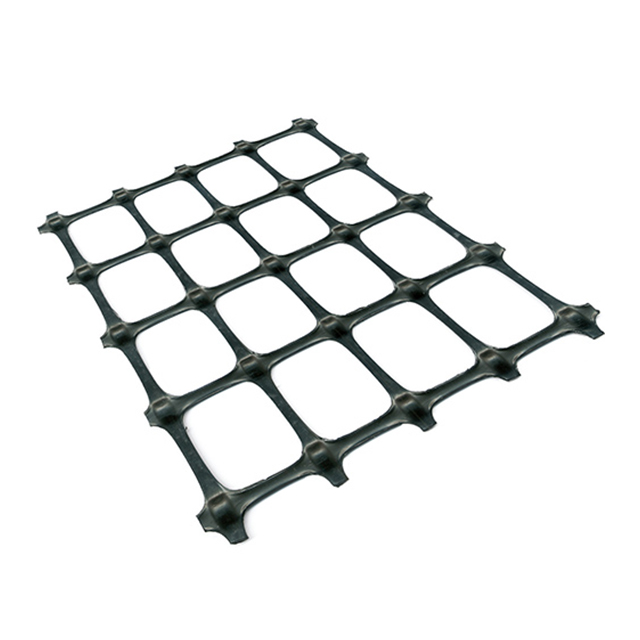
Physical inspections remain just as vital as reviewing laboratory data. Dimensional accuracy requires strict attention. Inspectors must physically measure roll length, overall width, and squareness. Short rolls cause major headaches on site. They lead to excessive overlaps during field installation. These overlaps cause severe material shortages, forcing you to reorder mid-project. Measure at least three different rolls per batch to ensure consistent dimensional output.
Surface and manufacturing defect checks prevent weak links in your soil matrix. Factory audits must identify common extrusion or weaving flaws immediately. Look closely for broken ribs. Check diligently for misaligned nodes. Ensure the protective polymer coatings remain highly consistent across the entire roll. Uneven coating applications expose the core fibers to chemical attack.
Packaging, tagging, and labeling must meet CE or DOT compliance standards. Every roll needs distinct, legible labeling. Labels must display the manufacturer name, exact product grade, unique roll number, and specific lot number. This provides end-to-end traceability for your project records. Check the protective wrapping carefully before loading. Accidental tears in the packaging expose the geogrid reinforcement to excessive UV degradation during transit. Sun exposure significantly weakens unprotected polymers.
Relying solely on internal documentation is a risky strategy. Mill Test Reports (MTRs) provide a baseline, but they are not always sufficient. Internal QC documents often fall short for government or DOD-level infrastructure projects. You must request recent independent lab results. Third-party testing programs, such as NTPEP, validate the manufacturer's internal claims. These independent reports prove regulatory compliance to strict state engineers.
Handling bespoke materials requires extra vigilance. Ordering specific roll widths or non-standard tensile strengths introduces new manufacturing variables. You must establish clear acceptance criteria upfront. Define exact testing protocols early in the procurement phase. Always thoroughly review prototype-to-production QA sign-offs when procuring custom geogrid reinforcement. This prevents unwelcome surprises upon delivery. Custom orders leave zero room for assumption.
Chain of Custody documentation legally protects your firm. Secure Certificates of Compliance (CoC) before authorizing the shipment. Obtain all warranty documentation prior to signing the bill of lading. Proper paperwork proves you performed due diligence. It protects your financial investment if hidden material defects emerge years after installation. Keep these records organized and accessible for final project handovers.
A supplier’s internal culture dictates their output quality. Assess their factory audit capabilities before placing large orders. Assess how open they are to external oversight. Do they allow pre-shipment virtual inspections? Will they willingly permit third-party auditor visits? Look for manufacturing facilities offering video-documented load-outs. Transparency during the loading phase builds immense trust.
ISO certification and standardized testing indicate mature operations. Confirm the manufacturing facility operates under strict ISO 9001 quality management systems. Standardized processes yield consistent material properties across massive production runs. An accredited, reliable geogrid reinforcement supplier openly shares these certifications upon request. They welcome scrutiny because their processes are fundamentally sound.
Responsiveness to deficiencies reveals their true character. Evaluate the supplier’s Corrective Action and Preventive Action (CAPA) process. If a pre-shipment inspection reveals out-of-tolerance materials, how quickly do they respond? Do they argue, or do they immediately isolate the defective batch? Swift, transparent resolution indicates a trustworthy manufacturing partner. A good supplier fixes the problem before the truck ever leaves the yard.
Pre-shipment inspection shifts the risk burden directly back to the manufacturer. This proactive validation ensures only compliant, project-ready materials arrive on your site. By verifying dimensions, analyzing test reports, and inspecting physical rolls, you protect your critical path schedule. You also guarantee the long-term structural integrity of your soil stabilization designs.
A: The standard sampling rate typically follows ASTM D4354 guidelines. Inspectors test one unit per specific square footage or production lot. This method ensures statistical reliability across large orders. Proper sampling prevents isolated manufacturing defects from compromising the entire shipment.
A: Yes. You can hire independent inspection agencies at the manufacturing origin. These professionals provide unbiased validation of Mill Test Reports. They also conduct thorough visual defect reporting. Utilizing external auditors guarantees transparency and ensures the factory strictly adheres to project specifications.
A: Slight aperture variations pose a serious engineering risk. Incorrect sizes compromise aggregate interlock. This failure mechanism may require a complete redesign of the base course. In severe cases, engineers must reject the entire batch. Pre-shipment checks are vital to prevent this costly scenario.


