

Views: 0 Author: Site Editor Publish Time: 2026-07-02 Origin: Site


Managing unpaved roads often brings endless frustration to property owners and contractors alike. Cyclical aggregate loss, chronic rutting, and rising replacement costs plague roads bearing heavy loads. You watch expensive crushed stone vanish into the mud season after season. Heavy logging trucks, heavy farm equipment, and constant delivery vehicles accelerate this destruction.
Basic fixes no longer cut it. Modern infrastructure requires engineered solutions to stabilize the vulnerable base. Choosing the correct geotextile serves as a mathematical necessity to prevent base course failure, rather than an optional luxury. We must isolate the native soil from the imported gravel to stop the endless cycle of grading and patching.
This guide evaluates why the 8 oz non-woven specification stands as the industry standard for heavy-duty separation and drainage. We will show you how to source the correct material without falling for inflated marketing claims. Keep reading to secure your roadway investment and eliminate chronic maintenance headaches.
ROI of Stabilization: Using an 8 oz subgrade separation fabric fundamentally changes the road's lifecycle, often paying for itself by eliminating the need for a second or third gravel top-up.
Drainage vs. Strength: While woven fabrics offer higher raw tensile strength, 8 oz non-woven is required for gravel roads to allow vertical water flow while maintaining high aggregate friction.
The Puncture Threat: For heavy traffic, the primary metric is CBR (California Bearing Ratio) puncture resistance, not just grab tensile strength, as sharp angular stone will pierce lighter fabrics under axle loads.
Installation is Critical: Material specs are useless if installation fails; proper subgrade crowning, 12-18 inch overlaps, and correct initial aggregate depth dictate project success.
Road base failure usually starts hidden beneath the surface. Wet, soft subgrades act like a massive sponge under your driveway. When heavy vehicle tires roll over the surface, they compress the wet ground. This pressure forces mud upwards while pushing expensive top-course gravel downwards. Engineers call this destructive process "pumping."
The mechanics of pumping follow a predictable, destructive cycle:
Rain saturates the native clay or silt subgrade.
Heavy axle loads compress the road profile.
Mud squeezes up into the clean gravel voids.
The gravel loses its friction and sinks.
Surface ruts form, capturing more rainwater.
Property owners constantly debate whether to geostabilize or not. You must compare the upfront cost of rolling out a heavy-duty textile against future maintenance bills. Without separation, you will face the 3-to-5-year cost of frequent road grading. You will pay labor to patch recurring potholes. You will constantly order replacement crushed stone. Utilizing a proper subgrade separation fabric stops aggregate loss entirely. The material pays for itself by saving just one future gravel delivery.
Beyond separation, the material acts as a tensioned membrane. Heavy traffic exerts intense localized pressure exactly where the tires touch the ground. The fabric catches this downward force. It distributes these localized wheel loads across a much wider subgrade footprint. This membrane effect reduces rutting depth significantly. It keeps your road surface flat, predictable, and structurally sound under massive farm equipment.
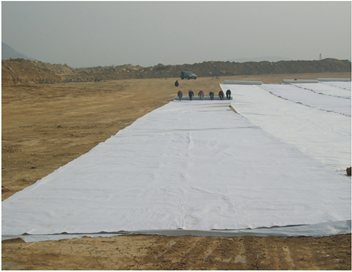
Choosing the wrong material type ruins entire road projects. Woven fabrics look incredibly strong on paper. They boast massive raw tensile strength numbers. However, they harbor a fatal flaw for unpaved driveways. Manufacturers create woven slit film fabrics by weaving flat plastic ribbons together. This tight weaving process destroys permeability. Rainwater cannot pass through quickly. Water pools on the surface, causing dangerous washouts. The woven trap leaves you with strong plastic holding up a flooded, failing road.
A needle-punched nonwoven road fabric solves this dilemma perfectly. Manufacturers use thousands of barbed needles to entangle synthetic fibers. This creates a thick, felt-like material. It allows high volumes of water to pass vertically down into the subgrade. At the exact same time, it traps fine soil particles. The barrier prevents the native base from turning into a muddy soup.
Friction interlock provides another massive advantage. Angular gravel grips the fuzzy, textured surface of non-woven rolls tightly. Woven options have slick, smooth surfaces. When heavy trucks hit the brakes on an incline, gravel slides right off woven plastics. Non-woven textures lock the bottom layer of stone in place. This prevents aggregate migration on steep hills.
Material Comparison for Unpaved Heavy Traffic Roads | ||
Feature | Woven Slit Film | 8 oz Non-Woven |
|---|---|---|
Manufacturing Style | Woven flat plastic ribbons | Needle-punched felt texture |
Water Permeability | Very Low (Pools water) | Very High (Drains quickly) |
Surface Friction | Slick / Smooth | High / Fuzzy Interlock |
Best Application | Under paved asphalt | Under unpaved gravel roads |
Weight classes often deceive buyers. Calling a roll "8 oz" simply indicates its material density per square yard. Smart buyers look beyond the weight. You must verify the actual engineering performance metrics. Reputable products meet AASHTO M288 survivability standards for heavy-duty applications.
The single most critical specification for heavy equipment is CBR Puncture Resistance. Sharp base rock easily cuts thin plastics under immense axle weight. A true 8 oz non-woven driveway geotextile typically offers 400+ lbs of puncture resistance. It survives heavy truck tires pushing sharp angular stones forcefully downward. If the textile punctures, mud bleeds through the holes, and failure begins.
You also need balanced Grab Tensile Strength and elongation. Tensile strength measures the pulling force required to tear the material. Elongation measures how far it stretches before breaking. A solid balance (typically ~200+ lbs of strength and 50%+ elongation) allows the fabric to stretch. It conforms to minor subgrade ruts without snapping. Rigid materials tear when the ground shifts.
Permittivity matters heavily in wet climates. This measures the water flow rate. Specify an acceptable flow rate exceeding 90 gpm/ft². Fast drainage ensures heavy rain events do not cause road hydroplaning. Water exits the road profile rapidly, protecting the base structure.
Performance Target Chart: 8 oz Non-Woven Specifications | ||
Test Property | ASTM Standard | Target Minimum Value |
|---|---|---|
CBR Puncture Resistance | ASTM D6241 | 400+ lbs |
Grab Tensile Strength | ASTM D4632 | 200 - 220 lbs |
Elongation at Break | ASTM D4632 | > 50% |
Water Flow Rate | ASTM D4491 | 90+ gpm/ft² |
Premium material cannot fix terrible grading. A common myth suggests fabrics magically cure all site problems. You must prepare the subgrade properly before unrolling anything. Remove sharp stumps, heavy roots, and massive boulders first. Crown the bare dirt subgrade properly. Crowning creates a slight peak in the center. It sheds water sideways into the ditches. Only lay the fabric after finalizing this shape.
Next, you must respect the overlap rule. Unroll your gravel road fabric carefully. Require 12 to 18-inch overlapping seams between parallel rolls. Very soft, marshy soils might demand 24-inch or 36-inch overlaps. Seams prevent heavy tires from squeezing mud upwards between the rolls. Never skimp on overlap dimensions to save money. Seam failure compromises the entire installation.
Finally, control the base rock application strictly. Enforce a strict rule against driving equipment directly on exposed material. Tires will pinch and tear the synthetic barrier. Instead, mandate a back-dumping technique.
Dump a minimum 6–8 inch initial lift of base aggregate onto the starting edge.
Use a bulldozer or skid steer to push the stone forward over the exposed textile.
Drive the equipment only on top of the newly spread stone layer.
Compact the aggregate thoroughly before applying subsequent lifts.
For roads handling heavy logging equipment, aim for 8 to 12 inches of total compacted depth. Proper depth protects the textile from crushing forces.
Sourcing commercial-grade materials requires vigilance. Avoid vendors shouting "heavy duty" without publishing actual specification sheets. Specification transparency is non-negotiable. Always demand Technical Data Sheets (TDS) before purchasing. Look for explicit references to ASTM testing standards. If a supplier hides their CBR puncture numbers, walk away.
UV resistance presents another critical risk. Non-woven plastics degrade quickly in direct sunlight. Sunlight breaks down the polymer chains, turning strong barriers brittle. Evaluate vendors based on clear UV resistance ratings. You want products offering at least 70% strength retention after 500 hours of exposure. Even with good ratings, ensure prompt aggregate coverage during installation. Do not leave the driveway geotextile exposed for weeks.
Consider roll dimensions and logistics carefully. Calculate your total square footage requirement accurately. Broad rolls measuring 12.5ft or 15ft wide minimize the number of required seams. Fewer seams mean fewer overlaps. This saves massive amounts of wasted material and labor. Narrow landscape rolls require endless overlapping, increasing the risk of installation errors.
Properly specifying your heavy traffic road fabric ensures lasting project success. Partner with suppliers who understand load distribution and subgrade stabilization thoroughly.
A gravel road performs only as well as its underlying base. Skipping base stabilization leads to endless repairs and wasted aggregate. Choosing an 8 oz non-woven textile acts as a reliable physical insurance policy against structural collapse. It stops pumping, spreads wheel loads, and drains heavy rainfall efficiently. The upfront investment rapidly outpaces the chronic costs of road reconstruction.
Your next steps dictate the success of your roadway. Measure your total road footprint carefully. Calculate the extra square footage needed for proper overlapping seams. Request formal specification sheets from your shortlisted suppliers to verify puncture resistance and permittivity metrics.
Take action today to protect your property infrastructure. View our complete product catalog to compare material specifications. Request a physical sample of our 8 oz fabric to feel the density yourself. Contact our technical team for a load-bearing calculation tailored to your site conditions.
A: No, lighter fabrics lack the puncture resistance for heavy truck axles and large angular base stone, leading to premature tearing.
A: Minimum 6 inches for light traffic, but 8-12 inches of compacted aggregate is required for heavy equipment or logging trucks.
A: Yes, as a secondary benefit, the dense material and the required depth of the gravel above it effectively block weed root penetration.
A: When protected from UV light and installed correctly without punctures, it can last indefinitely (20+ years), matching the lifespan of the road.


