

Views: 60 Author: Site Editor Publish Time: 2026-05-29 Origin: Site


Joining an HDPE pond liner correctly is one of the most important steps in building a reliable pond, reservoir, aquaculture basin, irrigation pond, or wastewater lagoon. An HDPE liner is highly resistant to seepage, chemicals, UV exposure, and puncture, but the overall waterproofing performance depends heavily on seam quality. In most engineering pond projects, an HDPE liner should be joined by thermal welding rather than glue, tape, or loose overlapping, because only welded seams can create a continuous and durable containment barrier.
● HDPE liner seams should usually be joined by heat welding.
● Hot wedge welding is best for long straight pond liner seams.
● Extrusion welding is used for corners, repairs, pipes, and details.
● Glue and tape are not reliable permanent methods for HDPE liner.
● Seam testing is essential before filling the pond.
● Proper overlap, surface cleaning, and welding control reduce leakage risk.
Joining an HDPE liner means creating a sealed connection between two liner panels so they perform as one continuous waterproof layer. Simple overlapping may temporarily cover the soil, but water pressure can move between the sheets and create seepage paths. A welded HDPE liner seam fuses the material surfaces together and gives the pond lining system much stronger long-term performance.
The main HDPE liner sheet usually has very low permeability, so leakage problems often occur at weak seams, corners, penetrations, or damaged areas. Poorly welded seams can allow slow water loss, soil saturation, slope instability, and contamination migration in wastewater projects. Strong HDPE liner seams require proper equipment, clean surfaces, correct welding parameters, and inspection after welding.
Large ponds usually require several HDPE liner rolls because one roll cannot cover the full pond bottom and slopes. Joining is also required around pipe penetrations, anchor trenches, repairs, irregular corners, and panel transitions. Whenever the pond surface is wider than one liner panel, professional HDPE liner joining becomes part of the installation plan.
HDPE has low surface energy, which makes it difficult for ordinary adhesives to bond permanently to the material surface. Even if glue appears to hold an HDPE liner at first, water pressure, sunlight, temperature movement, and chemical exposure can weaken the bond. For permanent pond containment, glue should not replace thermal welding of HDPE liner seams.
Waterproof tape and sealant may cover a small temporary defect, but they do not create a structural HDPE liner seam. Over time, tape edges can lift, sealant can age, and pond water can move beneath the repair area. In fish ponds, reservoirs, and wastewater ponds, tape and sealant are not dependable long-term joining methods.
The best way to join an HDPE liner is thermal welding, which melts and bonds compatible HDPE surfaces together. Hot wedge welding is commonly used for long straight seams, while extrusion welding is used for detail work and repairs. This welded approach gives the HDPE liner a continuous waterproof structure that is more suitable for engineered pond containment.
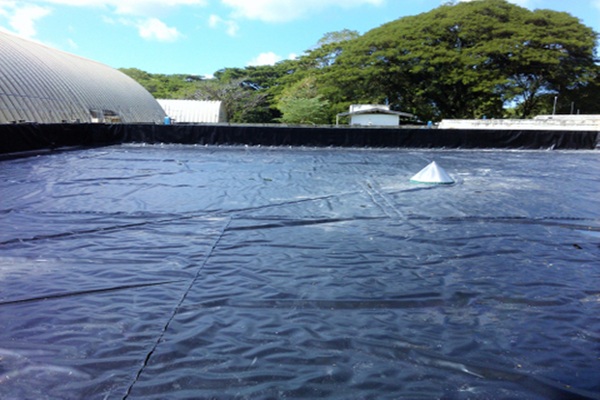
Hot wedge welding uses a heated wedge and pressure rollers to fuse two overlapping HDPE liner panels. It is commonly used for long seams on pond bottoms, side slopes, reservoirs, and large containment areas. A double-track hot wedge seam often creates an air channel between welds, which allows air pressure testing after welding.
Extrusion welding uses molten HDPE welding rod to bond detail areas where a hot wedge welder cannot operate effectively. This method is commonly used for pipe boots, patches, corners, T-joints, anchor details, and repairs. The HDPE liner surface usually needs cleaning, grinding, and preheating before extrusion welding to improve bond strength.
Hot air welding may be used to tack HDPE liner panels in place before final welding. It can control movement during fitting, trimming, and detail preparation, especially around complicated shapes. However, hot air tack welding is normally not considered the main waterproof seam for long-term pond containment.
Joining Method | Best Application | Main Advantage | Main Limitation |
Hot wedge welding | Long straight HDPE liner seams | Fast and consistent | Not ideal for complex details |
Extrusion welding | Corners, pipes, patches, repairs | Flexible for detail areas | Slower and skill-dependent |
Hot air tack welding | Temporary positioning | Useful before final welding | Not a primary waterproof seam |
Glue or tape | Temporary emergency cover | Easy to apply | Not reliable for permanent HDPE liner joining |
A hot wedge welder is the primary machine for long HDPE liner seams on pond bottoms and slopes. An extrusion welder is required for detail areas, patching, corners, pipe penetrations, and irregular transitions. Stable power supply, suitable extension cables, spare nozzles, and temperature control equipment are also important for consistent HDPE liner welding.
Clean cloths, cutters, measuring tape, chalk lines, grinders, and scrapers are used to prepare HDPE liner panels before welding. Dirt, moisture, oil, mud, and oxidation can weaken the welded bond and create hidden seam defects. For extrusion welding, light grinding is often required to remove the surface skin and expose fresh HDPE liner material.
Air pressure testing equipment is commonly used for double-track hot wedge HDPE liner seams. Vacuum boxes, soap solution, probes, and spark testers are used for extrusion welds, patches, and detail areas. Proper inspection tools allow the contractor to confirm seam integrity before the pond is filled with water or wastewater.
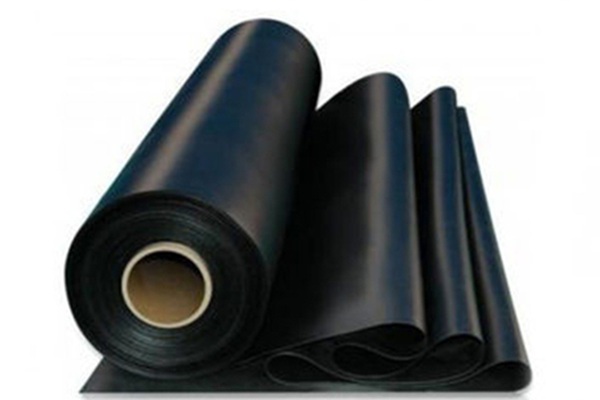
The pond base should be smooth, compacted, and free from stones, roots, sharp debris, and standing water before the HDPE liner is deployed. A rough subgrade can puncture the liner or create stress points after the pond is filled. If the soil contains angular particles, a geotextile cushion layer beneath the HDPE liner can reduce damage risk.
HDPE liner panels should be deployed according to the panel layout, slope direction, wind condition, and welding sequence. The overlap must be wide enough for the selected welding machine and inspection method. Poor alignment can cause wrinkles, uneven weld pressure, and inconsistent seam strength along the HDPE liner joint.
Welding parameters depend on HDPE liner thickness, ambient temperature, wind, humidity, and machine type. A trial weld should be made before production welding to confirm that the selected settings create proper fusion. Too little heat can cause a weak cold weld, while too much heat can burn or thin the HDPE liner seam.
The hot wedge welder should move steadily along the HDPE liner overlap without sudden stops or misalignment. Operators should monitor seam appearance, panel tracking, roller pressure, and the machine’s temperature throughout the process. After welding, the seam should cool naturally before air pressure testing is performed.
Extrusion welding should be used where hot wedge welding cannot form a complete HDPE liner seam. Pipe penetrations, patches, corners, and T-joints require careful trimming, grinding, preheating, and controlled placement of molten HDPE material. The finished extrusion weld should be continuous, smooth, and free from voids, burn marks, or loose edges.
Every important HDPE liner seam should be tested before the pond is placed into service. If leakage, pinholes, fishmouths, or weak areas are found, the defect should be repaired with compatible HDPE material and proper welding procedures. After repair, the same area must be tested again to confirm that the HDPE liner system is sealed.
Air pressure testing is commonly used for double-track hot wedge seams in HDPE liner pond installations. The air channel between the two weld tracks is pressurized, then monitored for pressure loss over a specified period. A stable pressure reading indicates that the HDPE liner seam is continuous and does not contain obvious leakage paths.
Vacuum box testing is often used for extrusion welds, patches, corners, and areas where air channel testing is not possible. A soap solution is applied to the HDPE liner seam, and the vacuum box creates negative pressure over the test area. Bubbles indicate a leak or discontinuity that must be repaired and tested again.
Spark testing can locate small holes or discontinuities in certain HDPE liner systems, especially where conductive backing or approved testing conditions are used. Visual inspection should also be performed to identify wrinkles, burns, contamination, poor overlap, and incomplete welding. Although visual inspection alone is not enough, it remains an important part of HDPE liner quality control.
Test Method | Suitable Seam Type | Inspection Purpose | Typical Use Area |
Air pressure test | Double-track hot wedge seams | Detect leakage in long seams | Pond bottoms and slopes |
Vacuum box test | Extrusion welds and repairs | Locate pinholes and weak welds | Corners, patches, pipe areas |
Spark test | Approved detail areas | Detect small discontinuities | Special inspection zones |
Visual inspection | All HDPE liner seams | Identify visible defects | Full installation area |
Using glue on an HDPE liner seam is one of the most common mistakes in small pond projects. Adhesive bonding does not provide the same fusion strength as hot wedge or extrusion welding. For permanent pond containment, welded HDPE liner seams are far more dependable than glued joints.
Mud, dust, water, oil, and organic matter can prevent proper fusion between HDPE liner surfaces. A seam may look acceptable from the outside but still contain weak areas if the overlap was contaminated before welding. Cleaning and drying the seam zone should be treated as a mandatory step rather than a cosmetic task.
A trial weld confirms whether the machine settings match the HDPE liner thickness and site conditions. Without trial welding, long seams may be produced with incorrect heat, pressure, or speed. Trial welds reduce the risk of large-scale seam failure and unnecessary rework.
An untested HDPE liner seam can contain small defects that are difficult to see during installation. These defects may become leakage points after the pond is filled and the liner is under hydraulic pressure. Seam testing protects the project from hidden failures and confirms that the installed HDPE liner performs as designed.
Large ponds require many HDPE liner panels, long seam lengths, and careful installation sequencing. Wind, temperature, panel movement, and slope conditions can make joining more difficult than it appears. Professional welding equipment and trained operators reduce the risk of seam defects across large containment areas.
Thick HDPE liner material requires more controlled heat input, pressure, and welding speed. Incorrect settings can create incomplete fusion, overheating, thinning, or seam distortion. Skilled welding practice is especially important when joining 1.5 mm, 2.0 mm, or thicker geomembrane materials.
Wastewater lagoons, manure ponds, leachate ponds, and chemical containment basins require stronger seam reliability than decorative ponds. A failed HDPE liner seam in these applications can create environmental, operational, and repair problems. Detailed welding procedures, seam testing, and repair documentation should be included in the project quality plan.
Joining an HDPE pond liner correctly requires more than placing two sheets together or applying adhesive along the overlap. A reliable HDPE liner pond system depends on thermal welding, clean seam preparation, proper overlap, suitable welding parameters, seam testing, and careful repair of any defects. Hot wedge welding is the preferred method for long straight seams, while extrusion welding is essential for pipe penetrations, corners, patches, and other detail areas. For pond lining, aquaculture, water storage, wastewater containment, mining ponds, and industrial anti-seepage projects requiring stable HDPE liner material and geomembrane technical support, Shanghai Yingfan Engineering Material Co., Ltd. provides HDPE geomembrane solutions for practical containment applications.
Ordinary glue is not recommended for joining HDPE pond liner because HDPE is difficult to bond permanently. Water pressure, UV exposure, temperature movement, and chemicals can weaken adhesive joints. Thermal welding is the preferred method for permanent HDPE liner seams.
The best way to join HDPE pond liner is heat welding. Hot wedge welding is used for long straight seams, and extrusion welding is used for details, patches, corners, and pipe penetrations. Proper seam testing should follow the welding process.
The required overlap depends on HDPE liner thickness, welding equipment, and project specifications. The overlap must be wide enough for stable welding and inspection. Installers should follow the welding machine requirements and the project quality plan.


