

Views: 0 Author: Site Editor Publish Time: 2026-07-25 Origin: Site


Reservoir containment systems face massive hydrostatic pressure every single minute. Preventing seepage, ensuring structural embankment integrity, and meeting long-term environmental compliance define the critical engineering stakes of these projects. A flawed containment barrier often creates disastrous leaks and structural failures. Therefore, the installation planning phase acts as the primary driver of your project return on investment. Your initial planning directly impacts future maintenance needs and overall liner lifespan. If you rush deployment, you risk severe subgrade erosion and catastrophic failure.
You need an evidence-based roadmap to secure your infrastructure effectively. This guide provides actionable steps for successful containment planning. We cover material specification, risk mitigation during deployment, and supplier evaluation criteria. We will explore exactly how you can select the right materials for harsh environments. You will also learn how to enforce strict field-welding protocols. By following these rigorous guidelines, you ensure operational security for decades.
Proper planning reduces long-term expenses dramatically. You must invest upfront in a premium waterproof geomembrane to minimize expensive repairs. Cheap materials or rushed installations inevitably lead to post-commissioning leaks. Leak detection surveys require specialized equipment and significant downtime. Furthermore, undetected seepage often causes subgrade erosion. Repairing an eroded embankment costs exponentially more than purchasing high-quality liners initially. A proactive approach saves money and prevents disastrous structural failures.
Common Mistake: Project managers often select thinner materials to save initial capital. This choice almost always accelerates puncture risks under heavy water loads. You should always prioritize durability over short-term savings.
You cannot ignore regional environmental standards. Your installation plans must align strictly with structural engineering guidelines. Organizations like the U.S. Bureau of Reclamation (USBR) provide comprehensive frameworks for reservoir containment. International hydroelectric standards dictate precise safety margins for dam and reservoir liners. Environmental agencies will penalize operations leaking contaminated or treated water into groundwater tables. Therefore, engineers must design containment systems exceeding minimum legal requirements. Compliance protects the surrounding ecosystem and shields your organization from massive fines.
How do we measure a successful installation? You need concrete, quantifiable metrics. We evaluate containment success through several strict parameters over a 20-year horizon.
Meeting these criteria ensures a resilient infrastructure. They provide a clear benchmark for contractors and suppliers alike.
Choosing the correct polymer dictates project success. Engineers typically choose between High-Density Polyethylene (HDPE) and Linear Low-Density Polyethylene (LLDPE). HDPE offers exceptional UV resistance and high tensile strength. It handles harsh chemical exposures perfectly. However, HDPE remains relatively stiff. LLDPE provides superior flexibility. We use LLDPE when facing severe differential settlement or uneven subgrades. LLDPE stretches significantly without rupturing. You must match the polymer characteristics to your specific reservoir demands. High-pressure, stable embankments usually require HDPE. Soft, shifting soils benefit greatly from LLDPE.
The chart below outlines key differences between these two primary materials.
| Polymer Type | Flexibility | UV Resistance | Tensile Strength | Best Application Scenario |
|---|---|---|---|---|
| HDPE | Low | Excellent | Very High | Stable subgrades, exposed environments |
| LLDPE | High | Good | Moderate | Uneven terrain, high settlement risk |
You must determine the correct mil-thickness carefully. Establishing accurate waterproof geomembrane specifications prevents puncture failures. Engineers calculate required thickness based on maximum anticipated hydrostatic pressure. Deep reservoirs generate immense downward force. Subgrade roughness also dictates material thickness. If the soil contains minor irregularities, a thicker liner absorbs the stress safely. A standard reservoirs waterproof geomembrane typically ranges from 40 to 80 mils. Thicker materials yield less square footage per roll. You must account for this yield reduction during logistics planning and procurement.
Standard liners perform well in moderate climates. Extreme environments demand specialized chemical additives. High-altitude reservoirs face intense ultraviolet radiation. To combat this, manufacturers add fine carbon black particles. Carbon black absorbs UV rays and prevents polymer breakdown. Severe thermal cycling also damages standard plastics. Antioxidant packages protect the liner from thermal oxidation. When temperatures fluctuate wildly between freezing nights and scorching days, these additives keep the material flexible. You must explicitly require these stabilization packages for exposed applications.
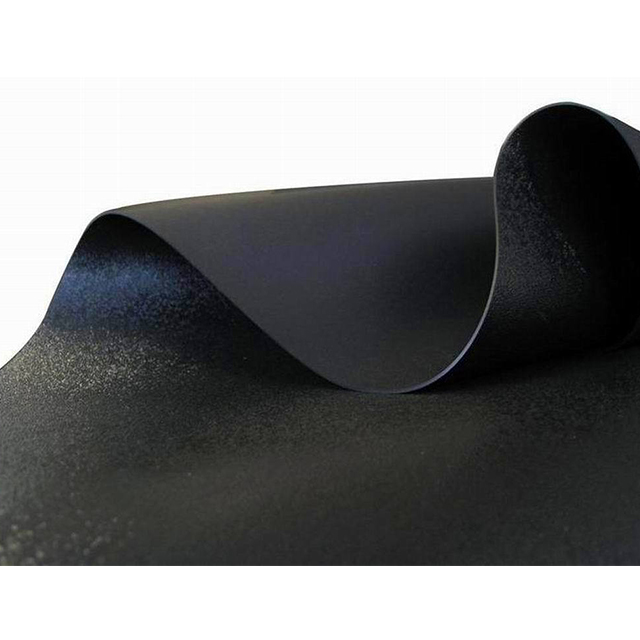
Your liner is only as strong as its foundation. We enforce strict tolerances for soil compaction and moisture content. The subgrade must achieve at least 90% Proctor density. Soft spots will cause the membrane to stretch and snap under water weight. Workers must remove all angular rocks, roots, and sharp debris. A smooth drum roller provides the best surface finish. If you leave a single sharp stone, the hydrostatic pressure will drive it straight through the plastic. Subgrade readiness demands absolute perfection.
Best Practice: Always conduct a final barefoot or soft-shoe inspection of the subgrade. This tactile check reveals hidden sharp objects missed by visual inspections.
Panel deployment carries significant logistical risks. Wind acts as the primary enemy during installation. A sudden gust can lift a massive panel, endangering workers and damaging the material. Teams must use hundreds of sandbags to manage wind-uplift. Temperature also limits deployment windows. Thermal welding requires specific ambient temperatures. If the environment is too cold, the welds become brittle. If the surface is too hot, the plastic melts excessively. Rain or morning dew completely stops all welding activities. Moisture ruins seam integrity instantly.
Creating flawless seams defines the installation process. We utilize two primary welding techniques alongside rigorous quality assurance protocols.
We test double-track seams using air-pressure methods. Technicians pump air into the channel between the two welds. A pressure drop indicates a leak. For extrusion welds, we use vacuum-box testing. Installers apply soapy water to the seam and place a vacuum box over it. Bubbles reveal any microscopic holes. These tests verify absolute structural integrity.
Pumped storage facilities present unique engineering challenges. These reservoirs experience rapid water level fluctuations called drawdowns. Fast drawdowns pull aggressively on the liner system. To prevent slope sliding, you need specialized solutions. Engineers utilize a custom waterproof geomembrane featuring highly textured surfaces. The friction-textured surface grips the underlying soil tightly. This prevents the heavy plastic from sliding down steep embankments. Furthermore, custom-engineered anchoring trenches secure the top edges permanently. Deep anchor trenches prevent wind uplift and material shifting during heavy storms.
Reservoirs are rarely simple empty bowls. They feature concrete intake structures, outlet pipes, and sumps. These penetrations represent the highest-risk failure points. Water naturally seeks the path of least resistance around these structures. We use engineered penetration detailing to seal these gaps. Installers attach specialized mechanical batten strips to concrete walls. They compress the liner between the concrete and stainless steel strips using heavy-duty gaskets. For pipes, technicians create custom-fitted polymer boots. They extrusion-weld these boots directly to the main liner and clamp them tightly around the pipe. You cannot cut corners on penetration detailing.
Field welding introduces variables like wind, dust, and moisture. Factory conditions remain perfectly controlled. By specifying custom panel dimensions, you maximize factory welding. Prefabricated panels arrive at the site already fused into massive sheets. This strategy drastically reduces the total linear footage of high-risk field seams. Fewer field seams equal fewer potential leak points. Furthermore, prefabrication accelerates deployment schedules. Your crew spends less time welding and more time placing the material. Faster deployment reduces weather-related risks significantly.
Your supplier must prove their quality through data. You must vet partners based on verifiable laboratory testing. The industry relies heavily on GRI-GM13 standards for HDPE and GRI-GM17 for LLDPE. These frameworks dictate strict parameters for thickness, density, and tear resistance. A reliable waterproof geomembrane supplier provides batch-specific quality control documentation. This documentation proves the specific roll shipped to your site passed all required tests. Never accept generic data sheets. Demand actual test results for the exact material you purchase.
Manufacturing plastic differs vastly from engineering containment solutions. You must require detailed case studies from your prospective partners. Look for a proven track record in large-scale water containment and civil earthworks infrastructure. Have they supplied materials for a 50-acre hydroelectric reservoir before? Do they understand the specific demands of exposed high-altitude environments? Project-specific expertise ensures the supplier anticipates challenges before they happen. They can recommend specific textures or thicknesses based on past successes. Experience prevents costly trial-and-error on your job site.
Producing the material represents only half the battle. Delivering it safely and supporting the installation matters equally. Assess your supplier on their technical and logistical capabilities. Can they provide on-site technical guidance during the first few days of deployment? Do they offer custom fabrication capabilities for tricky pipe penetrations? Furthermore, evaluate their global delivery timelines. Heavy geomembrane rolls require specialized flatbed transport. Delays in shipping idle your entire construction crew, costing thousands of dollars daily. Reliable logistics support ensures your project remains on schedule and under budget.
Successful reservoir containment relies on meticulous preparation and uncompromising quality. You must bridge the gap between precise material specification and rigorous installation protocols. Rushing subgrade preparation or ignoring weather constraints guarantees failure. Choosing the correct polymer thickness and employing continuous non-destructive testing secures the long-term operational integrity of your facility.
Take proactive steps today to protect your infrastructure. We encourage project managers and civil engineers to request a technical consultation. Ask your engineering team for comprehensive material data sheets and site-specific containment risk assessments. By planning meticulously now, you ensure decades of reliable, leak-free performance.
A: The lifespan typically ranges from 20 to over 30 years. Several variables influence this duration, including the specific material type (like HDPE), mil-thickness, and UV exposure severity. Proper maintenance and high-quality antioxidant additives significantly extend the functional life of the containment system.
A: We test seams using strict non-destructive methods. Technicians use air-pressure testing for double-track wedge welds and vacuum-box testing for extrusion welds. Additionally, we perform destructive peel and shear tests on sample cutouts to verify the ultimate mechanical strength of the weld.
A: No. We strictly prohibit welding in wet conditions because moisture completely destroys seam integrity. Thermal welding also requires minimum ambient temperatures to prevent the polymer from becoming brittle. Installation must pause during rain, heavy dew, or extreme cold snaps.
A: Smooth geomembranes lack surface friction and work best on flat subgrades. Textured geomembranes feature a roughened surface engineered for steep slopes. The texture increases friction, preventing underlying soil or protective cover materials from slipping down the reservoir embankments.


