

Views: 0 Author: Site Editor Publish Time: 2026-07-30 Origin: Site


In large-scale primary containment, landfill lining, or mining applications, liner failure is simply not an option. When containment systems breach, they trigger severe regulatory fines, catastrophic environmental damage, and highly complex remediation efforts. You face intense scrutiny from stakeholders to ensure flawless execution from day one.
Sourcing materials at this massive scale requires moving far beyond basic off-the-shelf catalog ordering. You need deep engineering alignment, rigid factory quality control, and carefully orchestrated site logistics. Relying on generic solutions introduces unacceptable vulnerabilities into your containment infrastructure.
This comprehensive guide breaks down the exact criteria you need to evaluate manufacturers and build robust technical requirements. You will discover practical strategies to mitigate implementation risks before ground is even broken. Ultimately, we will show you how to securely procure custom HDPE geomembrane systems for your most demanding, high-stakes applications.
Generic roll sizes and standard formulations often fall short in demanding industrial applications. Buyers who rely on off-the-shelf catalogs frequently encounter major business problems in the field. Standard sizing forces installation crews to perform excessive field seaming. Every additional field weld increases labor costs and introduces a potential leak vulnerability. Complex topographies require tailored solutions, and forcing a generic liner into a difficult site layout nearly always compromises structural integrity.
Procuring custom fabricated panels provides a distinct operational advantage. Factory-fabricated panels dramatically reduce the number of necessary field welds. Manufacturing facilities operate in controlled environments, ensuring weld quality surpasses anything achieved on a windy, dusty job site. Furthermore, engineers can request targeted resin blends. You might specify enhanced UV resistance for exposed mining applications, superior chemical inertness for hazardous waste, or high thermal stability for brine evaporation ponds.
An optimal sourcing strategy must yield specific success criteria. You should expect zero-defect material delivery. The manufacturer must provide exact dimensional accuracy to match your site drawings. You also need a verifiable chain-of-custody for all raw materials, ensuring no substandard resins enter the production line. Finally, on-time deployment is critical, as delays cascade into massive cost overruns for heavy equipment and installation crews.
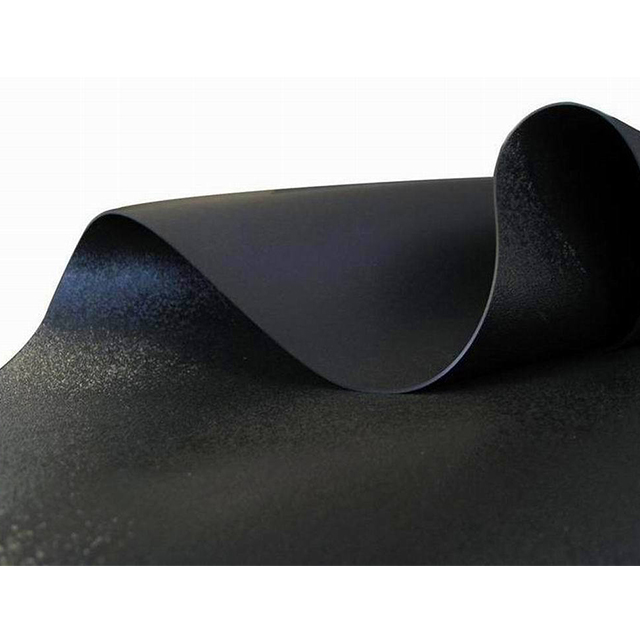
Drafting precise technical requirements dictates the success of your containment project. You must map specific application needs directly to material features. Engineers look primarily at three main factors during this mapping process.
First, consider the mil rating, or thickness. You must match the structural load to the liner thickness. A basic municipal water pond might perform perfectly well using a 40-mil liner. Conversely, a hazardous waste containment facility often requires an 80-mil or 100-mil liner to withstand extreme hydrostatic pressures and chemical attacks.
Second, surface topography plays a crucial role in slope stability. Smooth liners work well for flat subgrades. However, if your project involves steep embankments, you will need single-sided or double-sided textured liners. Texturing increases the friction angle between the liner and the underlying soils or protective geotextiles, preventing catastrophic material slippage.
Third, resin quality is non-negotiable. Always demand 100% virgin high-density polyethylene resins. Some manufacturers cut costs by mixing regrind or recycled materials into the batch. Regrind introduces impurities, significantly increasing the likelihood of environmental stress cracking over time.
Translating engineering drawings into actionable custom HDPE geomembrane specifications requires a solid understanding of performance metrics. You must define acceptable thresholds for physical properties. The table below outlines standard benchmarks you should expect during the specification phase.
| Performance Metric | Industry Test Method | Why It Matters for Large Projects |
|---|---|---|
| Tensile Strength (Yield & Break) | ASTM D6693 | Ensures the liner can stretch and adapt to subgrade settlement without rupturing. |
| Puncture Resistance | ASTM D4833 | Defends against sharp rocks, equipment damage, or debris during and after installation. |
| Carbon Black Dispersion | ASTM D5596 | Provides critical UV stabilization for long-term exposed applications. |
| Stress Crack Resistance | ASTM D5397 (NCTL) | Prevents premature failure when the liner is subjected to constant mechanical stress. |
Finding a manufacturing partner involves deep operational vetting. You must first evaluate manufacturing capacity. Large-scale containment jobs require massive tonnage. Assess whether your chosen custom HDPE geomembrane supplier can actually handle these volume requirements. A supplier might produce high-quality material but lack the extrusion line capacity to meet your deployment schedule, creating costly project bottlenecks.
Quality Assurance and Quality Control (QA/QC) represent the backbone of reliable procurement. Ensure the facility complies strictly with GRI-GM13 standards, developed by the Geosynthetic Institute. These standards establish minimum testing frequencies and acceptable baseline values for HDPE liners.
Document everything. Before accepting a delivery, demand Manufacturing Quality Control (MQC) certificates for every single roll. These certificates prove the specific roll passed rigorous factory testing. Look closely at the manufacturer's in-house testing capabilities. They should conduct both destructive and non-destructive evaluations. Destructive tests measure peel and shear strength, while non-destructive methods often utilize air channel testing or spark testing to ensure seam integrity.
Evaluate the supplier's engineering support. The best manufacturers do not just ship plastic; they act as technical partners. They should offer comprehensive constructability reviews. By analyzing your site plans, they can provide panel layout optimization before extrusion begins. This optimization minimizes waste, reduces field seaming, and accelerates installation times.
The highest quality liner will fail if mishandled during logistics and deployment. Moving materials at scale presents significant challenges. You must navigate complex flatbed shipping constraints. Custom rolls are exceptionally long and heavy. Site access roads must accommodate oversized trucks and heavy lifting equipment.
Handling protocols require strict enforcement. Ground crews must use specific equipment to prevent mechanical damage. A common mistake is allowing operators to unload rolls using standard forklift tines, which easily gouge the material. You must use designated spreader bars, specialized rigging, and core pipes to lift rolls safely.
Site readiness dictates deployment success. Prior to unrolling any material, the subgrade must pass stringent preparation checks. Follow these crucial steps to ensure site readiness:
Weather liabilities represent the final hurdle. Schedule deployment windows carefully around temperature extremes. High heat causes the black material to expand and wrinkle, while freezing temperatures make it stiff and difficult to weld. High winds can easily catch large panels, causing dangerous lifting and tearing. Moisture destroys seam integrity, so you must halt welding operations during rain or heavy dew.
Evaluating bids requires looking far beyond the initial quote. The lowest bid often masks critical deficiencies. Cheap quotes frequently indicate inferior resin quality, inadequate QA/QC protocols, or lack of engineering support. Saving money on initial procurement often leads to disastrous early failures, triggering massive repair costs.
When selecting your partner, factor in labor offsets. Using factory-welded custom panels significantly reduces field-welding hours. You spend less money on specialized installation crews, welding equipment rentals, and third-party field inspectors. These offset costs often justify investing in a premium, prefabricated solution.
To finalize your decision, rely on a strict sourcing checklist. Verify references specifically for previous large projects custom HDPE geomembrane deployments. Ask past clients about delivery timelines, material defects, and responsiveness to issues. Require sample testing by an independent third-party laboratory to validate the manufacturer's MQC data.
If your containment facility requires a highly specific, custom custom HDPE geomembrane formulation to combat extreme chemical profiles, demand evidence. The manufacturer must provide R&D case studies validating their specific polymer blend against your exact chemical exposure scenario. Never accept unproven formulations for high-stakes containment.
Procuring custom containment systems is a rigorous engineering procurement exercise, not a basic commodity purchase. Success requires aligning technical specifications with environmental realities and selecting manufacturing partners capable of delivering verified quality at scale.
Taking these methodical steps guarantees you build a resilient containment infrastructure capable of decades of reliable performance.
A: Typically 4 to 8 weeks depending on resin availability, production queue, and specific custom formulations, though complex prefabrication can extend this.
A: Require MQC (Manufacturing Quality Control) documents for every roll shipped, and utilize third-party CQA (Construction Quality Assurance) inspectors for independent lab testing.
A: Yes. Factory conditions provide controlled temperature and clean environments, resulting in stronger, more consistent seams compared to field welding, which is subject to wind, dust, and moisture variables.
A: Yes, custom orders frequently combine textured panels for sloped perimeters (to prevent soil slippage) and smooth panels for flat basin floors to optimize costs and performance.


