

Views: 0 Author: Site Editor Publish Time: 2026-08-05 Origin: Site


Specifying the wrong material for transportation infrastructure doesn't just inflate budgets—it risks catastrophic subgrade or structural failure. Weak subgrades demand robust engineering solutions. Failing to match soil profiles to the correct materials inevitably leads to premature rutting and pavement cracking.
While government standards like FHWA and AASHTO provide baseline methodologies, translating these into watertight bid documents proves challenging. You must navigate a saturated market of competing material claims. Generic guidelines often leave dangerous loopholes for contractors. You need rigorous metrics to prevent substandard material substitution during procurement.
This guide outlines an evidence-based framework for writing precise geosynthetic reinforcement specifications. We will show you how to minimize field variations and select the right partners for heavy-duty transport applications. You will learn to draft specifications leaving no room for costly field errors.
Establish the primary objective before writing any material requirements. Are you designing for base course reduction to achieve immediate cost savings? Or do you want to extend the pavement design life for better long-term performance? Defining this goal dictates how you specify transport projects geosynthetic reinforcement. Clarifying the business problem prevents engineers from over-designing or under-specifying.
Next, define the structural role of the materials. Different applications demand entirely different testing metrics and performance indicators. Use the following framework to categorize your structural needs:
Finally, transparently list the design assumptions driving your choices. Document the assumed soil properties and anticipated traffic loading measured in Equivalent Single Axle Loads (ESALs). Record all environmental exposure conditions. These parameters justify every metric written into your bid documents.
Avoid proprietary or "or equal" traps in your bidding documents. These vague phrases allow contractors to substitute inferior products. Instead, specify required polymer types based strictly on soil pH and project life. For example, mandate Polyester (PET) for high strength and low creep environments. Require Polypropylene (PP) or High-Density Polyethylene (HDPE) for projects demanding high chemical resistance. Connecting polymer types to site chemistry eliminates ambiguity.
You must mandate specific Key Performance Indicators (KPIs) to ensure long-term stability. The table below outlines critical parameters you should include in every specification document.
Specification Requirement Chart
| Performance Indicator | Requirement Details | Engineering Purpose |
|---|---|---|
| Ultimate Tensile Strength | Specify as MARV in both machine and cross-machine directions. | Ensures a 97.7% statistical confidence level for breaking limits. |
| Allowable Design Strength | Require calculation using reduction factors for installation damage, creep, and durability. | Accounts for real-world degradation over the project lifecycle. |
| Junction Efficiency | Specify minimum percentage thresholds for geogrid nodes. | Critical for ensuring continuous load transfer across the grid. |
| Aperture Size | Match directly to the specified aggregate gradation. | Guarantees optimal interlocking between stone and grid. |
To establish baseline authority, require compliance with relevant state DOT standards. You should also reference the FHWA guidelines or AASHTO LRFD Bridge Design Specifications. Linking your geosynthetic reinforcement requirements to these national frameworks makes it legally binding and scientifically sound.
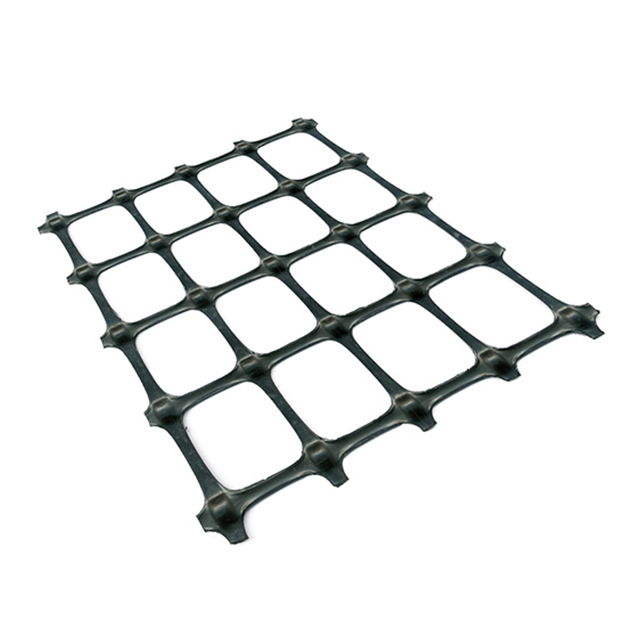
Engineers frequently face a dilemma between standard and custom materials. Standard roll dimensions often result in excessive cutting on complex transport geometries. Curved highway ramps and variable-width rail embankments complicate deployment. Field crews end up overlapping excessive material. This approach wastes expensive polymers and slows down the construction schedule.
You can easily justify customization by evaluating the return on investment. Specify custom geosynthetic reinforcement dimensions to match specific lane widths or unique embankment profiles. Compare the upfront premium of custom manufacturing against the massive labor savings. Contractors spend less time cutting rolls. Your project suffers far less material overlap waste.
Customization also serves as a critical risk mitigation strategy. Custom tensile strength profiles solve unique load-bearing constraints. Uniaxial grids manufactured with specific strengths at precise intervals prevent over-engineering. Off-the-shelf solutions force you to design for the worst-case scenario across the entire alignment. Tailored materials let you place strength exactly where the structure needs it.
Lab data doesn't build highways. Constructability considerations dictate whether a design succeeds or fails in reality. Specifications must account for field survivability. Base this metric on the aggressiveness of the backfill material and the weight of the compaction equipment. Sharp angular rocks drop heavy stress on grid ribs. Your specification must demand a polymer robust enough to survive this physical assault.
Handling and storage specifications require equal attention. Mandate strict protocols for UV protection during site storage. Set hard time limits for sunlight exposure before backfilling occurs. Establish clear temperature constraints during installation. Polymers become brittle in extreme cold and overly pliable in intense heat. Set limits to prevent accidental damage during roll deployment.
Openly address the expectation of installation damage. Site damage assumptions protect your allowable design strength calculations. Require test pad verification if contractors plan to use heavy or recycled concrete aggregates. These materials deviate significantly from standard laboratory testing conditions. Field trials prove whether the selected material can actually survive the specified compaction methods.
Shortlisting potential partners requires looking beyond the initial price tag. Evaluate technical competence and supply chain reliability. A cheap roll of grid becomes a massive liability if it arrives three months late. Assess their manufacturing capacity and their historical track record on heavy infrastructure projects.
Demand independent data verification from every geosynthetic reinforcement supplier. Look for active participation in the National Transportation Product Evaluation Program (NTPEP). Equivalent accredited lab data is also acceptable. Do not trust internal marketing brochures. Independent testing validates their tensile strength and durability claims.
Transparency in QA/QC processes separates reliable partners from risky vendors. A trustworthy supplier provides lot-specific quality assurance testing certificates. Never accept historical averages. You need proof verifying the exact material delivered to your site meets the specification.
Finally, evaluate the supplier’s ability to provide technical support. They should offer project-specific design assistance. Ask if they provide cross-section drawings and on-site construction support. A true partner helps your contractors understand deployment techniques, ensuring the installation matches your design intent.
Specifying materials for transportation infrastructure demands rigorous attention to detail. You must translate long-term performance needs into strict MARV metrics and realistic reduction factors. Avoid vague terminology and legally bind your requirements to trusted national standards like AASHTO.
Remember, a specification is only as reliable as the testing data behind it and the manufacturer supplying it. Vet your partners based on transparent QA/QC protocols and third-party laboratory certifications.
Invite your project engineers and procurement teams to review their preliminary designs. Submit your soil reports to our technical team for a compliance-aware specification review and precise material matching today.
A: Typical values represent an average, meaning up to 50% of the material could fail to meet that metric. MARV (Minimum Average Roll Value) provides a 97.7% statistical confidence level, which is a required safety baseline for critical transport projects.
A: Ultimate tensile strength is penalized for expected installation damage, biological/chemical degradation, and long-term creep. Specifiers must calculate the Allowable Design Strength based on these site-specific reduction factors to ensure the material performs throughout the project's design life.
A: Yes. Pre-sized custom rolls eliminate the need for on-site cutting, reduce overlap requirements by adhering to exact footprint dimensions, and significantly accelerate the deployment rate for contractors.
A: Require current third-party certification (such as NTPEP reports), ISO 9001 factory manufacturing certificates, lot-specific QA/QC testing data, and explicit installation guidelines tailored to your specified aggregate.


