

Views: 0 Author: Site Editor Publish Time: 2026-07-01 Origin: Site


Modern waste containment demands extreme efficiency and strict regulatory compliance. Regulatory bodies worldwide require zero-failure systems to protect surrounding ecosystems. You can no longer rely solely on traditional granular materials like heavy gravel or sand. These bulky aggregates consume profitable airspace, demand heavy transportation, and suffer from rapid biological clogging. The industry requires a smarter, engineered alternative. We now use an advanced geosynthetic system to manage complex fluid dynamics. A composite drainage network integrates a high-density polyethylene core thermally bonded to non-woven geotextiles. It provides exceptional high-capacity fluid and gas transmission. This engineered material outperforms traditional layers at a fraction of the thickness. How do you assess its performance for your specific site? What implementation risks must engineers actively mitigate during construction? This article provides a comprehensive technical evaluation. We will explore practical applications, critical performance metrics, and field installation realities.
Airspace Optimization: Replaces thick gravel layers, reclaiming valuable landfill volume for waste storage (direct ROI).
Multifunctional Application: Acts simultaneously as a leachate collection layer, leak detection system, and gas drainage layer.
Structural Integrity: Maintains transmissivity under extreme compressive loads while protecting the primary geomembrane liner from puncture.
Specification Focus: Procurement decisions must hinge on site-specific transmissivity tests, shear strength requirements, and chemical resistance to leachate.
Environmental protection agencies mandate strict control over hydrostatic head pressure across waste containment facilities. Regulatory guidelines universally demand you prevent liquids from building up on landfill liners. If hydrostatic pressure rises too high—typically beyond the standard 300mm compliance limit—toxic liquids can puncture or breach the containment system. This containment failure leads directly to severe groundwater contamination. Modern compliance frameworks require drainage systems to maintain pressure head levels below specific thresholds over several decades.
Traditional aggregate layers fail to meet modern efficiency standards. Granular materials pose significant logistical and operational challenges. Sourcing and transporting gravel require massive fleets of dump trucks. These heavy loads incur massive transport costs and degrade local infrastructure. Once installed, gravel layers often experience rapid biological and particulate clogging, which ruins their flow capacity. Furthermore, gravel layers consume up to 300 millimeters to 500 millimeters of vertical space. You lose revenue-generating volume every time you place a thick aggregate layer in your cell.
Engineers now solve these challenges by adopting geosynthetics. A landfill drainage network offers a lightweight, factory-manufactured alternative. It delivers consistent transmissivity across the entire containment footprint. These systems drastically reduce installation time compared to moving thousands of tons of stone. They successfully solve both the strict airspace constraints and the long-term flow-capacity challenges simultaneously.
Geosynthetic drainage systems handle aggressive liquids and gases efficiently. They serve multiple critical functions throughout the entire lifecycle of a waste containment facility.
You will typically install this highly durable material at the base and along the steep side slopes of a containment cell. A leachate collection layer funnels chemically aggressive liquids safely away from the geomembrane. The system directs these fluids rapidly down the slope into designated collection sumps. When evaluating base layer designs, you must account for harsh biochemical conditions. Trustworthy design assumptions always calculate long-term chemical degradation. Microorganisms thrive in these environments. Therefore, you must also apply strict reduction factors for biological clogging, since the materials remain in direct contact with concentrated leachate over the facility's lifespan.
Double-lined containment cells utilize primary and secondary liners to ensure environmental safety. You place this geosynthetic layer precisely between these two liners. It operates as an active monitoring zone. It provides rapid fluid transmission capabilities. If the primary liner suffers a mechanical breach, the network channels the escaping liquid quickly to an observation point. This triggers early warning sensors long before widespread environmental contamination occurs.
Final closure systems require highly effective gas and surface water management. You utilize a gas drainage layer underneath the final capping geomembrane. It safely captures and vents methane, hydrogen sulfide, and other hazardous landfill gases. These networks also perform a vital secondary role above the cover liner. They drain surface water infiltration rapidly. This continuous drainage prevents the cover soil from becoming overly saturated. Soil saturation acts as the primary trigger for catastrophic slope failures in final covers.
Selecting the right product requires careful, highly technical analysis. You cannot rely on basic baseline tests alone. You must evaluate the drainage geocomposite against rigorous site-specific conditions.
Laboratory baseline conditions rarely mimic the harsh realities of a massive waste pile. You must evaluate flow capacity under the actual expected load of the waste mass over a century or more. Waste piles exert immense compressive forces continuously. You need to calculate exact reduction factors to predict true performance. These factors account for long-term creep, structural intrusion, chemical degradation, and biological clogging.
The attached geotextiles serve as vital particulate filters. You must evaluate their Apparent Opening Size (AOS) and permittivity before specification. Engineers always face a delicate trade-off. The fabric must prevent fine soil particles from migrating into the core. However, it must also allow adequate, continuous liquid flow. If the AOS is too small, the fabric clogs quickly. If it is too large, soil enters the core and permanently blocks the inner drainage channels.
Landfill liquids are notoriously aggressive and unpredictable. A reliable geonet drainage material usually features an extruded high-density polyethylene (HDPE) core. You must test the HDPE core against highly acidic or alkaline leachate profiles derived from your specific waste type. Proper chemical compatibility testing ensures long-term structural stability and maintains essential flow rates.
Below is a comparative chart outlining common reduction factor variables you must analyze:
Reduction Factor (RF) | Primary Cause | Design Impact |
|---|---|---|
RF Creep | Long-term compressive loads from dense waste mass | Reduces core thickness and diminishes flow capacity permanently over time |
RF Intrusion | Geotextile fabric pushing deep into the geonet structure | Constricts flow channels under heavy vertical pressure |
RF Chemical | Aggressive acidic/alkaline compounds found in leachate | Weakens polymer bonds and destroys structural integrity |
RF Biological | Bacterial and microbial growth inside the drainage core | Creates stubborn physical blockages in the fluid pathway |
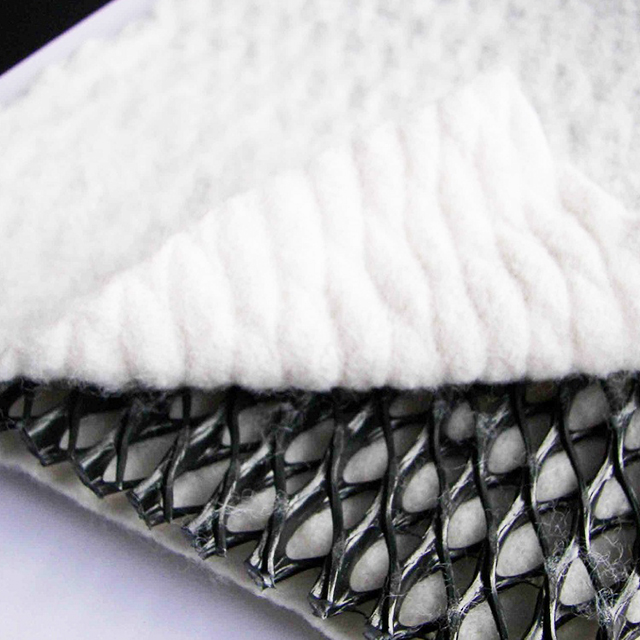
Even the most premium engineered materials fail if contractors install them incorrectly. Field realities often introduce variables not seen in pristine laboratory environments. Engineers and site managers must address these installation risks proactively to ensure the system functions.
Slippage poses the absolute highest risk on steep side slopes. A smooth geocomposite can easily slide against the underlying geomembrane liner. This downward movement tears critical liners and severely compromises environmental containment. We strongly recommend specifying highly textured geomembranes for slope sections. You should also demand specifically engineered high-friction geocomposites. Testing interface shear strength in a lab prior to installation prevents catastrophic slope failures.
Heavy waste loads push the attached geotextile deep into the geonet core. If you place a weak geotextile over a bi-planar net under massive weight, the fabric stretches significantly. This intrusion severely chokes the available flow path, acting as a physical bottleneck. Choosing the right core thickness matters immensely. You must also evaluate the core structure itself. Tri-planar structures generally resist intrusion much better than older bi-planar options under extreme loads. Proper structural selection mitigates flow loss effectively.
Installation handling directly impacts long-term performance. Field contractors must follow strict overlap rules. Wind, temperature fluctuations, and heavy machinery create daily challenges. We recommend the following best practices for field placement:
Secure adjacent geonet panels using standardized plastic cable ties to prevent shifting during soil placement.
Continuously sew or heat-weld the upper geotextile seams to stop fine soil intrusion at the joints.
Minimize ultraviolet (UV) light exposure by covering the sensitive material quickly after deployment.
Avoid driving heavy construction equipment directly on uncovered geosynthetics to prevent crushing the core.
Procurement choices dictate the long-term environmental and financial success of your waste containment strategy. You must move past generic specifications and demand project-specific evidence. Do not accept assumed values from a manufacturer's basic data sheet.
Advise your purchasing team to request standardized testing validation from independent laboratories. Buyers should demand hard data based on recognized industry standards, such as ASTM D4716 for transmissivity. You need to know exactly how the material behaves under your site's specific load and chemical profile.
Next, evaluate the cost-to-performance ratio carefully. Frame the procurement logic around tangible operational returns. A premium system certainly carries a higher upfront cost. However, you must weigh this expense against massive logistical savings. You eliminate aggregate transportation costs entirely. More importantly, you unlock the immense financial value of reclaimed airspace. Every vertical meter saved generates direct, measurable waste-storage revenue for the facility operator.
Encourage early consultation with geosynthetic engineering teams. Expert teams run site-specific flow modeling and complex stability calculations. These evaluations ensure you finalize accurate, safe procurement specs long before the first excavator breaks ground.
Geosynthetic drainage solutions provide an essential structural upgrade for modern waste containment operations. They replace outdated, inefficient granular materials. Here are the most critical takeaways to remember for your next site development project:
These materials act as highly engineered systems, critical to both the structural and environmental safety of your site.
Success requires actively aligning the material’s limits with your site-specific load, slope friction, and chemical variables.
Replacing traditional aggregate creates immediate financial returns through vastly expanded landfill airspace.
Rigorous testing against compressive creep and biological clogging ensures long-term operational viability and regulatory compliance.
Do not leave your containment design to chance. Download our technical specification checklist to guide your rigorous procurement process. Request a detailed transmissivity testing report for your targeted materials. Consult directly with an engineering representative today to fully optimize your next containment cell.
A: Yes. Provided the core is manufactured from premium high-density polyethylene (HDPE), it offers proven chemical resistance against aggressive liquids. However, engineers must properly calculate reduction factors for biological clogging during the initial design phase to ensure long-term transmissivity when in direct contact with leachate.
A: An engineered geocomposite measuring just 6mm to 10mm thick often provides equivalent or superior liquid transmissivity. This direct replacement eliminates heavy trucking costs and saves nearly 300mm of vertical airspace, creating highly profitable internal volume for additional waste storage.
A: When specified correctly for expected environmental loads and shielded from UV exposure post-installation, high-quality HDPE materials offer immense durability. They are structurally designed to outlast standard regulatory post-closure care periods, which typically range from 30 to well over 100 years.


