

Views: 0 Author: Site Editor Publish Time: 2026-06-17 Origin: Site


Are you struggling with water management in construction projects? Geocomposite drains are revolutionizing the way we handle drainage systems. These innovative solutions combine multiple layers of materials to efficiently manage water and gases, making them ideal for modern civil engineering projects. In this article, you will learn what geocomposite drains are, how they work, and their applications in various industries, including those provided by Shanghai Yingfan. We’ll also explore the benefits and best practices to consider when choosing a geocomposite drain for your next project.
A geocomposite drain is a sophisticated drainage system designed to efficiently manage the flow of water and gases. It consists of a drainage core and geotextile filter layers. The drainage core is typically made from durable materials such as HDPE (High-Density Polyethylene) or polypropylene, designed to allow water to flow freely while preventing soil and debris from blocking the system. This multi-layer design ensures enhanced drainage capacity, offering significant advantages over traditional systems like gravel.
The geotextile filter layer plays an important role in preventing fine particles from clogging the drainage core, while still allowing water to pass through. This structure ensures long-term functionality and prevents system failure due to clogging, a common issue with traditional drainage methods.
The drainage core is the heart of the geocomposite drain, designed to provide an open pathway for water to flow. Typically made from HDPE or polypropylene, the core material is both durable and resistant to environmental degradation. The design often includes geonets, cuspated sheets, or mini-pipes, each with a 3D structure that maximizes water flow while maintaining strength and resistance to compression. This design allows the geocomposite drain to handle large volumes of water, even under high pressure.
The drainage core serves as the primary channel for transporting water away from the area it is meant to protect, such as behind retaining walls or in landfill sites. By preventing the buildup of water and reducing hydrostatic pressure, it plays a critical role in maintaining the stability of structures and infrastructure.
The geotextile filter layer surrounds the drainage core and provides essential filtration. Typically made from nonwoven fabrics like polypropylene or polyester, the geotextile layer allows water to pass through while blocking soil particles, sediment, and other debris from entering the core. This prevents clogging and ensures that the system continues to function effectively for long periods.
The filter layer helps maintain the efficiency of the drainage system by keeping the core clear, even in environments with high levels of soil or debris. Its permeability is carefully designed to balance the need for water flow with the prevention of sediment infiltration.
Geocomposite drains are widely used across various civil engineering projects, offering efficient drainage solutions that are superior to traditional systems like gravel. One of the primary applications is in landfills and dams, where they manage leachate collection and gas venting systems. In landfills, geocomposite drains help efficiently remove contaminated water and gases from the waste mass, thereby reducing the risk of groundwater contamination and enhancing the environmental safety of the site. The robust design of these drains, often made from high-density polyethylene (HDPE), allows them to withstand harsh conditions while providing long-lasting drainage solutions.
In roadways and railway embankments, geocomposite drains are critical for maintaining the structural integrity of the subgrade. By diverting water away from the foundation, they prevent the weakening of the subsoil caused by water accumulation. This functionality is particularly important in areas where moisture could lead to frost heave or erosion, thus ensuring that transportation infrastructure remains stable and durable over time.
Geocomposite drains are also an essential part of green infrastructure and urban development, especially in projects focused on sustainability and water management. For green roofs and landscaping, these drains help manage excess water and prevent root rot by directing water away from the plant roots. By maintaining an optimal moisture balance, geocomposite drains support the growth of plants, contributing to the health of urban green spaces and improving the building’s energy efficiency by managing stormwater effectively.
In tunnels and underground structures, geocomposite drains are used to intercept and divert water that may seep into the tunnel lining. This is crucial for preventing water-related damage to the structure and ensuring the integrity of the underground space. By reducing seepage, geocomposite drains enhance the overall waterproofing efforts and help maintain a dry, safe environment underground.
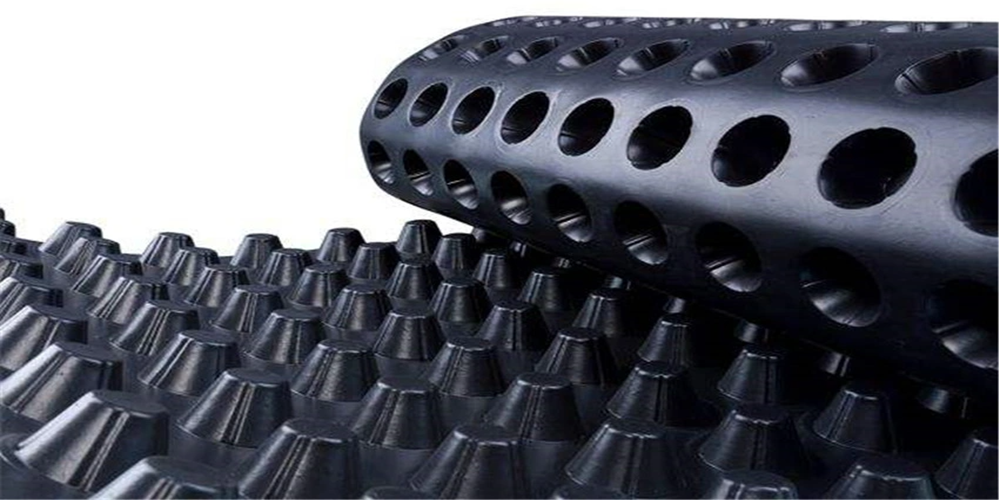
Here is a visual representation of an HDPE drainage board, a common core component in geocomposite drainage systems. The dimpled surface allows for efficient water collection and flow, ensuring optimal drainage in various applications like landfills, railways, and green infrastructure projects.
Geocomposite drains significantly enhance drainage efficiency by offering higher flow rates and greater drainage capacity compared to traditional systems like gravel. The 3D drainage cores used in geocomposite drains—made from materials like HDPE (High-Density Polyethylene)—allow water to flow more freely and faster. These designs, such as geonets or cuspated sheets, create optimal pathways for water to travel through, even under heavy pressure, making them ideal for high-performance applications like landfills and retaining walls.
Unlike traditional systems, geocomposite drains reduce maintenance needs by preventing clogging. The geotextile filter layers surrounding the core effectively block soil and other particles from entering the system, ensuring long-term performance without the frequent repairs or replacements that gravel systems require. This efficiency leads to cost savings by reducing the frequency of maintenance and the labor involved, making geocomposite drains an economically advantageous option for large-scale projects.
Geocomposite drains are known for their durability, with the ability to withstand significant compressive forces. The drainage core can handle pressures up to 1000 kPa, making it suitable for applications subject to high load-bearing conditions, such as in roadways or railway embankments. This level of strength ensures that geocomposite drains maintain their structural integrity over time, even under extreme environmental conditions, without compromising performance.
In addition to their impressive durability, geocomposite drains are also environmentally friendly. By reducing the need for natural materials like gravel and sand, they contribute to lower carbon footprints. Traditional drainage systems rely heavily on mining these materials, which can be damaging to the environment. Geocomposite drains, on the other hand, use recyclable materials such as HDPE, and their efficient performance helps minimize the environmental impact of large-scale drainage systems.
Choosing the right geocomposite drain for your project involves a detailed assessment of several critical factors, including soil type, flow requirements, and load conditions. These elements determine the best product for your drainage system, ensuring it meets both the specific requirements and performance expectations of your project.
Shanghai Yingfan offers customized solutions that cater to these specific project requirements. By adjusting the thickness, density, and core material of the geocomposite, they ensure the product fits the unique needs of each project.
Factor | Considerations | Example Products |
Soil Type | Match the geotextile material with the soil conditions for optimal drainage. | Nonwoven geotextiles for fine-grained soils, geonets for coarse soils. |
Flow Requirements | Choose a geocomposite with the appropriate flow capacity for managing water volume. | High-flow geocomposites for areas with substantial water infiltration. |
Load Conditions | Ensure the geocomposite drain can withstand the pressure and weight at the site. | High-compressive strength geocomposites for use in landfills, highways, and railways. |
When selecting the right geocomposite drain, it is essential to consult with geosynthetics experts. These professionals can assess the unique needs of your project, considering the environmental conditions, drainage requirements, and load-bearing factors. By working with experts, you can ensure that you are choosing the most efficient and durable drainage solution for your project.
Professionals provide valuable insights into the best products for specific conditions and can guide you through the design and installation processes. Their experience ensures that your drainage system will function optimally throughout its lifespan, reducing risks and minimizing long-term costs.
The installation of geocomposite drains requires careful preparation to ensure optimal performance and longevity of the system. The first step is a site assessment, where the soil type, water flow conditions, and load-bearing capacity of the site are evaluated. This step is crucial to determine the appropriate geocomposite product based on the specific environmental and structural needs.
Once the site is assessed, the next step involves soil preparation. This includes clearing the area of debris, ensuring the ground is level, and compacting the soil to the correct density. Proper soil preparation helps to create a stable foundation for the drainage system, ensuring that it functions efficiently over time.
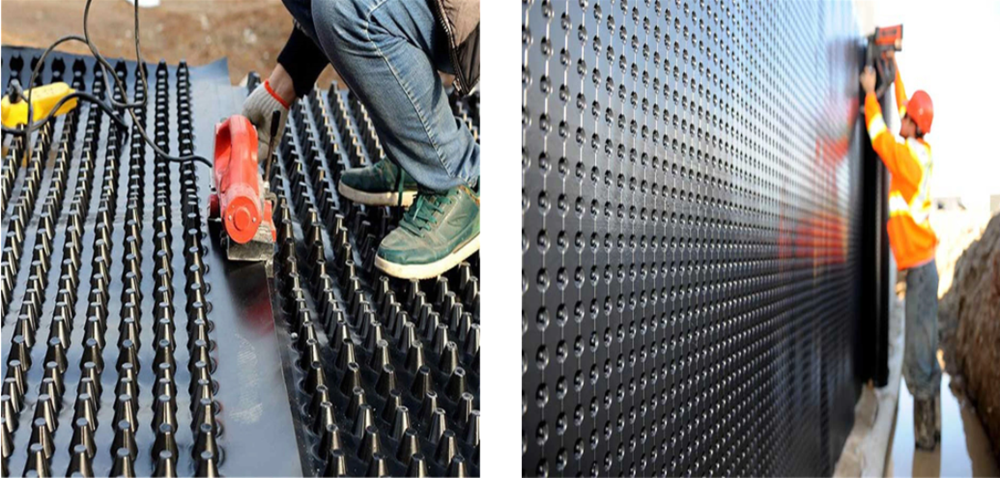
After soil preparation, it is important to inspect the materials before installation. Ensure that the geocomposite material meets the required specifications for thickness, flow capacity, and tensile strength. Materials should be free from any damage that could compromise their performance. Finally, the drainage layer should be carefully laid and connected. The drainage sheets or mats should be positioned according to the project’s specifications, with seams securely connected to avoid gaps and ensure continuous water flow.
Step | Action |
Site Assessment | Evaluate soil type, water conditions, and load-bearing capacity. |
Soil Preparation | Clear debris, level the area, and compact soil for stability. |
Material Inspection | Ensure the geocomposite meets required specifications for durability. |
Drainage Layer Installation | Lay and connect the drainage material securely, ensuring no gaps. |
When installing geocomposite drains, it is essential to avoid certain common mistakes that could affect the system's performance. One of the most frequent issues is misaligned seams. If the drainage layers are not properly connected, water can bypass the system, leading to inefficient drainage. Another common mistake is incorrect material placement, such as improper overlap or insufficient compaction of the soil, which can compromise the drain's ability to carry water efficiently.
To ensure long-term efficiency and stability, follow best practices during installation. One of the key practices is to ensure proper overlap of geocomposite layers to avoid leaks and ensure water flows through the intended channels. Additionally, securing the drainage material with anchors or pins in areas of heavy flow or steep gradients is essential to prevent shifting. Finally, always conduct a final inspection to confirm that the installation is correct, and the system is ready to function optimally.
Geocomposite drains offer high efficiency, durability, and cost savings for modern drainage systems. Choosing the right drainage product is crucial to the success of any engineering project. Shanghai Yingfan Engineering Material Co., Ltd. provides customized geocomposite solutions designed to meet specific project needs, ensuring effective performance and long-term reliability for a variety of applications.
A: A geocomposite drain is a multi-layered drainage system designed to efficiently manage water and gases. It typically combines a drainage core with geotextile filters to prevent clogging and ensure effective water flow.
A: Geocomposite drains enhance efficiency by offering high flow capacity, preventing soil infiltration, and maintaining continuous water flow even under high pressure.
A: Geocomposite drains are commonly used in landfills, roadways, railway embankments, and retaining walls to manage water and reduce hydrostatic pressure.


