

Views: 0 Author: Site Editor Publish Time: 2026-07-17 Origin: Site


At the procurement stage, selecting the right containment membrane is a high-stakes decision. You must carefully balance upfront material costs, installation complexity, and long-term project viability. A single leak can compromise local soil integrity and disrupt operational timelines. While an HDPE pond liner serves as the industry standard for large-scale applications, choosing it is not always straightforward. Buyers often struggle to evaluate whether it fits their needs compared to alternative elastomers or flexible plastics. They also face challenges knowing exactly how to spec it correctly for optimal performance. This article provides a technical, objective decision framework to help you navigate these choices. We will compare high-density polyethylene against alternative materials to clarify their distinct advantages. You will learn how to evaluate critical specifications and effectively vet reliable suppliers. This guide ensures your commercial, agricultural, or specialized aquatic projects achieve lasting success.
High-Density Polyethylene (HDPE) stands as the undisputed benchmark for heavy-duty containment systems. We look to it because it delivers extreme durability and consistently high tensile strength. Its dense molecular structure resists environmental stress cracking exceptionally well. These physical traits make it highly reliable for demanding, long-term environments.
To understand its value, consider these core performance characteristics:
You will see HDPE thrive in specific, rigorous use cases. Commercial water containment facilities rely on it heavily to prevent seepage. Hazardous waste sites depend on its robust chemical barriers to protect local ecosystems. Furthermore, it excels as an aquaculture HDPE pond liner. The material is non-leaching and completely food-safe. It protects sensitive aquatic life while maintaining pristine water quality across multiple harvest cycles. Fish farmers prefer it because its smooth surface does not harbor harmful bacteria easily.
However, we must acknowledge the core implementation trade-off. This impressive durability comes at the direct cost of flexibility. HDPE is inherently stiff and quite heavy to maneuver. Installers cannot simply fold it over complex curves or sharp corners. Instead, crews typically require specialized thermal wedge welding. This process melts the overlapping edges together. It creates a solid, leak-proof barrier. Proper installation demands trained technicians and clean, dry weather conditions.
Buyers must weigh high-density options against other popular geomembranes. Each alternative brings distinct advantages and unique risks to your site setup.
EPDM offers superior flexibility right out of the box. Installers can easily conform it to complex pond shapes or decorative water features. You often see it used in residential backyards or DIY landscaping projects.
However, EPDM carries notable risks for large-scale applications. It weighs significantly more per square foot than polyethylene options. You will also face higher material expenses during procurement. EPDM resists specific harsh chemicals poorly compared to its denser counterparts. Finally, it offers significantly lower puncture resistance. Sharp rocks or animal claws can breach it more easily.
LLDPE successfully bridges the gap between different material properties. It combines the core toughness of high-density polymers with the flexibility of EPDM. Crews find it much easier to install on highly uneven terrain.
The primary trade-off lies in slightly reduced long-term durability. LLDPE exhibits slightly lower UV resistance overall. It also features a lower tensile strength. The material might stretch too much under heavy, localized stress.
PVC remains highly flexible and extremely cost-effective for tight project budgets. Contractors often specify it for buried containment applications where sunlight cannot reach it.
Despite these initial benefits, standard PVC contains volatile liquid plasticizers. Direct UV exposure degrades these chemical additives rapidly. The plasticizers may also leach directly into the surrounding water over time. This makes PVC a remarkably poor choice for exposed aquaculture projects.
| Material Type | Flexibility Level | UV Resistance | Puncture Resistance | Ideal Project Application |
|---|---|---|---|---|
| HDPE | Low | Excellent | High | Exposed commercial, agriculture, hazardous waste |
| EPDM | High | Good | Low | Residential ponds, complex landscaping shapes |
| LLDPE | Medium | Good | Medium | Uneven terrain, buried landfill caps |
| PVC | High | Poor (Exposed) | Medium | Buried applications, temporary water storage |
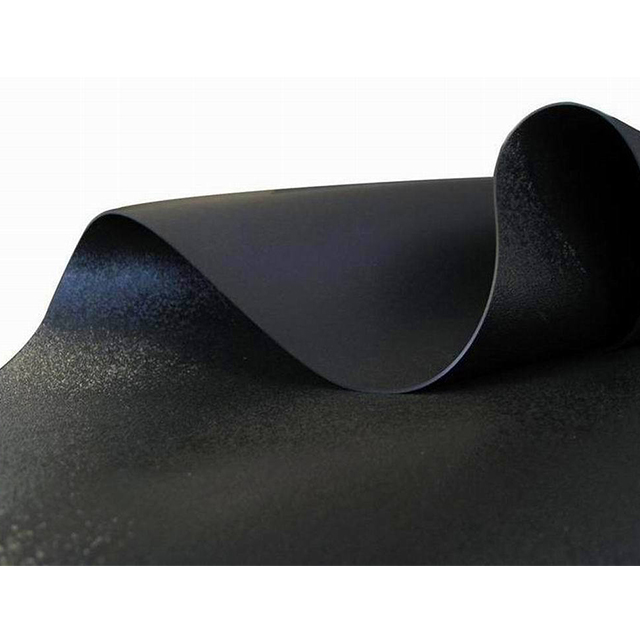
Avoid settling for generic marketing claims about high quality materials. You must evaluate objective HDPE pond liner specifications to ensure project success. These exact metrics directly align the product to your physical site demands.
First, you must match the mil thickness to your desired outcome.
Next, prioritize UV and weathering resistance during your evaluation. You should always look for a 2% to 3% carbon black additive. This specific dispersion rate remains non-negotiable for any exposed application. Carbon black absorbs harmful ultraviolet rays effectively. It prevents the sun from breaking down the polymer chains prematurely. Without it, the plastic becomes brittle and cracks within months.
You should also ask about Oxidative Induction Time (OIT). This metric measures how well the polymer resists thermal degradation. High standard OIT values ensure the plastic will survive decades of intense solar heat.
Finally, we strongly advise you to verify industry compliance. Check if the liner meets standard industry benchmarks like the widely accepted GRI-GM13 framework. The Geosynthetic Institute established this standard to dictate minimum baseline requirements. It covers tear resistance, chemical makeup, and material density. Meeting this strict benchmark guarantees long-term structural integrity.
How the material arrives on-site dictates your entire labor model. It also significantly influences your overall installation failure risk. You must choose the right delivery format carefully to optimize resources.
Many buyers default to standard roll sizes for sheer convenience and market familiarity.
Choosing a custom HDPE pond liner changes the installation dynamic entirely.
Your supplier’s operational capabilities are just as critical as the polymer itself. You must thoroughly vet their business practices before signing a purchase order. Working with an unreliable vendor introduces severe project delays.
A credible HDPE pond liner supplier prioritizes testing and absolute transparency. They will immediately provide technical data sheets (TDS) upon request. They should also supply material safety data sheets (MSDS) without hesitation. These documents verify the precise chemical makeup of your chosen geomembrane. The TDS should explicitly list ASTM testing methods for tensile strength and puncture resistance.
You also need to assess their logistics and freight expertise. Roll goods are exceptionally heavy and bulky. Unloading them often requires forklifts equipped with specialized carpet poles or spreader bars. Vet the supplier’s freight policies carefully. Ask about the shipping protective measures they use. Proper packaging prevents transit damage that could ruin a membrane before deployment.
Finally, scrutinize the warranty closely to avoid common industry traps. You must differentiate between weathering warranties and puncture warranties. Most warranties only cover UV degradation, not accidental physical damage. Identify whether the coverage is strictly pro-rated or absolute. A pro-rated warranty diminishes in financial value over time. Absolute coverage protects your entire replacement material cost for the stated duration.
Selecting the right geomembrane requires a clear, objective evaluation framework. You should consistently choose high-density polyethylene for maximum longevity in exposed commercial environments. It remains unmatched for rigorous, large-scale aquaculture applications. Only shift to flexible alternatives if installation constraints drastically outweigh the need for maximum tensile strength.
Take immediate, informed action to secure the best material for your site. First, request physical material samples from multiple vendors to compare textures and stiffness. Next, ask engineering teams for project-specific thickness recommendations based on your local subgrade. Finally, calculate your total project expense accurately. Factor in material, freight, and specialized installation labor rather than just comparing the base price-per-square-foot.
A: Yes, but with significant caveats. The material becomes extremely stiff in low temperatures. This makes it difficult to unroll and conform perfectly to subgrades. Thermal welding parameters must also be strictly adjusted. Technicians need to calibrate their wedge welders specifically for cold weather to ensure strong, leak-proof seams.
A: While the material remains highly puncture-resistant, a non-woven geotextile underlayment is strongly recommended. Many manufacturers actually require it to maintain valid warranties. It protects the membrane over rocky or highly abrasive subgrades. This extra layer prevents long-term stress fatigue and extends the overall lifespan of your containment system.
A: With proper carbon black UV stabilization meeting the GRI-GM13 standard, it performs exceptionally well. Correct installation without severe stress points maximizes this lifespan. An exposed barrier can realistically last 20 to 36 years or more. It significantly outperforms unburied PVC and other alternatives in harsh, direct sunlight.


