

Views: 0 Author: Site Editor Publish Time: 2026-07-08 Origin: Site


Procuring containment liners represents a high-stakes decision for any project. Material failure leads directly to severe environmental contamination. You might face heavy regulatory fines from environmental protection agencies. Catastrophic project delays also threaten your core budget. Evaluating an HDPE geomembrane requires looking past clever marketing claims. You must strictly analyze verifiable technical specifications. Rely heavily on standardized testing from organizations like ASTM and GRI. Application-specific parameters matter just as much as baseline material quality. This guide provides procurement teams and site engineers a highly skeptical, evidence-based framework. You will learn how to evaluate specs accurately. We show you how to match parameters directly to field realities. Finally, you will discover how to shortlist reliable manufacturing partners. By mastering these specifications, you protect your site and secure your project timeline.
The Geosynthetic Research Institute created the GM13 standard. It serves as the undisputed global baseline for HDPE geomembrane specifications. Legitimate manufacturers formulate their products to meet these strict minimums. GRI-GM13 outlines exact requirements for physical, mechanical, and endurance properties. If a spec sheet ignores GM13, you should walk away immediately.
Verifiable suppliers rely on specific ASTM test methods. They use these standardized methods to prove the numbers on their spec sheets.
Watch out for suspicious testing claims. Some suppliers provide internal or "in-house" data. They often skip third-party laboratory verification. They might omit clear references to ASTM methodologies entirely. Always demand independent certification. In-house numbers alone rarely guarantee long-term performance in harsh environments.
Common Mistake: Accepting a Certificate of Analysis lacking independent lab accreditation. Always verify the testing facility holds proper ISO or GAI-LAP credentials.
You need to evaluate yield strength and break elongation carefully. Field realities demand extreme flexibility. High elongation prevents tearing during installation. Subgrades often settle unevenly over time. Flexible liners stretch instead of breaking under this pressure.
Lab numbers must translate directly to site preparation realities. Sharp subgrades pose major threats. Rocky terrain dictates highly specific puncture resistance specs. You must choose a material strong enough for your exact soil type. Proper geotextile cushioning often pairs with high-puncture liners to prevent catastrophic breaches.
Environmental Stress Crack Resistance (ESCR) strictly predicts longevity. High ESCR prevents brittle failures. Liners face decades of intense thermal cycling. Mechanical stress also takes a heavy toll. Excellent ESCR ensures the liner survives these harsh conditions without microscopic cracking.
OIT measures the internal antioxidant package. This package actively fights degradation. It determines the liner's overall lifespan. Aggressive UV radiation destroys weak plastics. Harsh chemical leachate attacks the material daily. High OIT means superior chemical resistance.
Best Practice: Always evaluate High Pressure OIT (HP-OIT) alongside standard OIT. HP-OIT better reflects the performance of modern hindered amine light stabilizers (HALS).
Table 1: Core Testing Parameters Overview
| Specification Category | Primary ASTM Method | Field Reality Importance |
|---|---|---|
| Tensile Yield & Break Strength | ASTM D6693 | Prevents tearing during subgrade settlement. |
| Puncture Resistance | ASTM D4833 | Defends against sharp rocks and rough terrain. |
| ESCR (Stress Crack Resistance) | ASTM D5397 | Prevents brittle failure under thermal cycling. |
| Oxidative Induction Time (OIT) | ASTM D3895 / D5885 | Determines lifespan under UV and chemical attack. |
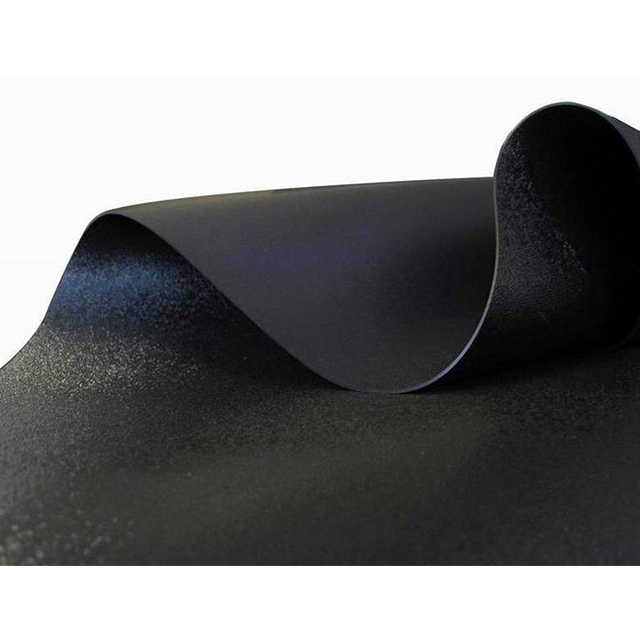
How do you calculate required thickness? You must evaluate hydrostatic head pressure first. Lifespan requirements also play a huge role. Finally, closely examine your subgrade conditions. Deeper water requires thicker plastic. Rougher soil also demands heavier gauges to prevent puncturing.
Thinner gauges ranging from 0.5mm to 1.0mm work well for specific, light-duty uses. Aquaculture farms use them frequently for shrimp and fish ponds. Decorative ponds also benefit from this flexible thickness. Temporary daily covers rarely need anything thicker. They provide excellent short-term waterproofing.
The 1.5mm to 2.0mm range serves as the strict regulatory standard for hazardous containment. You explicitly need this robust thickness for landfill liners HDPE geomembrane applications. Mining heap leach pads rely heavily on 2.0mm sheets. Secondary chemical containment around fuel tanks also demands these heavy-duty gauges. The extra material provides a crucial safety margin against aggressive chemicals.
Some sites push materials to the absolute limit. High-risk industrial applications need ultra-thick liners. Areas featuring severe mechanical stress require 2.5mm or more. This prevents catastrophic punctures under heavy equipment loads. Solid waste facilities sometimes deploy these extreme thicknesses in highly trafficked dumping zones.
Slope stability strictly dictates surface texture requirements. Smooth liners work perfectly for flat ground. Steep embankments require a completely different approach. You should specify a custom HDPE geomembrane featuring textured surfaces. Single or double-sided texturing increases the interface friction angle. This prevents soil and protective cover materials from sliding down the slope. It also keeps the liner from shifting against the subgrade.
Standard black liners absorb heavy sunlight. This causes severe thermal expansion. A white-surfaced liner reflects dangerous UV rays. It heavily reduces thermal expansion and contraction. Installers face fewer wrinkles during daytime deployment. A bright surface also highlights installation damage easily. Scratches reveal the black core underneath. Green liners serve a different purpose. They blend naturally into surrounding landscapes for aesthetic compliance.
Post-installation leak detection ensures absolute safety. Conductive bottom layers facilitate verifiable spark testing. Installers run testing equipment directly over the seams and panels. A spark immediately reveals tiny pinholes. High-risk containment sites frequently mandate this specialized conductive technology. It provides unparalleled quality assurance before placing the facility into active service.
Cheap liners carry hidden long-term risks. High-quality products use 100% virgin prime resin. Budget options often blend off-spec or recycled resins into the mix. Recycled materials severely degrade ESCR and OIT performance. The molecular chains in recycled plastics are already broken down. Early failure destroys your project timeline. Do not compromise on virgin resin quality.
Roll width directly impacts your installation budget. Narrow rolls require extensive field welding. Wider rolls mean significantly fewer seams. This drastically reduces installation labor hours. Fewer seams also lower long-term leak risks. Less welding means less opportunity for human error. You should always source the widest rolls your site can safely handle.
Freight weight heavily affects your final per-square-meter price. Heavy rolls cost more to ship over long distances. You must factor in on-site roll handling logistics. Special equipment unloads and places massive rolls safely. Storage requirements also add to the overall project expenses. You must protect the rolls from extreme mud or physical damage before deployment.
Common Mistake: Ignoring logistical constraints. Ordering 8-meter wide rolls saves welding time. However, if your site access road cannot accommodate large flatbed trucks, delivery becomes impossible.
Manufacturing Quality Control (MQC) guarantees consistency across your entire order. You should demand batch-specific MQC certificates. Never accept generic, marketing-style spec sheets. Real certificates tie directly to your exact roll numbers. They prove the manufacturer tested the actual material arriving at your site.
A trustworthy HDPE geomembrane supplier operates transparently. They openly disclose their resin sources. They explain their specific additive formulations. Obscured supply chains often hide inferior raw materials. Ask them directly about their carbon black dispersion methods. Excellent dispersion prevents UV degradation hot spots.
The best spec sheet is entirely useless otherwise. If the material resists welding, installers struggle immensely. Evaluate the supplier's ongoing technical support. Request detailed welding parameter guidelines. Check their track record in climates similar to yours. Good weldability ensures rapid, secure site deployment. Experienced suppliers know exactly how their material behaves under varying temperature and humidity conditions.
Specifying high-density polyethylene requires careful balance and diligent research. You must meet minimum regulatory standards like GRI-GM13. You also have to address specific project risks head-on. Slope friction, UV exposure, and chemical compatibility demand targeted solutions. Ignoring these field realities invites catastrophic material failure.
Procurement teams should act decisively and methodically. Always request physical material samples first. Demand specific MQC documents for review before signing any purchase orders. Ask your candidates for project-specific technical datasheets to ensure exact compliance.
Contact our technical engineering team today. We offer a comprehensive spec-review for your upcoming project. Request a quote tailored perfectly to your exact dimensions and site conditions. We help you meet all stringent regulatory requirements seamlessly.
A: Resin is the raw, unprocessed polyethylene bead. Manufacturers melt these beads down during production. A geomembrane is the finished, extruded sheet. The final product contains vital additives. These include carbon black and specialized antioxidants. You cannot use raw resin for containment. It must undergo precise extrusion to become a usable liner.
A: Lifespan depends entirely on exposure and OIT specs. Uncovered liners face harsh UV degradation. Covered applications perform much longer. Industry data suggests a 1.5mm liner lasts over 50 years when buried. High-quality antioxidant packages significantly extend this timeframe. Always review the OIT data for accurate longevity predictions.
A: Yes, you can weld new material to old liners. However, it requires significant surface preparation. Older liners suffer from surface oxidation. Installers must grind away the oxidized layer first. This exposes fresh polymer underneath. You then use extrusion welding to bond the new material securely to the prepared surface.
A: Industry standards dictate strict thickness tolerances. GRI-GM13 remains the ultimate guide. The acceptable tolerance is usually ±10%. This applies to the average thickness across the entire roll. Lowest individual readings can sometimes drop slightly lower. However, overall averages must strictly meet this 10% tolerance rule to pass inspection.


