

Views: 0 Author: Site Editor Publish Time: 2026-07-12 Origin: Site


Industrial, agricultural, and municipal pond projects cannot afford secondary containment failures or unexpected seepage. A single microscopic tear often triggers massive environmental liabilities and heavy regulatory fines. Generic plastic sheets and standard landscaping liners are often conflated with engineered containment materials. This dangerous confusion consistently leads to under-specified projects and premature material degradation in harsh environments. You need a reliable, industrial-grade barrier to ensure absolute containment security and regulatory compliance.
We provide a pragmatic breakdown of material choices, engineering standards, and critical site-specific variables. This comprehensive guide will help project managers specify the exact containment solution required for long-term success. You will discover how to evaluate distinct material strengths, calculate accurate panel dimensions, and assess manufacturer credentials effectively. Understanding these variables prevents catastrophic leaks and ensures your containment infrastructure performs flawlessly under extreme environmental stressors.
Consumer-grade landscaping plastics perform adequately for simple backyard water features. They fail predictably under the punishing stress of municipal or industrial containment applications. You must clearly differentiate between these basic plastics and an engineered geomembrane liner. Basic landscaping sheets utilize thin PVC or blended polyethylene materials. Manufacturers design them for visual appeal rather than structural integrity. They lack the molecular density required to stop aggressive chemicals or withstand significant hydrostatic pressure.
Industrial systems evaluate performance through rigorous engineering metrics rather than simple mil-thickness measurements. We assess true geomembranes using critical factors like puncture resistance, chemical inertness, and ultraviolet (UV) stability. Engineers test these materials through rigorous American Society for Testing and Materials (ASTM) protocols. A high-quality engineered membrane resists harsh chemical leachate while remaining structurally sound under extreme heat. Landscaping plastics simply melt or shatter under these same conditions.
We evaluate upfront material expenses against the devastating remediation costs of a failed standard liner. When standard plastics puncture, contaminated water seeps directly into local groundwater sources. Environmental protection agencies respond quickly to these containment breaches. The resulting fines, forced soil extraction, and emergency cleanup efforts dwarf the initial investment of proper engineered materials. Specifying industrial-grade polymers upfront eliminates these immense liability risks entirely.
Selecting the correct polymer structure dictates the long-term success of your containment project. You must evaluate specific geomembrane liner specifications based on exact site requirements and environmental exposure. The industry relies predominantly on two primary material classes. Let us examine the specific advantages and limitations of both options.
High-Density Polyethylene offers exceptional UV resistance and unparalleled chemical durability. It stands out as the ultimate choice for exposed applications, hazardous waste containment, and large-scale agricultural reservoirs. Desert environments and high-temperature industrial facilities rely heavily on its robust crystalline structure. The carbon black additives mixed into the resin provide decades of protection against intense solar radiation.
However, you must manage specific trade-offs when selecting HDPE. The material remains highly rigid and stiff. It requires professional thermal welding equipment for installation. The stiff nature of the polymer makes it extremely unforgiving on uneven subgrades. You must prepare the earth perfectly flat, as HDPE will not stretch to bridge gaps or soil depressions easily.
Linear Low-Density Polyethylene provides superior flexibility through its more amorphous molecular structure. It excels in decorative ponds, uneven terrain, and complex projects requiring high elongation capabilities. It settles naturally with the earth over time. LLDPE conforms easily to complex shapes, irregular corners, and demanding pipe penetrations.
The primary trade-off involves slightly lower tensile strength and chemical resistance compared to HDPE. While still suitable for moderate industrial applications, LLDPE cannot handle highly concentrated toxic waste as effectively. It works best for clean water storage, landfill caps, and municipal wastewater lagoons where flexibility outweighs extreme chemical inertness.
Material choices must strictly match standard regulatory compliance parameters. Environmental engineers and global institutions rely on the Geosynthetic Research Institute (GRI) testing frameworks. You should specify GRI-GM13 compliance for all HDPE materials and GRI-GM17 compliance for LLDPE. These globally recognized standards ensure your materials survive severe environmental stressors. They define precise requirements for oxidative induction time (OIT), tear resistance, and carbon black dispersion.
The following chart illustrates the fundamental differences between these two primary engineered materials:
| Performance Metric | HDPE (High-Density Polyethylene) | LLDPE (Linear Low-Density Polyethylene) |
|---|---|---|
| Flexibility & Elongation | Low flexibility; highly rigid structure. | High flexibility; stretches easily over uneven ground. |
| Chemical Resistance | Exceptional; ideal for hazardous industrial waste. | Moderate to High; suitable for municipal water or standard runoff. |
| UV Resistance | Excellent; withstands decades of direct sun exposure. | Very Good; suitable for exposed applications but slightly less durable than HDPE. |
| Subgrade Forgiveness | Poor; requires perfectly graded and smooth earth. | Excellent; bridges small soil gaps and settles well. |
| Relevant GRI Standard | GRI-GM13 | GRI-GM17 |
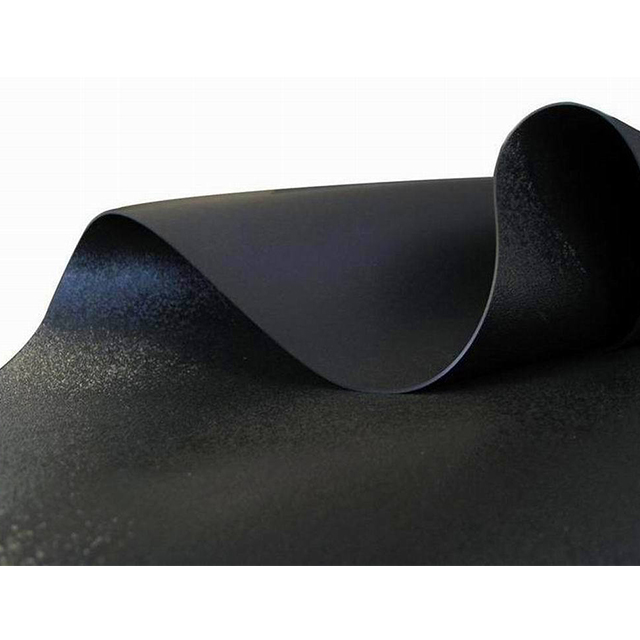
Simple length-by-width calculations fail miserably in real-world pond projects geomembrane liner applications. You cannot merely measure the flat surface area of the water level. Containment basins feature sloping walls, deep anchoring trenches, and varying depths across the basin floor. We must account for all three-dimensional variables to prevent material shortages during installation.
The standard baseline sizing formula requires precise calculation and site measurement. You compute the total length requirement first: (Length + 2 × Depth + Anchor Trench Allowance). Then you calculate the total width requirement using the same logic: (Width + 2 × Depth + Anchor Trench Allowance). You multiply these final figures together to find your required total square footage. The anchor trench allowance usually adds a minimum of three to five feet per side. This extra material drops down into the trench and folds back over to secure the membrane firmly against the earth.
Thermal expansion and contraction severely complicate these basic measurements. Polyethylene materials expand under hot afternoon sun and shrink significantly during cold nights. High-heat areas like desert reservoirs cause massive material movement. You must dictate generous overlap margins to accommodate this shifting. If you cut the material too tight, the nighttime contraction will pull the membrane completely out of the anchor trenches. This failure instantly compromises the entire containment system.
Ordering a pre-welded custom geomembrane liner directly mitigates unpredictable field challenges. Manufacturers weld large polymer rolls together into massive single panels under pristine, temperature-controlled factory conditions. Factory welding utilizes heavy stationary equipment to produce flawless seams. This strategy drastically reduces on-site seaming risks. It slashes expensive labor costs and accelerates construction schedules significantly. Large custom panels arrive neatly folded on heavy wooden pallets, ready for immediate deployment.
Even the highest-quality barrier materials fail quickly if contractors install them incorrectly. Proper execution separates successful industrial sites from environmental disasters. Installation teams must navigate complex physical challenges and strict quality control requirements.
Subgrade preparation determines the ultimate longevity of your containment system. Earthwork contractors must clear all rocks, tree roots, and sharp debris from the basin area. They compact the soil to precise engineering specifications to prevent future settling. You must also install a protective non-woven geotextile underlayment beneath the primary membrane. This critical fabric cushion prevents hydrostatic puncture from hidden soil irregularities. The weight of millions of gallons of water easily forces sharp stones right through unprotected polymer layers.
Field welding introduces significant operational bottlenecks into any construction timeline. Technicians utilize two primary methods to join membrane panels on-site:
Ambient weather drastically impacts seam integrity during both processes. High moisture levels, morning dew, or strong winds ruin thermal welds instantly. Installation crews must often pause work entirely until optimal weather windows open.
Mandatory post-installation testing provides the final guarantee of safety. You cannot merely guess if a seam holds water. Professional technicians perform rigorous destructive and non-destructive evaluations before commissioning the basin.
Sourcing materials requires intense scrutiny and careful vetting. Your chosen geomembrane liner supplier must demonstrate absolute transparency in their manufacturing processes. Buyers must demand raw resin data and final batch testing certifications before approving any procurement orders.
High-quality barriers require premium virgin resins. Avoid suppliers using high ratios of recycled regrind materials if durability remains critical. Recycled plastics introduce chemical impurities and unpredictable molecular structures into the finished sheet. A reputable supplier eagerly provides a Material Test Report (MTR) for every single roll shipped to your site. This documentation proves the specific batch meets the required GRI-GM13 or GRI-GM17 parameters.
Evaluate the vendor's broader operational capabilities beyond simple material production. Do they offer site-specific engineering support during the design phase? Can they provide experienced installation supervision to oversee your local contractors? Heavy-freight logistics also demand serious consideration. A single roll of thick HDPE can weigh over 4,000 pounds. Delays in shipping or improperly loaded flatbed trucks derail construction schedules rapidly. The supplier must handle complex freight coordination effectively.
Learn how to read past flashy marketing claims. Focus heavily on the fine print detailing what specifically voids the warranty, rather than just celebrating a "20-year lifespan" headline. Many warranties only cover the material itself and explicitly exclude installation labor or water removal costs. Improper subgrade preparation, unauthorized chemical exposure, or undocumented field welding often nullify manufacturer guarantees entirely. Always clarify these liability boundaries before signing purchase agreements.
Successful pond containment relies entirely on matching precise material specifications to site-specific environmental stressors. Basic consumer plastics cannot substitute engineered containment systems under any circumstances. Always prioritize rigorous subgrade preparation and professional welding techniques to ensure maximum longevity. True project security comes from understanding the granular details of material strength, thermal expansion, and strict quality assurance testing.
Demand complete manufacturing transparency from your selected vendor to protect your long-term investment. Avoid cheap regrind materials and insist on globally recognized testing standards. Take action today by compiling your exact site dimensions, soil data, and chemical exposure risks. Have this detailed technical data ready before requesting standard samples or technical data sheets from manufacturers. Proper planning and precise material specification remain your best defense against catastrophic containment failures.
A: Typically ranges from 30 mil to 60 mil (0.75mm to 1.5mm) depending on subgrade roughness, water depth, and exposure to mechanical stress. Shallow decorative ponds may use 30 mil, while deep industrial reservoirs require 60 mil materials to withstand extreme hydrostatic pressure and chemical exposure.
A: While small, factory-fabricated panels can be unfolded and placed manually, any seams required on-site must be professionally welded to guarantee containment integrity; tapes and adhesives are insufficient for industrial applications. Only thermal wedge welding and extrusion welding provide the strength necessary for permanent liquid containment.
A: Unprotected liners degrade rapidly without carbon black additives. Specify materials engineered with UV stabilizers if the liner will not be buried under soil or water year-round. High-quality HDPE contains specific carbon black formulations designed to block solar radiation and prevent the polymer from becoming brittle over decades of intense sun exposure.


