

Views: 0 Author: Site Editor Publish Time: 2026-07-03 Origin: Site


Designing containment systems brings incredibly high stakes to any engineering project. A single failure triggers devastating groundwater contamination and severe environmental damage. Facilities then face massive regulatory fines and catastrophic remediation costs. You must get the barrier selection right the first time. Standard sodium clay seals perfectly for basic freshwater environments. However, aggressive effluents demand highly specific chemical and structural evaluations. Industrial wastewater contains harsh elements capable of destroying standard clay structures. Relying on default specifications often causes premature liner degradation and massive leaks. A generic material will simply fail when exposed to complex industrial chemistry.
We built this comprehensive guide to help you navigate these critical choices. Project engineers, facility managers, and procurement leads need reliable, evidence-based data. You will learn a structured framework for evaluating and shortlisting the correct barrier confidently. We cover critical site conditions, chemical compatibility testing, and real-world installation realities. Understanding these elements ensures your containment project succeeds from day one.
Chemical Compatibility is Primary: Standard sodium bentonite degrades in high-salinity or high-calcium wastewater; polymer-modified alternatives are often required.
Physical Structure Matters: The choice of woven vs. non-woven carrier textiles dictates slope stability and internal shear strength.
Confining Stress is Non-Negotiable: A bentonite waterproof liner requires adequate cover soil or hydrostatic pressure to hydrate properly and achieve the targeted low permeability.
Supplier Verification: Always require site-specific compatibility testing (ASTM standards) before finalizing a procurement shortlist.
Different facilities present entirely unique environmental stresses. You cannot specify identical materials across all containment scenarios. A clean water basin behaves quite differently than a toxic leachate pond. We must define clear success criteria based on the specific facility type before reviewing any product catalogs.
For clean water containment, engineers typically select a reservoir liner. These applications demand a steady baseline hydration pressure. The primary goal centers on achieving standard low-hydraulic-conductivity requirements. Freshwater allows the natural clay to swell optimally and maintain its seal over decades. The risk of chemical degradation remains minimal.
When designing ponds subject to fluctuating liquid levels, a lagoon liner faces different structural challenges. Engineers must evaluate slope stability carefully. Wet and dry cycles create ongoing mechanical stress on the barrier system. Subgrade gas accumulation poses another significant risk. The barrier must resist these physical changes without tearing or losing its dimensional stability.
Industrial applications require specialized, extreme protection. A wastewater pit liner operates in highly hazardous environments. It requires strict chemical resistance against aggressive leachates. Heavy metals and volatile organic compounds (VOCs) constantly attack the seal. You must verify the structural integrity of the barrier under extreme, continuous chemical exposure.
Never assume a one-size-fits-all solution exists. Always establish the baseline chemical makeup of the contained liquid first. Do this before you even look at physical spec sheets. Understanding the contained liquid dictates every subsequent engineering decision.
Natural clay possesses incredible sealing properties. However, you must thoroughly understand its chemical vulnerabilities. Standard sodium bentonite faces severe risks when exposed to multivalent cations. Industrial wastewater frequently contains high levels of calcium and magnesium. These elements cause a destructive process called cation exchange.
During cation exchange, calcium ions replace the natural sodium ions within the clay structure. This exchange permanently destroys the clay's swelling capacity. It compromises the low-permeability seal entirely. The barrier basically turns into porous soil. When this occurs, contaminated water flows freely into the surrounding groundwater.
To combat this chemical attack, engineers specify polymer-modified alternatives. A specialized bentonite GCL resists aggressive leachates effectively. Manufacturers treat the clay core with specialized polymers. These treatments protect the clay structure from ionic attack. They prevent harmful cations from penetrating the molecular layers. This ensures the clay retains its crucial swelling properties.
You must perform site-specific compatibility testing to guarantee success. Never test these barriers using ordinary tap water. Always use the actual site effluent. Laboratory results using clean water will deeply mislead your engineering team and result in catastrophic field failures.
Highly toxic environments demand extreme protection measures. Mixed-waste facilities often require laminated multicomponent barriers. These systems bond an additional geomembrane backing directly to the clay layer. This creates a formidable dual barrier. It prevents highly concentrated VOCs and toxic chemicals from migrating into the soil. Multicomponent barriers represent the highest standard of containment security.
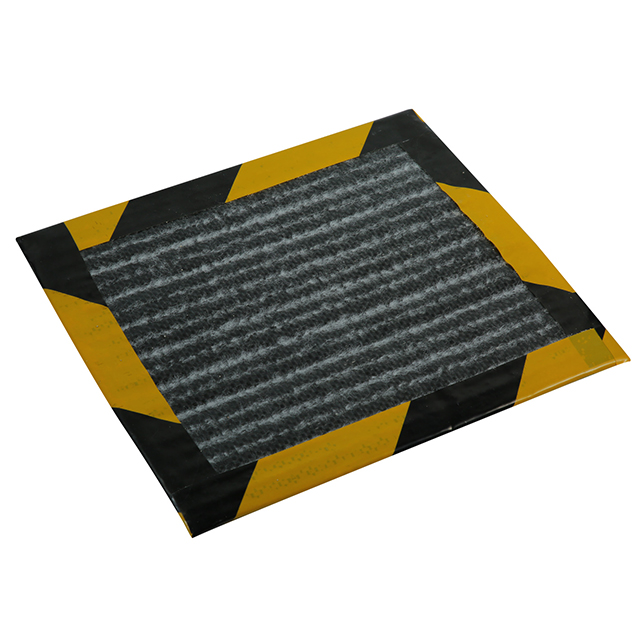
Chemical resistance only solves half the containment equation. The barrier must remain physically intact under massive operational loads. We must rigorously evaluate carrier textiles, internal shear strength, and peel metrics. These elements dictate the long-term survival of the system.
Geosynthetic textiles sandwich the active clay layer. You must choose between woven and non-woven materials. Woven geotextiles offer exceptional tensile strength. They resist stretching and tearing during deployment over rough terrain. Non-woven geotextiles provide superior friction. They adhere much better to steep subgrades and heavy cover soils.
Consider this functional comparison when evaluating textile configurations:
Textile Type | Primary Structural Advantage | Best Application Use Case |
|---|---|---|
Woven Geotextile | High tensile strength and dimensional stability | Flat basin floors requiring high puncture resistance |
Non-Woven Geotextile | Superior interface friction and strong adhesion | Steep lagoon slopes requiring strong subgrade grip |
Slope failure poses a catastrophic risk in deep pits. Internal shear strength prevents the barrier layers from separating under immense weight. Manufacturers use a process called needle-punching to lock the layers together. Thousands of barbed needles push fibers through the clay core. High needle-punching density remains absolutely crucial for slope stability.
Manufacturers also employ thermal locking to reinforce the barrier. Heat treatment melts the punched fibers slightly, fusing them into the bottom textile. This prevents the active clay from migrating downward under heavy shear stress. Without thermal locking, the clay can pool at the bottom of a slope, leaving the upper sections vulnerable.
Peel strength serves as a primary durability indicator. It measures exactly how tightly the outer textiles hold the core together. High peel strength ensures the liner survives aggressive installation handling. It also guarantees long-term stability during operational loading and liquid fluctuations.
A perfect specification fails completely if the installation goes wrong. Field conditions dictate the ultimate success of your containment system. You must manage environmental variables tightly during deployment.
Confining pressure represents an absolute engineering necessity. A bentonite waterproof liner must have adequate confining stress to function correctly. Engineers typically require 300 mm (12 inches) of heavy cover soil. This weight forces the hydrating clay to swell inward tightly. The confined swelling actively seals minor punctures and seam overlaps. Without this pressure, the clay expands loosely and remains highly porous.
Weather creates immense logistical risks during deployment. Premature hydration ruins the material before you can bury it properly. Rain or heavy snow activates the clay prematurely. Once fully hydrated without confining pressure, the panels become structurally useless. You must establish strict criteria for weather-window planning.
Monitor forecasts closely and halt deployment hours before rain arrives.
Cover installed panels immediately with approved plastic sheeting or permanent soil.
Store all unrolled materials in dry, elevated staging areas.
Keep factory wrapping intact until the exact moment of deployment.
Subgrade preparation requires absolute precision and discipline. The underlying soil must meet strict compaction limits to provide a stable foundation. Workers must manually remove all sharp rocks, roots, and debris larger than one inch. Localized punctures prior to hydration will destroy the primary seal immediately. A smooth, heavily compacted subgrade guarantees uniform hydration and flawless long-term performance.
Regulatory bodies demand definitive proof of performance. You must navigate strict testing standards and quality control protocols to satisfy environmental inspectors. Generic claims hold no value in regulatory compliance.
Procurement teams must verify specific ASTM test methods on manufacturer spec sheets. You should specifically look for ASTM D5887. This standard measures fluid loss and permeability accurately. It confirms the barrier holds liquid effectively under pressure. You also need ASTM D6243. This standard measures internal shear strength. It proves the barrier will survive steep slope deployments without internal shearing. These standards remain non-negotiable for strict environmental compliance.
Regulators often mandate traditional Compacted Clay Liners (CCL). A standard CCL requires two feet of highly compacted, native clay. You must prove your chosen geosynthetic clay liner provides equivalent or superior environmental protection.
Show the targeted permeability rating sits at or strictly below 5 x 10^-9 cm/sec.
Demonstrate how the drastically reduced thickness improves overall containment volume capacity.
Submit certified third-party lab results comparing the synthetic barrier directly to local soil samples.
Manufacturing Quality Control (MQC) documents verify production consistency. Always require roll-by-roll MQC certificates before accepting delivery. These documents confirm the exact mass per unit area of the active clay core. They also verify consistent needle-punch density across every single roll. Never accept generic batch certificates for critical infrastructure projects. You need proof that every roll meets the required engineering standard.
Choosing a manufacturer involves much more than simply comparing prices per square meter. You need a technical partner capable of executing rigorous support. You must vet suppliers thoroughly to mitigate project risks.
Never buy containment materials off a generic specification sheet. Require shortlisted manufacturers to perform site-specific testing. Send them a substantial sample of your facility's actual liquid effluent. They must run a long-term permeability test using this exact liquid. If a supplier refuses this test, remove them from your shortlist immediately.
Evaluate the supplier's logistical capabilities critically. Roll dimensions impact project timelines heavily. Assess their ability to provide custom roll lengths for your specific basin geometry. Custom lengths drastically minimize seam overlap waste and reduce installation labor. You also need proper deployment spreader bars. Ensure the manufacturer provides or rents these specialized lifting frames. Handling heavy rolls without spreader bars creates severe safety hazards and damages the materials.
Understand warranty limitations completely before signing any contracts. You must know exactly what actions void the field support guarantees. Several common mistakes cancel warranties instantly:
Improper overlap distances often void the manufacturer agreement immediately.
A lack of adequate cover soil cancels all permeability performance guarantees.
Unauthorized chemical exposure nullifies the entire warranty instantly.
Ensure your chosen installation contractor aligns completely with the supplier's published installation guidelines. A communication gap here leads to voided warranties and catastrophic failures.
Choosing the right containment barrier protects the surrounding environment and your facility's financial future. The correct choice requires balancing multiple highly technical factors. You must guarantee chemical compatibility first to prevent structural degradation. Then, you must specify the slope-appropriate internal shear strength to ensure physical stability. Finally, you must enforce strict installation discipline on the job site to prevent premature hydration.
Investing in upfront site-specific leachate testing removes massive operational guesswork. Verifying roll-by-roll MQC data directly mitigates the enormous liability of containment failure. Relying on verified laboratory data ensures long-term operational success and total regulatory compliance.
Take immediate action on your containment project. Initiate chemical compatibility testing with your shortlisted manufacturers today. Gather your facility effluent samples and demand evidence-based laboratory results to secure your site.
A: No. Industrial wastewater often contains chemicals or heavy metals that cause cation exchange, stripping standard sodium bentonite of its swelling properties. A polymer-modified or geomembrane-laminated GCL is usually required.
A: Standard practice dictates a minimum of 6 to 12 inches (150-300 mm) of overlap at the seams, supplemented with granular bentonite powder or paste, depending on the manufacturer's strict guidelines and slope angles.
A: Premature hydration without confining pressure allows the bentonite to swell unrestrictedly. It will lose its density and structural integrity, permanently compromising its ability to form a low-permeability seal. The affected panels typically must be replaced.
A: While HDPE provides an impermeable barrier, it is highly susceptible to puncture and requires specialized welding. A GCL provides a self-healing, low-permeability barrier that is easier to install but requires confining cover soil. They are frequently used together as a composite liner system for maximum security.


